Get Full Government Meeting Transcripts, Videos, & Alerts Forever!
Get email alerts on the Public Safety Surveillance topic
No spam. Unsubscribe anytime.
Bay City commissioners debate Flock Safety license-plate reader contract amid privacy concerns
Summary
Commissioners and public commenters debated a proposed contract with Flock Safety for automated license-plate readers, raising questions about data sharing, retention and oversight. A motion to refer the matter to staff tied 4–4 during roll call; no final contract approval is recorded in the transcript.
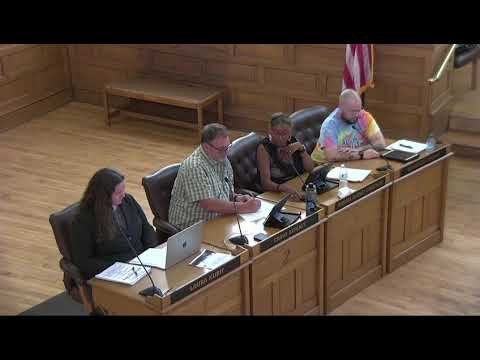
The Bay City Commission heard extended public comment and staff discussion July 21 on a proposed contract with Flock Safety to install automated license-plate readers (ALPRs) across the city.
Supporters, including public safety officials and a Flock Safety representative, said the system helps locate stolen vehicles and suspects quickly. Opponents in the audience and on the commission raised privacy, data-retention and third‑party‑sharing concerns and urged more public education and review before committing funds.
The issue appeared on the regular agenda after the city manager recommended an agreement with Flock Safety for "the implementation of multiple license plate readers" at an estimated cost of $45,150 in fiscal 2026 and $39,000 in fiscal 2027. Commissioner Tenney moved to approve the contract; Commissioner Morris seconded the motion, which then prompted an extended discussion and multiple public comments.
Why it matters: Residents and civil‑liberties advocates warned the technology could create a persistent, citywide record of vehicle movements and be shared beyond local control. Law enforcement and the vendor argued ALPRs are an investigative tool that can speed homicide, abduction and stolen‑vehicle investigations.
Key details and debate
- Cost and scope: The proposed contract figures read into the record were $45,150 for FY2026 and $39,000 for FY2027. City staff said the line items were included in the budget adopted earlier this year.
- How the system works: The public safety director described ALPR operation as capturing an image of a plate, comparing it to a law‑enforcement "hot list" and alerting officers to matches; the director said the agency controls preservation and sharing of the city’s data and that images are retained for 30 days unless preserved for an investigation.
- Data sharing and retention: Multiple public speakers and commissioners cited cases in other states where license‑plate data was shared with federal immigration authorities or used in ways community members found objectionable. Attorney Adam Redick told the commission he had read the proposed contract and warned that "Flock can share footage and license plate data with third parties, including federal agencies without a warrant" and that third‑party recipients could retain data indefinitely.
- Vendor response: Mike Lammon, Flock Safety, told the commission the agency (the city) owns its data and that Flock will not independently share agency data. He also said the company works with hundreds of agencies in Michigan and thousands nationally and described success stories where ALPR data accelerated homicide or abduction investigations.
- Oversight and policy questions: Commissioners asked whether searches are auditable; whether sharing with other agencies is blanket or case‑by‑case; and whether the contract’s language permits indefinite retention by third parties. The city manager and department director said usage policies, audits and agency control are part of the implementation, and that state and federal law limit certain uses.
Actions and procedural steps
- Motion to approve contract: Commissioner Tenney moved to approve the Flock contract; Commissioner Morris seconded. The transcript records discussion but does not show a final roll‑call vote approving the contract.
- Motion to refer to staff: Commissioner Coop moved to refer the item back to staff for additional public information and clarification; Commissioner Morris seconded. A roll‑call on the referral produced a 4–4 split (Yes: Morris, Cubitt, Coakley, DeWitt; No: Charlevoix, Bernie Obershaw, Tenney, Rhumburg), which the clerk announced as 4 and 4. The transcript records the tie and no recorded final approval of the referral at that point.
What remains unresolved
- The transcript does not record a final commission vote approving the Flock contract. - Commissioners and residents requested more public education about how images are captured, how long images and derived data are retained, which outside agencies (if any) would be permitted access, and what contractual safeguards would prevent unrelated third‑party access.
The commission asked staff to return with additional information; during the discussion some commissioners said they would vote against the contract as written. The transcript does not show a subsequent meeting action on this item within the July 21 record.