Get Full Government Meeting Transcripts, Videos, & Alerts Forever!
Get email alerts on the Licensure And Regulatory Standards topic
No spam. Unsubscribe anytime.
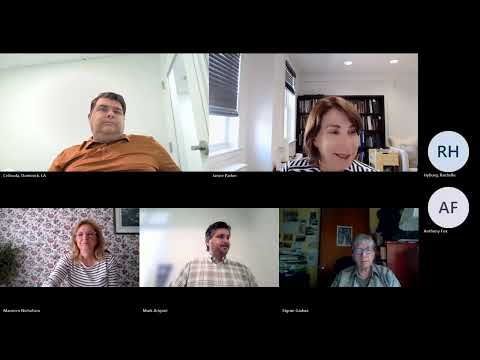
CLARB gives Connecticut board overview of licensure exam, record and model standards
Summary
Representatives from the Council of Landscape Architectural Registration Boards (CLARB) briefed the Connecticut State Board of Landscape Architects on the LARE exam, the CLARB Record, a uniform licensing standard and related member services; board members discussed potential follow-up and representation at CLARB’s annual meeting.
Representatives from the Council of Landscape Architectural Registration Boards, known as CLARB, gave a detailed presentation to the Connecticut State Board of Landscape Architects on CLARB programs and resources, including the Landscape Architect Registration Examination (LARE), the CLARB Record and a proposed uniform licensing standard.
CLARB Chief Strategy Officer Veronica Meadows and Member Relations Manager Zach Durga described the LARE as a four-part, fully computerized exam administered three times a year (April, August and December) and explained that the CLARB Record is a verified portfolio of education, experience and examination intended to streamline licensure across member jurisdictions. "All the information contained in the CLARB record is verified by CLARB staff," Durga said.
The presentation covered CLARB certification, model policies (model law and regulations, model continuing-education standards and a code of professional conduct), and CLARB’s rethink-regulation initiative, which aims to reduce licensing friction that does not affect public health, safety or welfare. Meadows said the uniform standard is rooted in data the organization used to justify experience thresholds in legislative or regulatory discussions.
Board members asked how CLARB coordinates with other professions and whether CLARB tracks the placement of state boards within state government structures. Durga and Meadows said CLARB collaborates with national regulatory counterparts for architecture and engineering and can collect additional state-structure data if requested. "We probably attend three to five board meetings in person per year and another half-dozen to a dozen virtually," Meadows said of CLARB’s outreach.
Board members also discussed CLARB’s upcoming annual meeting, scheduled for Sept. 17–20 in Lexington, Kentucky, and the availability of member credits that can offset travel costs. The board asked for the presentation slides to be shared for internal distribution and for the board to improve ongoing contact with CLARB staff.
The board and presenters discussed the balance between national uniform standards and state-specific requirements; Durga noted jurisdictions could still require supplemental or jurisdictional exams for site- or region-specific conditions (for example, Alaska’s arctic-related requirement). "Jurisdictions like Florida, California, Alaska can still have their jurisdictional or supplemental exam," Durga said.
Meadows and Durga offered follow-up contacts and resources, including webinars, guidance on experience evaluation, and a forthcoming CLARB website and database update intended to improve member access to records and tools. The board agreed to circulate the material and consider CLARB as a regular resource for member questions going forward.
The presentation also prompted discussion of outreach: board members said they want more direct CLARB contact in Connecticut and suggested CLARB or the board could offer targeted briefings when board staff or membership changes.