Get Full Government Meeting Transcripts, Videos, & Alerts Forever!
Get email alerts on the County Budget Restructure Staffing topic
No spam. Unsubscribe anytime.
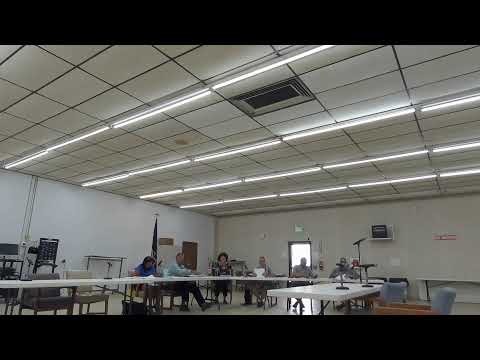
Pulaski County commissioners debate merging CDC work into building department amid budget push
Summary
County officials discussed a staff and budget restructuring proposal that would combine some Community Development Corporation duties with building and planning functions, prompting concerns about authority, legal review and service impacts. Commissioners voted to advertise multiple departmental budgets for public hearing.
Pulaski County commissioners spent much of their meeting reviewing a countywide budget restructuring that would fold some Community Development Corporation (CDC) functions into building and development operations and change staff classifications.
The discussion centered on a proposal that would reduce the number of full‑time positions overall by reorganizing duties across departments while leaving existing named positions in place. Carla, director of the county's CDC, told commissioners that her office has been working short‑handed for years and that the proposed restructuring would keep the county at four full‑time staff in affected areas but shift duties among those positions. "I'm not entirely convinced that not having five full‑time positions is ideal," Carla said, but added she was instructed to prepare options that would save money.
County staff described two restructuring options: in one, the county would have a full‑time building inspector and retain a part‑time office administrator; in the other, staffing would keep a full‑time inspector and still keep the director's position, but redistribute clerical and technical roles. Finance staff presented high‑level figures indicating modest savings on paper — roughly a $22,000 reduction in one line item against some increased costs elsewhere — but staff and commissioners said net savings were uncertain and would depend on benefits and health insurance costs.
Why it matters: commissioners and department leaders said the CDC and building work overlap in ways that could produce efficiency gains if reorganized, but they also warned about legal and governance limits. Several speakers said they were concerned about the county’s authority and whether a CDC director could exercise supervisory control over positions that traditionally report to elected offices or commissioners.
Discussion and concerns: some commissioners and other attendees said the CDC proposal had not been discussed broadly with affected boards and questioned why some commissioners and board chairs had not been directly consulted before the proposal was drafted. One commissioner noted that parts of the proposal had been discussed in executive session and that confidentiality rules limited what staff could share. Another raised statutory concerns tied to a separate reference several speakers made to "Senate Bill 1," saying the county needed an attorney's written opinion before taking action. Carla said she had talked with staff and had attempted to document comparable county structures but noted Pulaski County’s population and scale (discussed during the meeting as about 12,000) differ from neighboring counties that have consolidated similar services.
Operational detail: Carla said the CDC currently relies on a mix of full‑ and part‑time clerical support and outside vendors for tasks such as tourism and social media marketing. She said onboarding and training a current full‑time clerical employee into a programmatic/project role would require classification changes if the employee’s duties advanced beyond clerical tasks. Commissioners discussed whether grant funding (fund codes 11/12 referenced in the meeting) could pay some of the CDC functions and whether moving those lines out of county general fund would relieve fiscal pressure on the county’s general operating budget.
Legal/process questions: multiple speakers recommended obtaining formal legal review before implementing structural changes or reassigning departments. One commissioner warned that proceeding without counsel could lead to legal challenges and added expense. The county attorney was not available during the meeting, several commissioners said.
Votes at a glance: while the restructuring discussion remained unresolved and directed staff to obtain more information, commissioners voted by voice to advertise (publish for public hearing) a number of departmental budgets, including the sheriff, treasurer, extension service, recorder, soil and water district, maintenance, election board, veteran service officer, network/IT position, auditors, commissioners' budget, health department (with an added full‑time nurse), EMS/EMA, highway, aviation and several other special funds. For each advertised budget the minutes record a motion, a second and a voice vote; the clerk announced "motion carried" or similar for those items.
What happens next: commissioners directed staff to gather additional detail on the legal constraints (including whether SB1 affects the county's options), the likely net fiscal impact of the proposed staffing changes, and examples from similar counties. Several commissioners asked staff to provide a written comparison showing actual cost and benefit scenarios, and to confirm whether certain positions could legally report to a CDC director rather than to elected offices. A public hearing on advertised budgets was scheduled as part of the county's normal budget adoption timeline.
The meeting moved on after a long agenda that included line‑item adjustments and other departmental budget discussions; commissioners recessed for a break and scheduled follow‑up work on several items.