Get Full Government Meeting Transcripts, Videos, & Alerts Forever!
Get email alerts on the County Budget topic
No spam. Unsubscribe anytime.
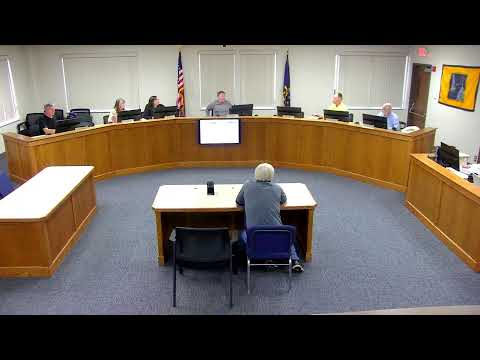
Marshall County commissioners review proposed jump in operating budget, weigh staff, roads and facility costs
Summary
Marshall County commissioners spent more than two hours reviewing a proposed general‑fund budget that department presenters said totals roughly $20.3 million, about $5 million more than last year’s adopted general fund, noting rising health insurance, highway materials and facility costs.
Marshall County commissioners spent more than two hours reviewing department budget requests and estimates, with staff telling the panel the consolidated request on file totals roughly $20.3 million — about $5 million higher than last year’s adopted general fund total of $15.6 million.
County financial staff and department representatives told the commissioners the increase is driven by projected health insurance costs for a still self‑funded plan, higher highway materials and equipment requests, and several facility and maintenance items the county may need to fund directly. Presenters repeatedly advised advertising the budget figures slightly high to preserve the option to cut later, and flagged a Friday deadline to submit final additions for advertising.
The health-insurance line drew sustained attention. County staff presented an estimate for group health near $2.44 million for the general fund this year, up from roughly $2.04 million last year. Staff explained the county still operates a self-insured arrangement in which payroll charges flow into an internal insurance fund (fund 4702) and vendors are paid from that pool; transfers among funds determine the cash available to pay vendors. Commissioners pressed staff for detail on fund balances and transfers; staff reported the self-insurance fund’s cash position was near break‑even for the first seven months after a recent internal transfer but cautioned the result depends on enrollment and pending program network changes.
Highway operations and materials were another central theme. Highway staff said increasing the materials budget would allow the department to prepare more road segments in the fall so they could be paved or chip‑sealed next season; presenters estimated current practice may short the county of 25–35% of potential annual production because of material supply constraints. Commissioners discussed using larger appropriations to let highway staff plan and advertise work earlier and to avoid repeatedly asking for supplemental funds.
Commissioners and staff also discussed multiple capital and one‑time requests. The proposed budget includes a $75,000 capital line identified as the county’s loan/building commitment for a property at 990 Illinois Street, and staff said that amount appears in both the general fund and the county capital program to give the council and commissioners options on funding source. Highway staff and commissioners agreed to create a new specific line for a “total patcher” lease/purchase and to advertise a placeholder of $105,000 for that line so the item can be cut later if needed; staff said the formal deadline for advertising changes was the incoming Friday at noon.
Building and facilities needs surfaced in multiple places. Facilities staff and commissioners discussed a proposed control‑system upgrade for the courthouse HVAC that was previously estimated near $200,000; speakers said the county’s mixed, partly‑custom control system has left offices with inconsistent temperatures and parts that may be difficult or costly to source. The treasurer’s office also requested upgrades to its front counter and security, with two contractor estimates cited in the meeting: roughly $18,000 for a partial renovation and just under $33,000 for a more complete rebuild, including a locking walkthrough door and flooring work. Commissioners signaled support for prioritizing security upgrades while noting piecemeal fixes can be visually mismatched in a building with original elements.
The budget review also covered several programmatic transfers and staffing placement questions. Prosecutor’s office and pretrial‑diversion staffing were discussed at length: prosecutors requested moving positions and clerical wages between the pretrial diversion fund and the prosecutor general fund after a state grant that previously paid some salary lines was cut. Commissioners and the prosecutor’s representative debated whether diversion fees and the dedicated fund could sustain those positions or whether the general fund should absorb them; staff said the grant formally ends in the autumn and that the county can advertise either approach and finalize the placement before second reading.
The sheriff’s compensation drew a legal question during the review. Participants noted language in state law tying sheriff compensation to a percentage of the prosecutor’s salary; meeting discussion referenced Indiana Code sections commonly cited on the subject (participants named IC 36‑2‑13‑2.5 and IC 36‑2‑13‑2.8). Commissioners asked the county attorney and the prosecutor to research whether statutory language or exemptions affect local sheriff pay obligations before the budget is finalized.
Planning and long‑range work also came up. The planning commission said the county’s comprehensive plan has not been updated since about 2013 and requested funding to revisit the plan in 2026; commissioners agreed to add $50,000 to the planning commission’s professional‑services budget to support an update or consultant work, and staff said they will formalize that line for advertising.
Staff and commissioners also touched on neighborhood property cleanup and unsafe‑building work. Planning staff said they currently respond to complaints and that an estimated seven pending cleanup cases could require contracting if owners don’t comply; staff noted the county receives only partial cost recovery in most cases and that building a recurring in‑house capability would change program costs and outcomes.
On smaller items, staff reported an incoming tranche of opioid‑settlement money (an email summary posted in the meeting showed a small disbursement that staff described as roughly $14,003 restricted and about $2,024 unrestricted) and reminded commissioners that some requests had cross‑fund impacts (for example, QCAP allocations versus general fund). Commissioners discussed the public‑safety grant program that has previously supported departmental equipment and asked staff to set that line at $400,000 (up from the FY2025 appropriation) so departments could anticipate roughly $50,000 each as a baseline; commissioners said leftover funds would remain in a grant fund administered by the commissioners with council appropriation as required.
The session closed with standard procedural reminders about meetings and deadlines: staff reiterated an advertising deadline for budget additions (the coming Friday at noon in the meeting), the next joint work session and council meeting dates, and an agreement that advertised numbers may be cut at later readings. The body approved a motion to adjourn at the end of the meeting; no other formal votes or ordinance adoptions were recorded in the transcript.
Asked‑for follow‑ups recorded during the session included: (1) staff to confirm self‑insurance fund balances and the net effect of recent transfers; (2) staff to create and advertise a new line for the total patcher at $105,000; (3) the prosecutor and county attorney to confirm statutory interpretation and any exemptions about sheriff compensation related to prosecutor pay; (4) planning staff to add $50,000 for professional services to support a comprehensive plan update; and (5) staff to return firm cost estimates and procurement timing for treasurer‑office security upgrades and the HVAC control project.
The meeting transcript does not show a formal adoption of the proposed budget; commissioners and staff noted the advertised numbers are subject to later reductions and formal approval on second reading.