Get Full Government Meeting Transcripts, Videos, & Alerts Forever!
Get email alerts on the Disconnected Youth Data Intermediary topic
No spam. Unsubscribe anytime.
Report outlines options for statewide nonprofit data intermediary to track disconnected youth
Summary
A WestEd report to OPM evaluated options for a statewide data intermediary to collect nonprofit data on 'disconnected' youth. The study identified trust, capacity and funding as major obstacles and recommended pilots or using existing intermediaries with added resources.
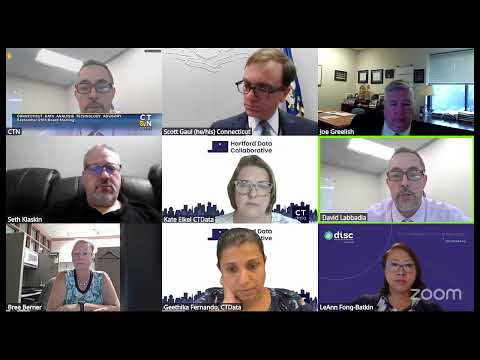
The Data Analysis Technology Advisory Board received a presentation on Oct. 25, 2025, of a WestEd study — prepared for OPM pursuant to Public Act 24‑45 — examining options for a statewide data intermediary to collect and use nonprofit data on disconnected youth.
Manisha Shrivastava, special projects manager and economist at OPM, said the report responds to a statutory requirement tied to prior analysis that identified an estimated 119,000 disconnected youth in an earlier study; the latest update cited a modest decline to about 106,000 but stressed the continuing scale of the problem. Dr. Leanne Fong Bakken of WestEd summarized interviews and surveys of local educational agencies (LEAs), nonprofits and existing data intermediaries.
WestEd found that nonprofits vary widely in capacity: some are small community organizations without formal data systems, while others maintain data teams. Nonprofits emphasized three needs: technical assistance and training, additional resources to collect and submit data, and a trusted intermediary to safeguard personally identifiable information. “They wanted to share data with a known entity that they trust,” Fong Bakken said.
The report sketched three primary options: (1) build a new, independent statewide data environment; (2) expand DataLink CT to include nonprofit data (noting DataLink CT would need additional resources and that trust relationships would need to be assessed); or (3) expand capacity of existing Connecticut intermediaries that already hold nonprofit trust but may need funding and technical scale. WestEd recommended piloting an approach (geographically or by service area), defining clear goals and evaluation criteria, and ensuring legal protections and data sharing agreements are in place.
Funding and governance choices were central concerns: building a new, independent intermediary requires substantial state or philanthropic investment; expanding an existing intermediary would require funding and careful mapping of which nonprofits already trust which intermediaries. The report also recommended budgeting for training and support so nonprofits can prioritize service delivery while participating in data collection.
Board members suggested further mapping of statewide intermediaries and more outreach to local partners. Several participants offered to share existing local efforts — including Hartford‑area collaborations and national intermediary models such as Baltimore Promise and the StriveTogether network — as possible starting points.
The board did not take formal action. Staff said the report and its appendices would be circulated and that further stakeholder engagement and mapping would be needed before deciding on a statewide approach.