Get Full Government Meeting Transcripts, Videos, & Alerts Forever!
Get email alerts on the Unpermitted Construction Deck topic
No spam. Unsubscribe anytime.
Board grants COA for rear deck at 287 South Limestone; other agency approvals still required
Summary
The Board of Architectural Review approved a certificate of appropriateness for a rear deck built without prior approval at 287 South Limestone but left agency compliance (building inspection/zoning) to determine required modifications.
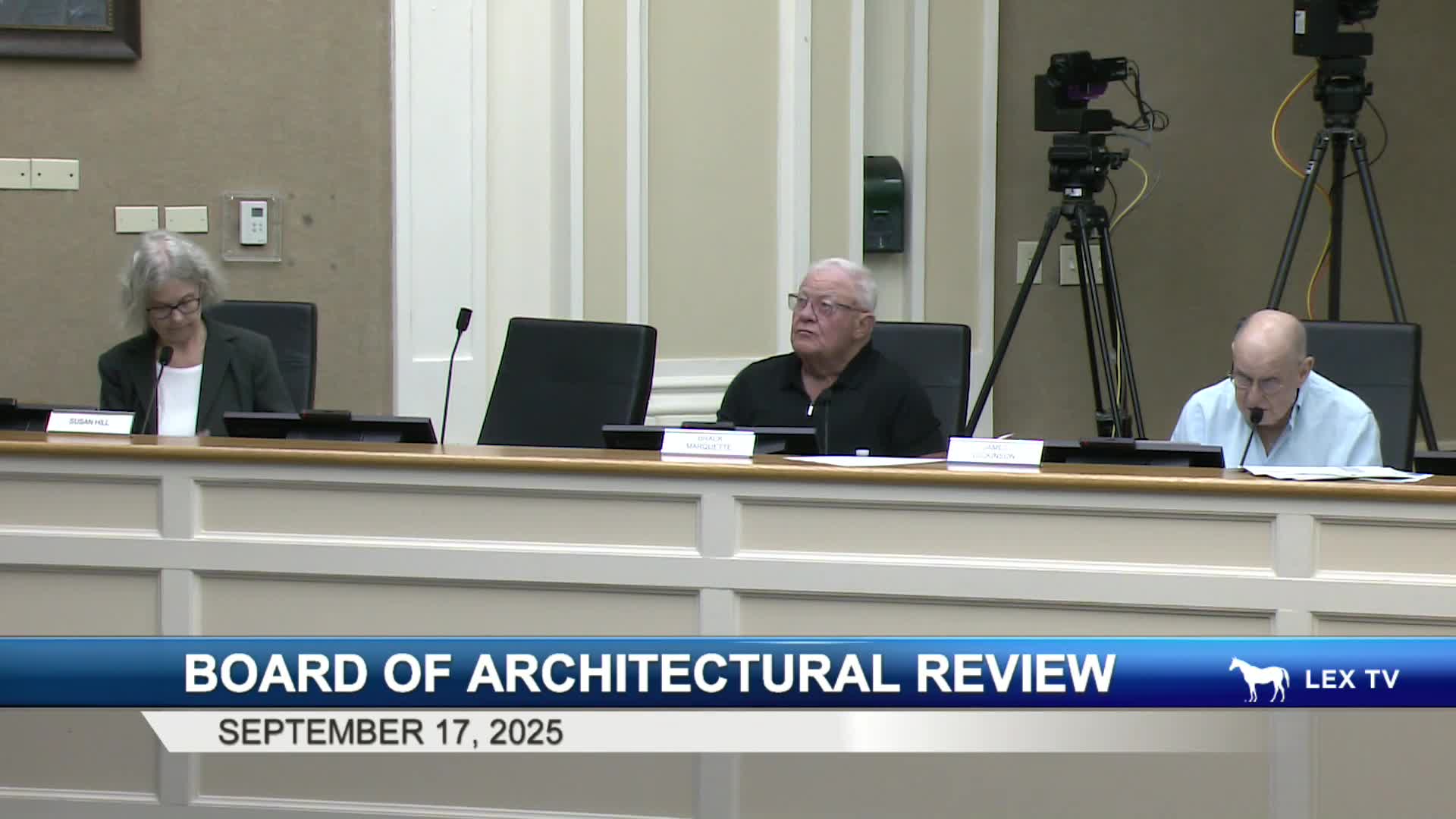
The Lexington City Board of Architectural Review on Sept. 17 approved a certificate of appropriateness (COA) for a rear deck at 287 South Limestone that had been constructed without prior board approval. The board approved the COA with the board's standard conditions and removed an additional staff-proposed requirement that the deck be cut back five feet from the Maxwell Street sidewalk, leaving technical compliance to building inspection and other city divisions.
Historic preservation staff said they discovered the deck after it had been built and noted that building inspection and planning staff advised the board that vertical combustible construction cannot be placed that close to the sidewalk under zoning/building rules. The staff presentation recommended approval only if the deck were cut back to a minimum of five feet from the back of the Maxwell Street sidewalk to comply with LFUCG zoning regulations.
Neighbor Austin Mayer, who identified himself as owner of Condominium Unit 305 at 275 South Limestone and whose bedroom window overlooks the property, told the board he and other condo residents were concerned about noise and encroachment. Mayer said the deck had been constructed without approval and that a property survey provided to the city showed the deck encroached 8 to 12 inches onto the condominium association's property line; he also referenced prior land-use restrictions prohibiting outdoor live entertainment. "He's built the deck without approval," Mayer said, and condo residents reported noise complaints during construction and after the deck opened.
The applicant, Genghis Akhmete, representing the property at 287 South Limestone, told the board the deck was for outdoor seating associated with the business and that construction had just been completed. He acknowledged the board's standard conditions and said he would pursue any required city permits.
Board members debated whether to impose the five-foot cutback as an explicit board condition or to rely on the COA's standard conditions that tie subsequent work to other agency approvals. One board member moved to grant the COA with the staff's two standard conditions but to delete the staff's proposed additional cutback condition; another board member seconded the amendment. "Just because we're saying the COA's okay with us, doesn't mean that you can't have it. You still may need a building permit," a board member said, explaining that separate building‑code review could require changes.
The board voted to approve the certificate of appropriateness with the standard conditions and with the staff-suggested cutback deleted; the applicant was advised to contact building inspection and to consult with neighbors. Staff cautioned that the approval does not waive other agencies' authority; building inspection or code enforcement could still require modifications or deny a building permit.
Why it matters: The case highlights how COAs interact with building code and zoning requirements: a board approval for compatibility with historic‑district guidelines does not override building code or zoning limits. Neighbors raised concerns about noise and alleged encroachment on private property; the board encouraged applicant-neighbor communication and made clear the approval remains subject to building inspection and other city reviews.
Next steps: The applicant will pursue permits with Building Inspection and may need to alter the deck if those divisions require changes. The board record indicates the 30-day appeal window for prior staff approvals has passed for earlier elements of the property, but other enforcement avenues and permitting reviews remain.