Get Full Government Meeting Transcripts, Videos, & Alerts Forever!
Get email alerts on the Wastewater Treatment topic
No spam. Unsubscribe anytime.
Georgetown staff, water board and council favor membrane bioreactor for Northlands plant to meet tighter phosphorus limits
Summary
Staff presented two treatment alternatives for the new Northlands wastewater facility (CAS with later conversion vs. membrane bioreactor). After a pairwise evaluation and a unanimous Water Board recommendation, council members signaled concurrence with selecting an MBR to future-proof performance despite higher upfront costs.
City staff and the project consultant presented two treatment alternatives for the proposed Northlands wastewater treatment plant and reported a staff and Water Board recommendation to construct a membrane bioreactor (MBR) facility.
Coby Gee, project manager for Northlands with consultant Freese and Nichols, described the project as a 1.5–3.0 million gallons-per-day (MGD) wastewater treatment facility located adjacent to Sun City. He said the city is currently permitted to discharge up to 3.0 MGD to Jennings Branch (downstream into Cowan Creek and the San Gabriel River) and that the critical design constraint for the plant is the total-phosphorus permit limit, currently 0.5 milligrams per liter.
Staff explained the two shortlisted options: a conventional activated-sludge (CAS) plant with biological nutrient removal and a membrane bioreactor (MBR) with biological nutrient removal. Both options described by staff would meet current permit limits, but staff and the consultant said the MBR provides more consistent effluent quality and is more likely to meet tighter phosphorus limits expected for future expansions or renewals (staff cited a likely future permit target near 0.15 mg/L based on recent TCEQ practice and other local plant permits).
Coby Gee summarized comparative findings: CAS is a proven, lower‑capital initial option with lower consumables (electricity/chemicals) and fewer instrumentation dependencies, but it requires larger site footprint, is more reliant on settling biology, and is less certain to meet more stringent future phosphorus limits day to day. MBR has a smaller footprint, provides more consistent treatment (finer filtration), and “future-proofs” the plant for lower phosphorus limits at the cost of higher capital and higher O&M (energy, chemicals, instrumentation and maintenance) and more single points of failure tied to pumping and electrical equipment.
Staff presented life-cycle and 20-year capital comparisons showing MBR as more expensive up front — about $13,000,000 or roughly an 11% increase in initial capital estimates — but the analysis also indicated that converting CAS to MBR later (if needed) would incur a costly retrofit (staff estimated $30–35 million of retrofit cost that would likely not be eligible for impact-fee reimbursement). On a life-cycle basis, MBR became more favorable after a future expansion and conversion scenario.
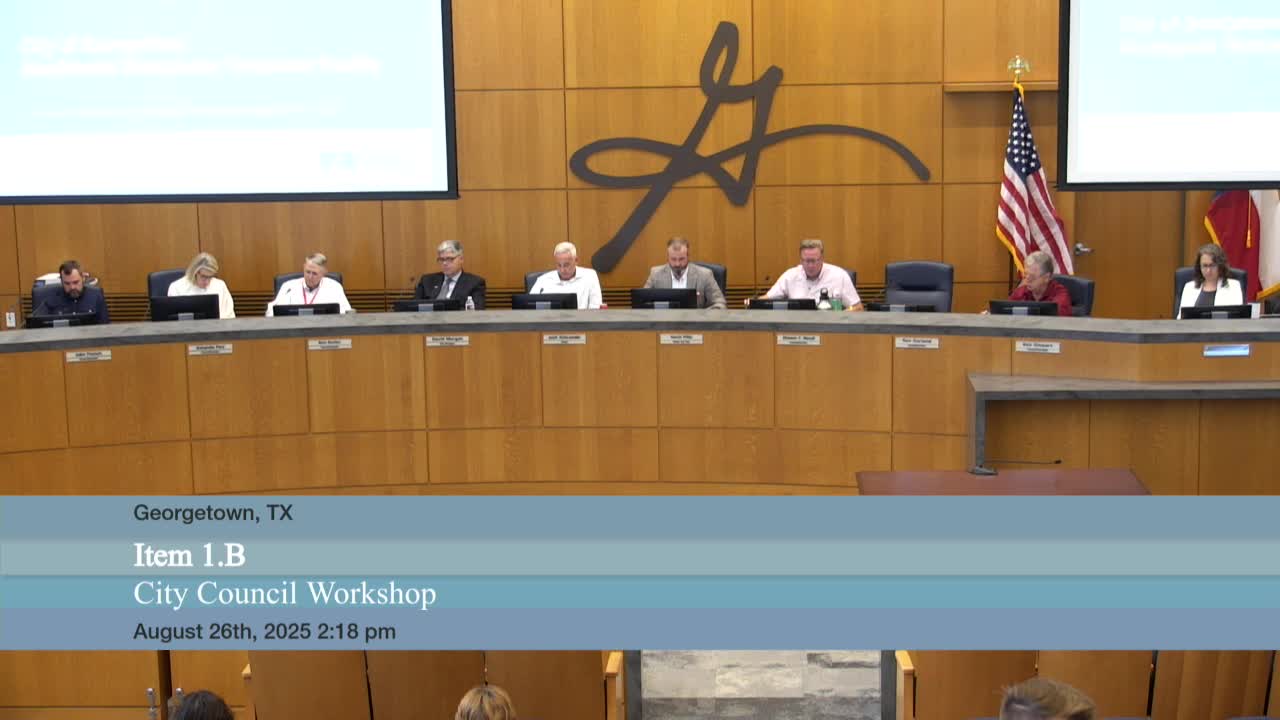
The project team described a pairwise, weighted criteria evaluation that emphasized reliability, maintenance and staffing, capital and O&M costs, public perception and future-proofing. The Water Board reviewed the analysis on Aug. 14 and issued a unanimous recommendation in favor of the MBR option. Multiple council members voiced concurrence during the workshop (Councilmember Ben, Councilmember Kevin and others said they agreed with moving forward on MBR), and staff said they would track the decision as direction from Council.
Staff outlined the schedule: preliminary design is expected to conclude in September; final design is roughly a one-year effort; staff said they hope to start construction after final design and to have the plant operating in the early 2030s. Staff also noted permitting constraints: if the city expands beyond 3 MGD in the future, TCEQ is likely to require stricter phosphorus limits (staff referenced recent permit decisions at nearby plants as the reason for that assumption).
No formal ordinance or motion was recorded in the workshop transcript; staff treated Council comments as guidance and said they will incorporate the MBR recommendation in next-phase design work.