Get Full Government Meeting Transcripts, Videos, & Alerts Forever!
Get email alerts on the Fire And Rescue Operations topic
No spam. Unsubscribe anytime.
Toledo Fire & Rescue reports staffing shortfalls, rising transports and long apparatus lead times
Summary
Fire & Rescue told council its uniform staffing is 591, recent separations total 21 with five more expected, EMS transports doubled from last year after taking on ALS transports, and apparatus delivery timelines extend to 2027 for some vehicles.
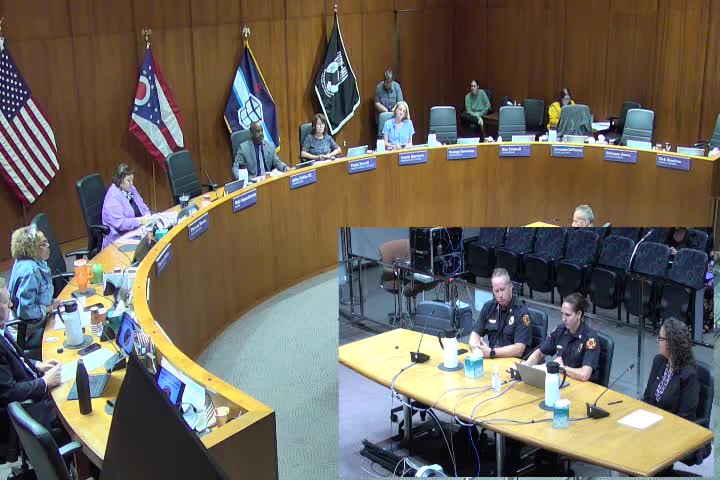
Chief of Fire and Rescue Lisonbee Armstrong presented quarterly operations data to the Public Safety Committee and described continuing station improvement projects and equipment needs.
Armstrong said uniform staffing stands at 591 and year-to-date separations total 21 with five more expected before year end. She said a recruit class of roughly 120 began the academy recently; about half of that class already hold EMT or paramedic certifications and will be released to stations after academy milestones.
Response-volume figures were provided: total incidents were 37,497, with about 31,495 EMS calls and just over 6,000 fire incidents; total responses (counting multiple rigs per call) were 65,670. The busiest medic unit, medic 3 downtown, logged about 2,375 responses; engine 23 in West Toledo had roughly 2,925 responses. Armstrong said ambulance transports (with ALS) were just over 14,000 this year, roughly double last year’s numbers when the city carried only BLS transports.
Armstrong reviewed capital and facilities work: two heavy rescues and one air unit were delivered this year, four engines are on order for first-quarter delivery next year, and three ambulances ordered will not arrive until 2027. She said delivery lead times are lengthening and an upcoming emissions standard change will increase vehicle costs. Armstrong said the department plans to restore a 24-hour EMS supervisor position by October to improve oversight and that station projects (roofs, windows, HVAC, kitchens, concrete) remain ongoing; she described building age as a complicating factor, with average station age near 50 years and some approaching 100.
Council members asked about contractor delays on station projects and Armstrong said weather and complex roof geometries contributed to work delays and leaks; contractors addressed damage and completed repairs where needed. Councilmembers also asked for an overdose-response count for 2025; Armstrong said the department would provide overdose totals by referral. Council members asked whether fire inspections and prevention staffing were fully filled; Armstrong said two fire-inspector vacancies remain and that the department would return that specific staffing and fee-history data by referral.
Armstrong highlighted public education and community outreach: the public education bureau reported participation at more than 116 events and distribution of more than 1,600 smoke alarms this year, with Red Cross assistance still available for installations.