Get Full Government Meeting Transcripts, Videos, & Alerts Forever!
Get email alerts on the Municipal Court Help Center topic
No spam. Unsubscribe anytime.
Toledo Municipal Court opens help center for self-represented litigants as filings rise
Summary
The Toledo Municipal Court reported creation of a budget-neutral help center to assist self-represented litigants and gave midyear filings and collections updates, including a plan to scan and destroy more than 500 boxes of paper case files.
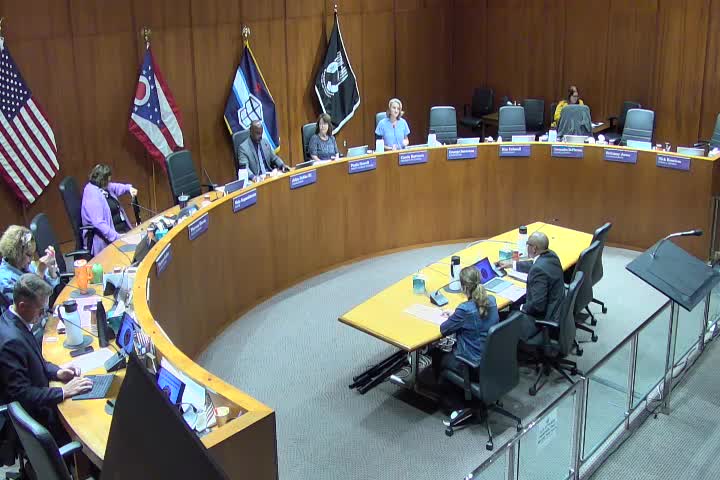
Deputy Court Administrator Brian Latta told the Toledo City Council Public Safety and Criminal Justice Reform Committee that Toledo Municipal Court has created a help center on the courthouse's fourth floor to assist self-represented litigants in civil matters.
The center, formed by repurposing existing staff and positions rather than adding new ones, will offer two lines of service: professional assistance (including mediators and attorneys from legal aid) and self-help resources. Latta said the center will focus on housing cases, debt collection, license reinstatements and record sealing/expungement. He said court navigators — part-time student employees — will serve as wayfinders for people who need direction inside the courthouse.
The court clerk’s office provided midyear case-volume figures. Alex Jugellet, executive chief deputy clerk, reported that seven months into the year small-claims filings were up 32 percent and the civil division overall had increased about 9 percent compared with the same point in 2024. Jugellet said the clerk’s office plans a midyear budget adjustment to shift savings into contractual services to contract with a document-scanning-and-destruction vendor to scan and destroy more than 500 boxes of paper case files to free physical storage space.
On collections and traffic filings, Jugellet said the court can still place warrant holds for active warrants but cannot put vehicle-registration blocks (a separate restriction raised by council members). He said credit-card collections for criminal traffic-related collections are down about 1 percent; overall criminal traffic filings are down, which also affects collections totals.
Chief prosecutor Rebecca Facey said the prosecutor’s office handled roughly 8,000 cases in the last quarter, averaging “just under a thousand cases per prosecutor” for the period. Facey said domestic violence misdemeanors remain a priority, with 602 such cases in the quarter and the office now staffed with three domestic-violence prosecutors. She also noted nearly 4,400 moving-violation matters and said the court’s Safety and Justice Diversion program (a Harvard study) has enrolled 192 participants so far toward a 1,200-person study goal.
Council members asked about the help-center referral pathways (Latta said people can be directed from probation, scheduling or the courtroom or walk in directly), the planned ordinance for contracting to scan/destroy records (Jugellet said he will submit it after the midyear adjustment is approved), and whether domestic-violence cases were being bound over to common pleas (Facey clarified the 602 figure was misdemeanor domestic-violence cases handled by her office).