Get Full Government Meeting Transcripts, Videos, & Alerts Forever!
Get email alerts on the Zoning topic
No spam. Unsubscribe anytime.
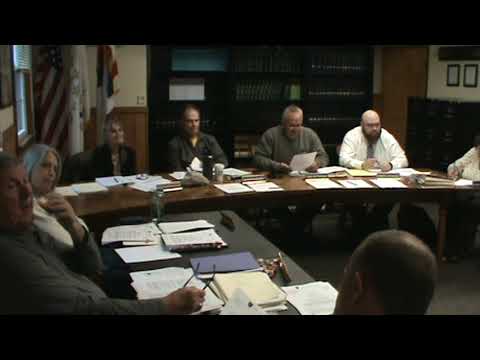
Exeter council adopts zoning changes to allow limited 'farm cafe' use, sets July review
Summary
The Exeter Town Council voted May 5 to adopt amendments to Appendix A of the town zoning code that add definitions and a new use for "farm cafe" tied to farm breweries, establish sourcing and operational limits, and require annual reporting; the council directed staff to return with further refinements in July.
The Exeter Town Council on May 5 adopted ordinance changes to Appendix A of the town zoning code that add a new "farm cafe" use tied to existing farm breweries, set performance limits on food service, and require annual sourcing reports to the town.
The vote implements a planning-board–backed package of revisions to zoning definitions and the zoning use table and follows months of drafting by the town planner. The changes create a specific line in the use table for “farm cafe within a farm brewery,” add related definitions and a new footnote making those facilities a minor land‑development review, and include operational requirements such as a cap on kitchen size, a local‑sourcing minimum and an annual reporting requirement. Council members also directed staff to return in July with additional objective criteria and refinements.
Planner Bill DeFasquale told the council the amendments are a response to recent state law changes that require municipalities to adopt specific, objective criteria for categories of special use permits and warned that, without such criteria, special uses could become by‑right. "If an ordinance does not expressly provide for specific and objective criteria for the issuance of that category of Special Use Permit, such category shall be deemed a permitted use," he said, summarizing the statute cited in his presentation (R.I. Gen. Laws § 45‑24‑42). DeFasquale said the town’s zoning code currently contains about 228 special‑use entries that must be reconciled with the new state standard.
Key provisions adopted: 1) Definitions and use code — The council inserted new definitions in Appendix A, Article 1 (definitions) for "farm cafe" and "farm cafe kitchen" and added a corresponding use line in Article 2, Section 2.4, with a new footnote (footnote 15) making the use subject to minor land‑development review by the planning board. 2) Kitchen and service limits — The ordinance limits the farm cafe kitchen to no more than 35 percent of the building’s gross floor area, capped at 600 square feet for the kitchen itself. During the hearing planners and the applicant agreed to exclude cold‑storage/walk‑in refrigeration from that kitchen area after the applicant explained cooling needs for produce. 3) Sourcing and reporting — The adopted language requires that a majority of served menu items be sourced locally: a minimum of 51 percent of menu items should be from local producers, where "local" is defined in the ordinance as within a roughly 125‑mile radius (the draft used that distance). Farm cafes must submit annual documentation — receipts and verification of locally sourced items, quantities, menu descriptions and producer partnerships — to the town council, planning board and town planner; the ordinance states failure to satisfy those requirements can cause the use classification to be revoked.
Supporters, including Matt Richardson of Tilted Barn (the applicant/operator who has operated a farm brewery in town), said the new rules create a pathway for farms and breweries to add subordinate food service while protecting residential neighborhoods. "Farming is not easy," Richardson told the council. "Part of farming is having to sell your product. This is a way to show that — it's supporting the farms and also giving them an outlet to sell what they are farming." Planning‑board member Ron Correa and public commenters including Earl Adams and attorney Ben Ratcliffe urged careful, detailed rules; Correa, who helped draft the planning board language, said the board aimed to balance farm support with protections for residential zones.
Concerns and next steps: Several residents and council members raised concerns about the broader package of zoning use changes the planner proposed to address state law. DeFasquale described the adopted ordinance as an "interim measure" intended to buy time for the town to develop precise, objective criteria for many special‑use categories. He emphasized the potential consequence of inaction: uses lacking objective criteria can convert to by‑right uses under state law. Council members and the planner discussed prioritizing a small list of uses for early refinement; council members suggested initial focus on uses that had generated the most public comment, including kennels, lumber/ building‑materials sales, two‑family dwellings, mixed‑use commercial and wood processing.
The council approved the planning‑board recommendations as amended at the hearing and requested a return in July to review and, where appropriate, adopt more detailed objective criteria for selected uses. At the meeting the council voted in favor of the planning‑board package, and the motion as announced by the president passed with affirmative votes by all five members present.
The ordinance amendments also include a new footnote classifying farm cafes as minor land‑development projects subject to planning‑board review and enumerate performance standards (parking, circulation and operational limits) intended to limit conversion of farms or farm breweries into primary commercial uses in residential districts. The council and planner left open the possibility of further adjustments after the July review and directed the planner to begin drafting objective criteria for priority categories.
Votes at a glance
• Motion: Adopt planning‑board recommendations to amend Appendix A (definitions and zoning use table) to add farm cafe/farm‑brewery language, adopt related performance standards, and require annual reporting; direct staff to return with further objective criteria in July. Outcome: approved (five affirmative votes).