Get Full Government Meeting Transcripts, Videos, & Alerts Forever!
Get email alerts on the County Budget topic
No spam. Unsubscribe anytime.
Scotts Bluff County budget workshop focuses on emergency operations center, 911 staffing and tax request
Summary
County commissioners and staff discussed narrowing a proposed $18.9 million tax request toward a likely $14.9 million cap, sought grant funding for a proposed emergency operations center and reviewed 911 dispatch staffing, training and interlocal funding amid equipment and tower costs.
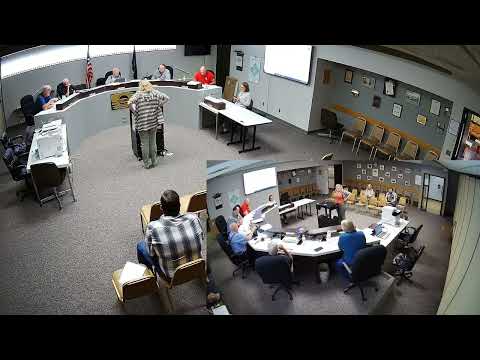
Scotts Bluff County commissioners and staff spent a budget workshop session reviewing emergency management and communications requests, including plans for an emergency operations center (EOC), a pending FEMA/Homeland Security grant application and a proposed increase in the 911 operations budget tied to staffing and equipment needs.
County budget administrator Lisa (county budget staff) opened the discussion by saying the county faces a large “tax ask” and that commissioners had earlier sought a 2.5% target; she told the group the aggregate requests stood at about $18.9 million and said “we are gonna need to carve some money down.”
The discussion centered on three linked decisions: how far to reduce the county’s overall tax request to stay within a statutory or administrative cap; whether to fund a proposed EOC/communications buildout if federal grant money does not arrive; and how to respond to a shortfall and staffing pressures at the county communications/911 center.
Rob (Emergency Management director) described his department’s request as largely unchanged from the prior presentation but said his board asked to add a $10,000 training line and a $40,000 placeholder for initial EOC work. He said he applied for a $150,000 investment justification under the 2025 Homeland Security Grant and that the FEMA notice of funding opportunity had been amended multiple times since its July 28 release. “There is a possibility that I’d be able to secure full funding for this project outside the county,” Rob said, while acknowledging the grant outcome remained uncertain.
Rob and staff described one possible EOC location in county-owned space (the old jail/ground-floor area) and outlined a plan that would initially add interior walls and restrooms so the space could be used for emergency operations without asking permission from another agency. Rob said the county’s share of a $50,000 local match for the project would be roughly 21% — about $10,000 — if partner jurisdictions split the remainder. Commissioners said they would prefer to secure outside grant funding but that the county could minimally cover its share if necessary.
Linda (communications/911 director) presented the communications budget and described severe staffing and training pressures. She said the center had moved from 10-hour to 12-hour shifts to reduce turnover, reported 17 current dispatch personnel on the roster and said full staffing would be closer to 19 positions. Linda outlined a multi-step training regimen for new dispatchers — roughly five months total, including classroom, emergency medical dispatch and on-the-job phases — and requested a $30,000 miscellaneous labor line to contract “traveling dispatchers” (outside, already-certified dispatchers) to cover gaps while trainees complete floor work.
“This department used to have a union contract with 10-hour shifts,” Linda said. “We put 12-hour shifts in. Our people are working long hours, hard hours. They’re exhausted.” She told commissioners two trainees could be released in the coming months but that three others would not be released until November under the current schedule.
Commissioners and staff also discussed several revenue and cost drivers affecting the 911 budget: a drop or fluctuation in federal EMPG (Emergency Management Performance Grant) funding in prior years, interlocal billing to cities and towns that share the communications center, a new tower rent charge moved from a hospital location to a commercial tower (raising annual tower rent substantially), and the upcoming replacement cycle for communications consoles.
Lisa and other staff walked commissioners through the county tax-request math: an initial total “tax ask” reported near $18.9 million, a working target the group discussed of about $14.9 million, and options to use one-time funds (inheritance tax carryover, reserve balances or interfund transfers) to reduce the immediate levy impact. Lisa cautioned that some funds (grants, inheritance receipts and other non-tax revenue) are variable and should not be treated as reliable recurring replacements for tax revenue.
Commissioners signaled willingness to keep the county’s tax ask close to the lower target if possible. One commissioner said he was “okay with the $2,000 increase” in the communications tax requirement if it allowed the county to move forward on the EOC and to stabilize 911 staffing and operations; another noted that many of the largest budgets are personnel-heavy and that the hardest cuts would fall on departments with 80–90% of costs tied to salaries.
No final budget votes were taken at the workshop. Staff were directed to refine line items, pursue grant opportunities and invite relevant department heads (particularly courthouse staff and road/roads officials) to the next meeting for additional review. The board approved the meeting agenda at the start of the session; the roll call showed commissioners Blue, Meyer, Harris and Knepper voting yes and the motion carried.
Why this matters: the outcome will affect the county’s property tax levy and the operations of public safety services. Commissioners balanced a desire to minimize additional tax burden with the immediate need to address a stressed 911 communications center and to secure usable emergency operations facilities that could host multi-agency incident response.
Looking ahead: Lisa said she would consult with the state/NACo adviser and bring a refined cap calculation and suggested allocations back to the board at its next workshop; Rob will continue to pursue FEMA/Homeland Security funding and seek local partner commitments if grants do not materialize; Linda will return with a revised request that separates temporary contracted dispatch coverage and recurring wage costs.