Get Full Government Meeting Transcripts, Videos, & Alerts Forever!
Get email alerts on the Planning Training topic
No spam. Unsubscribe anytime.
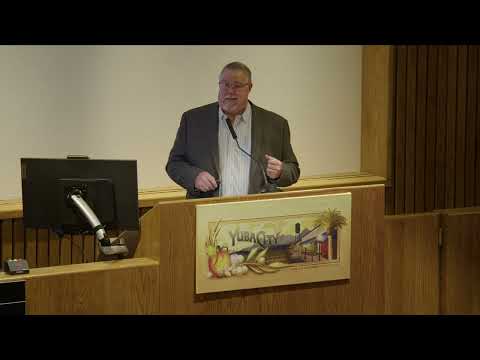
Yuba City planning commissioners receive PlaceWorks training on general plan, zoning and CEQA
Summary
PlaceWorks consultant Mark Tigg led a workshop for the Yuba City Planning Commission covering the role of commissioners, the structure of general plans and basics of CEQA, emphasizing practical guidance for new, district-based commissioners.
The Yuba City Planning Commission held a training workshop during its regular meeting, with Mark Tigg of PlaceWorks presenting an overview of planning basics, the structure of the general plan, zoning tools and the California Environmental Quality Act (CEQA).
Tigg told commissioners the general plan sits at the top of the local regulatory “pyramid” and advised commissioners to read the plan closely. He described zoning as the mechanism that implements general-plan policies and said commissioners should focus on how proposed projects fit the community’s stated goals. “CEQA is Latin for delays project,” Tigg said during the presentation, using a wry characterization to underscore the statute’s practical effects on project timelines.
The workshop emphasized distinctions commissioners will face in practice: ministerial versus discretionary approvals, how specific plans can bridge policy and zoning, and the role of findings and mitigation measures in environmental review. Tigg explained that ministerial actions generally do not trigger CEQA review while discretionary decisions typically do, and he outlined how exemptions, negative declarations and environmental impact reports differ in legal effect. He also discussed mitigation measures, noting they must be measurable, linked to a specific impact and enforceable by the local agency.
Presenters stressed the relationship between the planning commission, staff and the city council. Tigg and staff advised commissioners to consult staff before hearings so questions can be answered in public, to record clear findings when approving or denying projects, and to avoid changing standards in the middle of a project. The presentation also covered the housing element and state roles, describing the housing element as a state‑mandated part of the general plan that requires periodic updates.
The presentation materials will be circulated to commissioners and posted with links, Tigg said, and staff reiterated that commissioners should contact staff with questions. Development Services Director Doug Libby thanked Tigg and noted a follow-up legal-focused training will be held at a special meeting on Aug. 27 with City Attorney John Fox.
The workshop was largely instructional and did not include votes on policy changes. Commissioners asked no substantive follow-up questions during the session. The meeting proceeded to other agenda items, including formal votes on leadership and scheduling.