Get Full Government Meeting Transcripts, Videos, & Alerts Forever!
Get email alerts on the City Hall Renovation topic
No spam. Unsubscribe anytime.
Pawtucket committee votes to solicit second cost estimates on City Hall renovation, 7-0
Summary
The Ad Hoc City Council Building Review Committee voted unanimously Aug. 13 to request cost estimates from six vendors under the Rhode Island Master Price Agreement to compare the $92.3 million renovation estimate for Pawtucket City Hall with alternatives including demolition and sale.
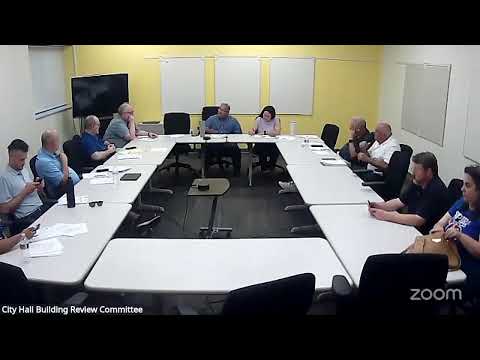
Pawtucket’s Ad Hoc City Council Building Review Committee voted 7-0 on Aug. 13 to solicit second cost estimates from six vendors on options for Pawtucket City Hall, including full renovation, removing the tower, or demolition, and to return to the committee with those bids for review.
The vote comes after two members of the public urged the committee to prioritize preserving the downtown landmark. Michael Pompeli told the committee that the city has published two headline figures—"$92,300,000 for a complete renovation of City Hall, and $10,100,000 to demolish the building"—and asked the committee to clarify what each figure does and does not include. "If we, if we demolish or sell City Hall, the alternative would have to be a new building for this, which is clearly not a state of the art facility, and it's removed from our city's downtown," Pompeli said. Amanda Fungo echoed that appeal, saying: "we should be looking for ways to ... justify keeping city hall rather than looking for ways to justify tearing it down," and urged committee members to consider the building's historic role in the downtown corridor.
Committee discussion focused on the process for getting a second, independent estimate. Chris Crowley summarized the committee’s intent: "we voted on to to get a second cost estimate, for the necessary repairs to City Hall. So we went on the master price agreement..." Purchasing director Peter (Pierre) Wingate explained the procurement mechanics under the Rhode Island Master Price Agreement (MPA). He said state MPA provisions and typical thresholds allow the city to contact listed firms for a limited “mini-bid” or informal RFQ and that, for some MPA categories, firms can be contacted directly when the estimated work is below a monetary threshold. "If we're estimating under 25,000... we have allowed you to simply go directly into any 1 of the firms listed," Wingate said, adding that the committee could ask as many of the listed firms as it wished and that the committee should write the RFQ so submissions would be apples-to-apples for comparison.
Wingate also flagged a statutory procurement constraint the committee discussed repeatedly: for architecture and design services procured under the MPA, state law limits the information the city may request in the initial step to qualifications rather than detailed price proposals. The committee planned to request qualifications and approaches in the RFQ, then negotiate price once a preferred firm is selected.
Committee members asked about timeline, vendor selection criteria and local preference. Wingate and staff said the city typically leaves procurement windows open at least seven days and up to 21 days and suggested an initial two-week question period followed by two more weeks for proposals; the committee agreed to aim for a return meeting in October to review submissions. Several members asked staff to prioritize firms with historic-preservation experience and to prefer Rhode Island-based firms when feasible.
The committee also discussed additional due-diligence steps the committee could request later in the process, including an appraisal of the City Hall property before any demolition decision and outreach to the Masonry Institute and preservation consultants for grant opportunities and technical guidance. Staff said the appraisal and deeper preservation studies would be separate expenses and recommended holding off on paying for an appraisal unless the committee was seriously leaning toward demolition or sale.
Action and vote: A motion to send RFQs to the six named vendors on the state MPA passed on a roll call vote of 7-0. Members recorded as voting "yes" in the roll call were Councilor Ruggio; Councilor Rubio; Elizabeth Marrero; Jason Peronado; Chris Crowley; Kevin Miniati; and Kevin Barry. The committee chair announced that the RFQ would be drafted by staff and the purchasing director, with responses timed to align with an October meeting to review returned proposals.
No formal decision was made at the Aug. 13 meeting to renovate, demolish, or sell City Hall. The committee framed the RFQ as a step of due diligence: a second professional estimate to compare with the earlier $92.3 million renovation figure and the $10.1 million demolition estimate. Committee members and public speakers repeatedly emphasized the historic and civic value of City Hall and said financial constraints and grant prospects would weigh on the final recommendation to the City Council.
The committee scheduled a meeting to review vendor submissions on Oct. 9, 2025, and discussed a placeholder follow-up date in early December to track longer procurement timelines. Staff said they will present the RFQ, vendor responses, and any appraisal estimates to the committee for a recommendation to the full council; the council will act on any contract awards or next steps according to established procurement and council-approval procedures.