Get Full Government Meeting Transcripts, Videos, & Alerts Forever!
Get email alerts on the Land Use topic
No spam. Unsubscribe anytime.
Council approves ordinance allowing livestock on vacant AR‑3 and AR‑5 lots with administrative permits
Summary
After a public hearing and Planning Commission recommendation, Paradise Town Council voted to amend zoning to allow livestock and certain ag buildings on vacant agricultural‑residential parcels (AR‑3 and AR‑5) with administrative permits; neighbors and proponents debated ministerial vs. discretionary review and compliance safeguards.
The Paradise Town Council voted to introduce and adopt an amendment to Title 17 to allow livestock on vacant parcels zoned AR‑3 and AR‑5 (3‑acre and 5‑acre minimums) through an administrative permit. The ordinance also allows ag buildings on vacant residential parcels through use permits, relaxes the definition of private stables to cover more livestock types, and requires an animal management plan as a condition of administrative permits.
Staff said the ordinance preserves the existing right to keep livestock on a parcel with a residence by right and expands options for vacant properties, including a provision that treats an adjacent vacant AR parcel as a unified development if the owner lives on the neighboring lot, thereby avoiding the administrative permit requirement. The Planning Commission recommended approval after discussing predator issues and other public‑safety concerns.
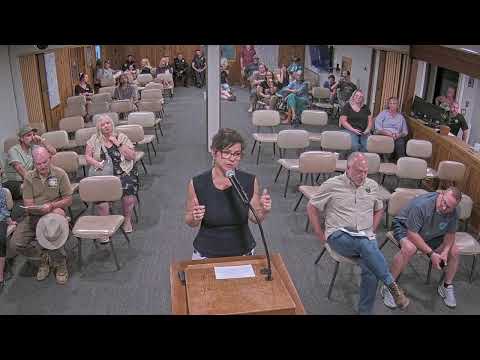
In public comment the council heard supporters who said limited livestock helps rural lifestyles and food security, while opposition raised concerns about grazing plans, liabilities and the need for clear ministerial standards. At the hearing staff said the administrative permit is ministerial (using fixed standards) and not discretionary, and staff explained the town can revoke permits via public hearing in cases of habitual noncompliance.
Council voted to approve the ordinance introduction and subsequent adoption. Staff noted fees for the administrative permit and use permits (for ag buildings) and that standard building and survey requirements still apply for any structures.
Councilmembers said they wanted the ordinance to remain simple and implementable and emphasized remedies for habitual noncompliance, including referral to the planning commission for permit revocation.
The ordinance was approved by roll call; council directed staff to refine implementation materials and to post guidance for applicants on required plans and fees.