Get Full Government Meeting Transcripts, Videos, & Alerts Forever!
Get email alerts on the Consultant Selection topic
No spam. Unsubscribe anytime.
Fort Myers council hears competing Midtown design proposals; staff to place finalist on next council agenda
Summary
Two consultant teams — Dover Collin Partners and Hoyt Architects — presented form-based code and architectural standards proposals for Midtown. Council members praised both teams and several voiced preferences; staff will place the item on the next council meeting agenda for a final selection vote.
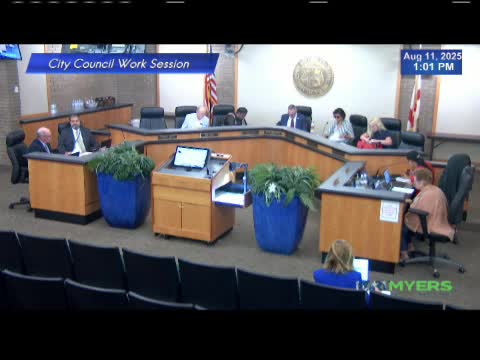
Two architecture and planning teams presented competing proposals for Midtown design standards and a form-based code during a Fort Myers City Council workshop, and councilors directed staff to return the item on the next council meeting agenda for a final decision.
Dover Collin Partners, represented by Josh Frank, described form-based code work and community charrettes focused on predictability for developers and neighborhoods. Frank said the approach can be “dialed up and dialed down” to balance strict standards and flexible guidelines that help projects “pencil out.” Hoyt Architects (presenting with Gary Hoyt, Bob Gibbs and other subconsultants) emphasized visualization tools and technical capacity to produce interactive models, showing examples from Sarasota and other Florida cities.
Council members asked detailed questions about how prescriptive a Midtown code should be, how to balance incentives with standards and where stricter requirements should be targeted (for example, on key corridors or public spaces). Councilmember LeBlanc asked whether strict stylistic prescriptions — as used in Coral Gables — would be appropriate in Midtown; Dover’s presentation framed Coral Gables as an example of a highly standardized code while noting Midtown would likely need a less prescriptive approach. Hoyt’s team emphasized visualization and pre-permitted building types as tools to accelerate approvals.
Presenters and council members discussed public engagement methods. Dover described charrettes, visualizations and developer “boot camps” to translate design standards into projects. Hoyt emphasized interactive “digital twin” and model-driven public engagement used successfully in other downtown projects. Both teams cited extensive prior form‑based code and design‑standards experience in Florida.
After questions and council comments, staff said it would finalize the agenda for the next regular council meeting and bring the consultant selection back for action next Monday. Several council members said they preferred Dover Collin Partners; others said Hoyt Architects’ experience was strong. The meeting closed with direction to staff to list the top two firms and present the recommendation for a council decision.
The council did not vote on a contract at the workshop; staff will place a formal selection item on the upcoming city council meeting agenda for a vote.