Get AI Briefings, Transcripts & Alerts on Local & National Government Meetings — Forever.
Committee backs minor Portland code change to let permitting staff install temporary parking-reservation signs
Loading...
Summary
The Transportation and Infrastructure Committee voted unanimously to refer an ordinance to the full City Council that updates the Portland City Code to authorize Temporary Street Use Permitting (TSUP) staff to install temporary parking-reservation devices in metered areas, matching current operations and freeing parking enforcement officers for enforcement duties.
The Transportation and Infrastructure Committee voted unanimously to refer an ordinance to the full City Council that updates the Portland City Code to authorize Temporary Street Use Permitting (TSUP) staff to install temporary parking-reservation devices in metered areas, matching current operations and freeing parking enforcement officers for enforcement duties.
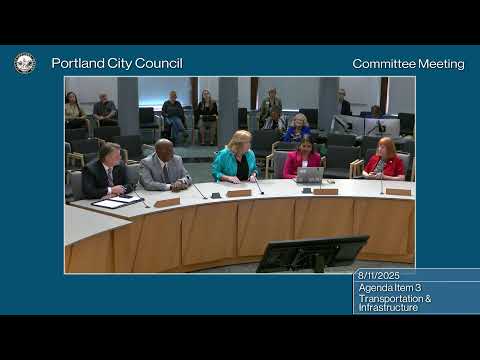
The committee took the action Monday after PBOT and city public-works officials described the change as a technical, operational alignment. “Today we're bringing forward an update of the Portland City code that will align the code with how our operations already function in the metered districts and give us more flexibility for the future,” said Priya Danapal, deputy administrator for public works. Danapal said the change will formally authorize TSUP staff as installers of temporary no-parking signs in meter districts so parking enforcement officers can focus on citations and other enforcement responsibilities.
Taylor Hushka, who supervises temporary street use permitting within PBOT, told the committee the permitting team issues more than 20,000 permits a year for uses of the right-of-way, including short-term parking reservations for moving trucks and longer-duration construction and utility work. Hushka said his team recently hired two staff dedicated to installing reservation devices in metered districts and that the code change is “a small change” — described in the presentation as a six-word amendment — to reflect that staff role.
Hushka said most permits are short term (a day or two for residential moves), though the code allows up to six months in exceptional cases with parking-control approval. He added that embedding installers within the permitting team improves familiarity with permit details and customer timelines.
Councilors praised the change as modest but useful. “It's a very subtle, small code change that I think has the opportunity to be kind of a resource-leveraging moment,” one committee member said. Councilor Smith moved to send the ordinance to the full council with a recommendation to pass; Councilor Murillo seconded. The clerk recorded five ayes and the ordinance was referred to the full council with a do-pass recommendation.
The ordinance as presented applies to metered parking areas; staff also proposed changing one word in the non-metered-area language so the permittee “may” rather than “will” be responsible for placing devices in non-metered locations. Hushka said that wording would allow the city to offer the same installation service in non-metered areas through a future pilot but noted there were no immediate plans to do so.
The committee did not take further substantive policy action on parking beyond the referral. The ordinance was identified in committee as document number 2025-5301 (as stated at the hearing).