Get Full Government Meeting Transcripts, Videos, & Alerts Forever!
Get email alerts on the Animal Welfare topic
No spam. Unsubscribe anytime.
Residents press St. Augustine commission for stricter oversight of horse-drawn carriage operations; operators urge preservation of tradition
Summary
Residents urged the City Commission to tighten oversight of horse-drawn carriage operators, citing photos and videos that speakers said show tethering, muddy/unsanitary holding areas and rest-period violations; carriage drivers defended the trade and said they work with local veterinarians.
Several residents urged the City Commission on July 28 to strengthen monitoring and enforcement of the city's horse-drawn carriage franchises, citing photos and videos the speakers said show tethering, unsanitary housing conditions, missed rest periods and unlicensed operators. Representatives of the carriage industry and a local tour operator said drivers care for the animals and support working with the city to improve practices.
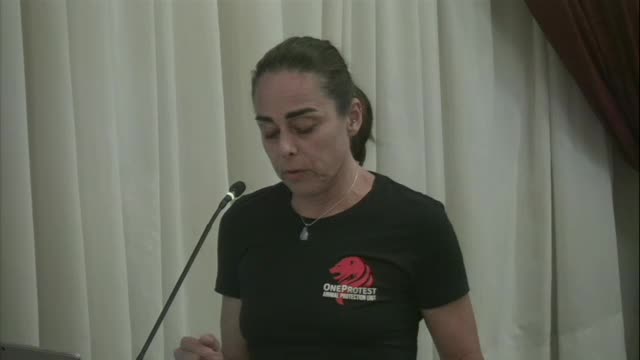
"These animals need us," Heather Wilson told commissioners, saying she had photos and videos showing horses tethered with leads so short they "could barely move their heads" for more than an hour and exhibiting signs of distress. She said enclosures at the horses' holding area were muddy, with feces and standing water, and that horses were forced to graze through chain-link fences because of lack of forage. Wilson requested production of records she said the city is required to keep under the franchise agreement.
Residents raised several compliance allegations in public comment. Patricia Ramos said she had identified at least one carriage company operating in the city without a license or franchise agreement and said she expected those operators to return for the busy "Nights of Lights" season, creating public-safety and liability concerns. Catherine Zoda submitted photos and cited specific city code sections she said were being violated, including references to City Code Chapter 27: Sections she referenced were identified in public comment as City Code 27.145 (rest periods) and 27.140 (conditions at stabling locations). Zoda flagged multiple examples that she said showed a mandatory 15-minute rest period being reduced to eight minutes for a carriage on a sample day.
A number of speakers asked the commission to place the issue on a future agenda. "We really need to have the horse and carriages placed on the agenda, especially before the inevitable happens," Patricia Ramos said, citing public-safety and animal-welfare risks during high-traffic events.
Representing the industry, Aaron Jockers (who identified himself as a carriage driver/operator) described the carriage trade's long local history and said drivers "love" the animals, that horses receive alfalfa and turnout as required by ordinance and that local veterinarians have helped set guidelines. Amanda Gerber, who operates a golf-cart tour company, said she works alongside carriage drivers and defended them as part of St. Augustine's tourism mix.
Other factual details raised in public comment: - Several speakers said the franchise agreement requires operators to submit lists of horses every six months; at least one speaker (Heather Wilson) said a public-records request sent in early July had not been fulfilled and that a check for $46.10 had been delivered for records production but she had not received the required list. - Catherine Zoda presented photos she said show standing water at stabling properties and multiple examples of carriage vehicles operating without visible company identification as required by the franchise agreement. - Patricia Ramos and others alleged unmarked carriages and violations of mandatory rest periods; Zoda pointed to a specific example in which a carriage returned after an eight-minute break, not the 15 minutes she said City Code requires.
Commissioners responded in discussion and several asked staff to increase oversight. One commissioner said they had already asked staff to "step those up and get organized," and the city manager noted staff were monitoring and would continue enforcement contacts with operators; the city manager also said carriage routing will change during future seawall work on the Bayfront, which will require relocation of operations for the construction period.
No formal action was taken at the July 28 meeting; the concerns were recorded in public comment and commissioners asked staff to investigate and report back and to schedule a discussion item on the subject prior to the upcoming busy season.
Speakers (public comment) relevant to this topic - Heather Wilson, visitor/resident (presented photos and video evidence of tethering and stall conditions). - Aaron (Aaron) Jockers, carriage driver/operator (defended industry practices; described veterinary input and feeding/turnout practices). - Patricia Ramos, resident (reported unlicensed operators and safety concerns during busy events; requested the issue be placed on a future agenda). - Catherine Zoda, resident (presented photos; cited City Code sections and rest-period examples). - Carla Wilson, resident (urged removal of carriages and expressed concern about accidents and animal welfare). - Bridal Wilson (speaker name as recorded), resident (cited a news example of a horse collapse elsewhere and urged preemptive action). - Amanda Gerber, tour-operator (golf cart tours; supportive of carriage drivers and their care of horses).
Authorities cited by public commenters - City Code Chapter 27 (as referenced by speakers; specific subsections cited in public comment included references given as "27.145" and "27.140" in the transcript). These code citations were raised by speakers and appear as the basis for rest-period and stabling-condition claims.
Clarifying details and evidence provided by speakers - Rest-period example: a carriage was documented returning after an eight-minute break; speakers said the municipal code requires a 15-minute rest period. - Public-records request: a records requester said she mailed a $46.10 check in early July to obtain required horse lists that franchisees must submit every six months and had not received the requested lists by the July 28 meeting. - Photographic/video evidence: multiple speakers offered photos or video to the clerk to document tethering, mud, standing water, and lack of company identification on some carriages.
Discussion vs. decision - Discussion only: Public comment focused on alleged code violations, animal welfare, unlicensed operators, and requests for enforcement and scheduled review. - Direction: Multiple commissioners asked staff to increase monitoring/enforcement and to prepare an agenda item for the commission to consider regulatory changes or enforcement updates prior to the busy season; staff indicated they would follow up. - Decision: No formal vote or regulatory change was adopted at this meeting related to carriage operations.
Why this matters Horse-drawn carriage operations occur in high-traffic, tourist areas; allegations of animal-welfare violations and franchise noncompliance raise public-safety, liability and reputational issues for the city. Operators and residents urged enforcement or policy change before seasonal peaks in tourism.
Next steps noted in the meeting Commissioners requested staff follow-up, including verification of franchise compliance, review of public-records responses, and scheduling a commission agenda item to examine carriage regulation and enforcement before the Nights of Lights season.