Get Full Government Meeting Transcripts, Videos, & Alerts Forever!
Get email alerts on the Legal Settlement Decorum topic
No spam. Unsubscribe anytime.
School board authorizes chair to sign pre-suit insurance settlement; attorney clarifies recording policy
Summary
The Santa Rosa County School Board authorized the chair to sign documents to resolve a pending pre-suit insurance claim and the board attorney clarified that the board's decorum policy does not bar media or public recording of meetings so long as it is not disruptive.
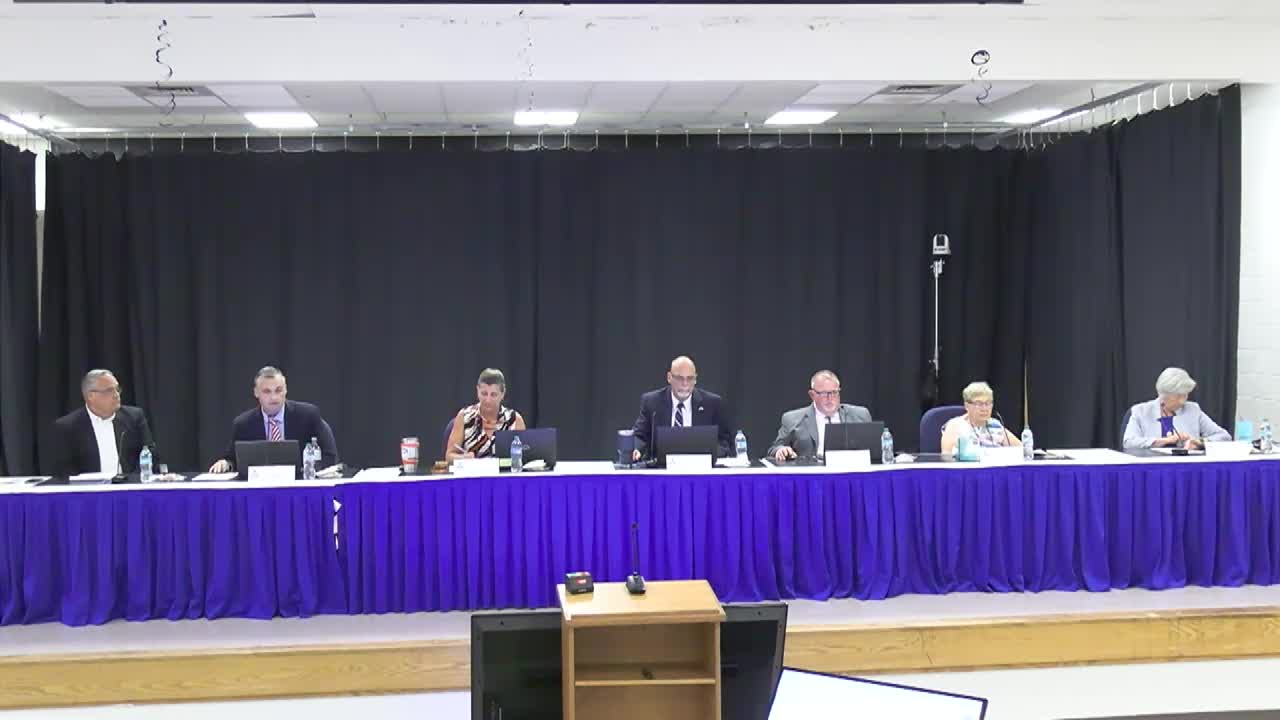
The Santa Rosa County School Board on July 29 authorized the board chair to sign documents to resolve a pending insurance claim before suit, the board attorney said.
"The motion would be to allow the board chair to sign the documentation that's been negotiated," the board attorney, Mr. Harmon, said as he summarized the recommended action. The board approved the recommendation by a unanimous voice vote with no opposing votes recorded.
Separately, Harmon clarified language in Board Policy 2.22 — a recently adopted decorum policy — to make clear the board did not intend to prohibit members of the public or news media from recording meetings.
Harmon said the policy's restrictions on audio or visual displays were intended to prevent disruptive playback of material (for example, a speaker playing audio through the meeting). "If somebody wants — news media wants to come here and record or a member of the public wants to sit in the front row and record on their phone, they're absolutely welcome to as long as it doesn't get in the way of the camera feeds or otherwise disrupt," Harmon said.
Why it matters: the settlement authorization allows the district to conclude a pre-suit matter using negotiated documentation and the clarification on recording preserves public access to meetings subject to non-disruption rules in district policy.
Details and next steps: the agenda listed the insurance claim numbers and asked the board to authorize the chair to sign necessary documentation; the board approved that authorization. Harmon said the clarification about recording was informational and intended to avoid misunderstandings about the policy’s scope; no formal change to the policy was proposed at the meeting.