Get Full Government Meeting Transcripts, Videos, & Alerts Forever!
Get email alerts on the Short Term Rentals topic
No spam. Unsubscribe anytime.
Bellbrook council opens review of short‑term rental rules; staff asked for recommendations
Summary
Bellbrook City Council heard public comment and council discussion on short‑term rentals on Aug. 11, directing staff to return with draft ordinance language covering minimum stays, registration, fees and enforcement options.
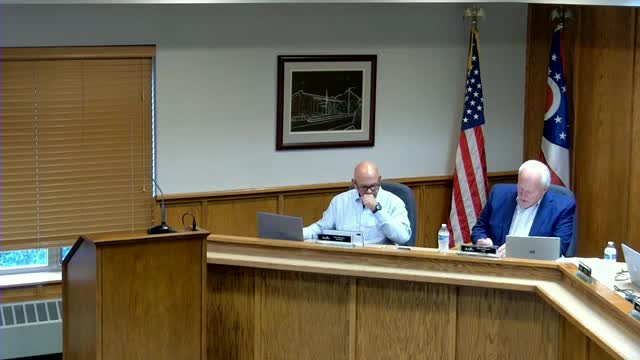
Bellbrook City Council on Aug. 11 directed staff to return within about 30 days with draft recommendations for changes to the city’s short‑term rental rules, after residents and council members discussed options including minimum stay limits, registration and a hospitality fee.
Council members heard three public commenters who said they support allowing backyard chickens and also raised questions about short‑term rentals; staff and council then reviewed a handout summarizing neighboring cities’ practices and possible approaches for Bellbrook. City Manager Rob said the current local code prohibits rentals of less than 26 days and that neighboring cities vary in their approaches.
The discussion focused on two issues: whether the city should continue prohibiting rentals shorter than 26 days or permit shorter stays in limited areas, and whether to require registration and collect a lodging fee. Council members cited examples from nearby municipalities: Oakwood’s ban, Centerville’s permitting and inspection program and Yellow Springs’ spacing rule. Several members suggested allowing shorter minimum stays only in specific areas such as the downtown/“entertainment” district, or in locations that already accommodate higher short‑term occupancy (apartments, Mill Pond), rather than throughout residential neighborhoods.
Council members and several residents suggested enforcement and collection measures. Staff noted platforms such as Airbnb and VRBO now provide property lists that municipalities can use to identify listings. Suggested enforcement tools included a registration requirement, an annual or multiyear permit, on‑site safety inspections, and a revocation provision tied to repeated police calls. One resident who operates multiple long‑term rentals recommended a $500 permit valid for five years and revoking permits after three police calls; council discussed but did not adopt specific fees.
Council agreed on several planning principles for staff to analyze and return with options: consider a minimum stay in the 7–14 day range as a possible compromise, evaluate a targeted geographic approach (downtown/entertainment district), include a registration and hospitality‑fee option (examples discussed included a 3% lodging excise), require appropriate safety inspections for owner‑occupied bed‑and‑breakfasts, and explore enforcement methods including using listings on commercial platforms to identify noncompliant properties. Staff was asked to research models (Centerville was repeatedly mentioned as a model) and come back with draft ordinance language and fiscal estimates.
Rob said staff will prepare recommendations and return in roughly 30 days for council direction and possible reintroduction of ordinance language. The council did not take a formal vote on any regulatory change at the meeting.