Get Full Government Meeting Transcripts, Videos, & Alerts Forever!
Get email alerts on the Coastal Development topic
No spam. Unsubscribe anytime.
Planning commission fails to approve home in Bermuda Beach dune conservation area
Summary
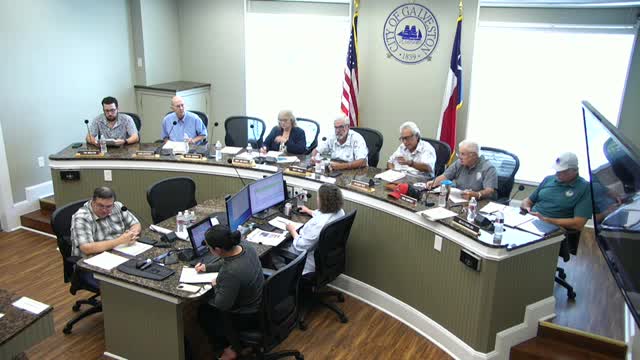
The Galveston Planning Commission declined to approve an exemption for construction of a single-family home at 12716 Bermuda Beach Drive after debate over dune conservation rules, prior unpermitted work and access concerns; the motion to approve with staff recommendations did not receive four affirmative votes.
The Galveston Planning Commission considered an exemption and approval request for construction of a single-family home at 12716 Bermuda Beach Drive, a lot in the Bermuda Beach subdivision located in the city's Dune Conservation Area, but a motion to approve the application failed for lack of four affirmative votes.
Staff planner Kyle reported the site sits in a highly eroding area and described the applicant’s proposal to place the house on pilings with an elevated deck instead of a slab, and to minimize ground disturbance below the structure. “According to the Bureau of Economic Geology, this area is eroded at a rate of 6 feet per year,” Kyle said during the staff presentation, and he described photos, a property survey and design drawings that show the proposal’s distance from the line of vegetation.
The request prompted questions from commissioners about compliance with a General Land Office (GLO) letter that said decks beneath habitable structures must not be impervious or otherwise alter the ground. Kyle said the proposed deck would be built on pilings and use spaced slats so drainage remains pervious. He also told commissioners staff had noticed pilings on the site before the applicant obtained the beachfront construction certificate; the homeowner stopped work after being informed. “We noticed the pilings were out there, so we contacted the homeowner. He wasn't aware of the beachfront construction certificates, so he stopped work,” Kyle said, describing staff outreach.
Commissioners and staff also discussed enforcement and penalties. Kyle explained the GLO’s administrative penalties can range from $50 to $2,000 per day for unauthorized work and that the city also retains ordinance-based penalties (he cited the city’s authority to fine up to $500 per day).
Public-safety and access concerns drew extended discussion. Commissioners asked whether Bermuda Beach Drive — a legacy, repeatedly storm-damaged right of way — can support emergency and service vehicles if a new house is approved. Staff and commissioners described past city spending on temporary repairs and said a renourishment project is planned for the area, with sand deliveries beginning in September and construction starting in October; staff clarified the renourishment will build the beach profile seaward, not raise the existing elevation above the road. On the risk of future storm damage, Kyle said the city has previously used emergency authorizations to allow owners to repair or replace material under homes after storms: “We could do an emergency authorization to allow him to come back in and build under his home that got damaged,” he said.
During debate, a commissioner who identified himself as John said he could not support approval: “I can't, in good conscience, I can't vote in favor of it,” he said, recounting experience living in Bermuda Beach and expressing concern about encouraging new development in a vulnerable area. Other commissioners noted the nuance that planned engineered beach projects increase the city’s ability to seek FEMA reimbursement after storm losses but do not eliminate near-term risk.
The commission took a motion to approve the application with staff recommendations; the motion was seconded but did not receive the required four affirmative votes. The tally reported at the meeting was two votes in favor, two opposed and two abstentions. The chair clarified that the result is technically “no action due to a lack of four affirmative votes,” which effectively leaves the application unapproved but allows the applicant to reapply. Staff also noted the appraisal district shows the property was acquired in December and that the applicant may contact staff about next steps.
The commission record indicates the GLO and city ordinances govern enforcement and penalties related to dune and beachfront work, and staff said their first approach is to work cooperatively to bring owners into compliance. The applicant stopped work on the exposed pilings after staff contact and remains eligible to revise the plans and reapply.
Ending: The commission’s decision does not permanently bar the owner from returning with revised plans; staff said an approved denial motion would have required a six‑month wait to reapply, but because the motion failed for lack of four affirmative votes the applicant may re‑file at any time. The item will not proceed to City Council unless resubmitted.