Lifetime Citizen Portal Access — AI Briefings, Alerts & Unlimited Follows
WFP: famine is emerging in Gaza as food‑security indicators breach thresholds
Loading...
Summary
World Food Programme officials told a U.N. press briefing that two of three IPC famine indicators have exceeded thresholds in parts of Gaza, describing an emerging famine and calling for faster clearance of convoys, a surge in supplies and safer distribution to reach vulnerable people.
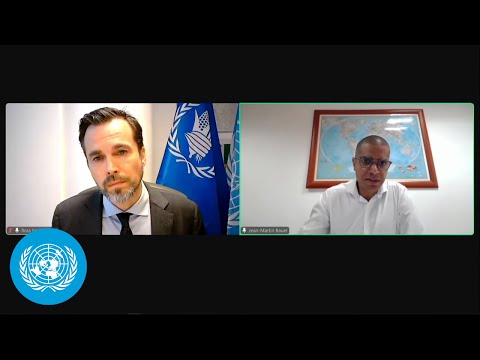
Jean Martin Bauer, director of food security and nutrition analysis at the World Food Programme, told a U.N. press briefing that an updated Integrated Food Security Phase Classification (IPC) alert shows a famine is emerging in the Gaza Strip.
"For household food deficits, those have been above famine thresholds for a long time in many parts of Gaza," Bauer said, and added that "today, we've got over 33 percent of the population that goes an entire day without having access to any food." He said global acute malnutrition had quadrupled in Gaza City between May and July and that two of the three IPC indicators (household food deficits and malnutrition) are now above famine thresholds.
The IPC alert and WFP analysis matter because they indicate rapidly worsening conditions that, if not reversed, would lead to greater child malnutrition and additional deaths. WFP officials warned that only sustained, large‑scale humanitarian access can slow or reverse the trend.
Bauer and Ross Smith, WFP director of emergencies, said distributions and safety on the ground remain the immediate constraints. Smith said WFP was receiving roughly half the daily truck movements it requested since the humanitarian pauses began and asked for "faster clearances, faster approvals for humanitarian convoys and for trucks" and that the Israel Defense Forces not be present near convoys or distribution points. "We need a surge of humanitarian relief supplies," Smith said, adding that the crisis requires medicine, specialized nutrition products, water and other items as well as food.
WFP gave additional operational details: the agency said more than two months' worth of food assistance is positioned at border crossings and staging areas outside Gaza but that only a portion of requested truck movements has been authorized. WFP requested at least 100 trucks per day for its own assistance since the recent pauses; Smith said the wider humanitarian response would require closer to 500 daily truck deliveries to meet needs across sectors and locations, and that until clearance and facilitation improve, crowding at convoys and unsafe distributions will continue.
On malnutrition and caseloads, Bauer said about 20,000 children had been admitted for treatment for acute malnutrition between April and mid‑July and that roughly 3,000 of those children were categorized as acutely malnourished. He noted that confirmed famines are rare in the IPC record and cited previous famine classifications in this century as context.
When pressed by journalists about reports of looting and whether gangs were responsible, WFP officials said they had seen incidents of crowds swarming convoys and that reported looting around convoys appeared primarily to involve desperate civilians rather than organized criminal groups. Smith said that is one reason WFP needs faster approvals and flexibility to choose safe routes and distribution points.
WFP also addressed cooperation with other actors. The agency said it has spoken with the Gaza Humanitarian Fund operationally but does not have an operational partnership with the fund and that different operational models mean actors may work in parallel. On airdrops, WFP said the measure is "highly risky in a densely populated zone" and noted reports of injuries from airdrop operations; it emphasized that air deliveries cannot replace the thousands of daily truck movements required.
The briefing closed with WFP reiterating an immediate operational request: sustained humanitarian pauses or ceasefires that permit large‑scale, safe and facilitated access; rapid approvals and clearances at crossing points; the ability to restart bakeries and community kitchens; and protection for staff and civilians at distribution sites.
WFP officials framed many statements as operational requests and warnings rather than formal legal findings: the organization described current conditions using IPC methodology and called for humanitarian actions and facilitation to avert further deterioration.