Get Full Government Meeting Transcripts, Videos, & Alerts Forever!
Get email alerts on the Humanitarian Aid Food Security topic
No spam. Unsubscribe anytime.
WFP warns $130 million shortfall could force suspension of aid in northeast Nigeria; region faces steep cuts
Summary
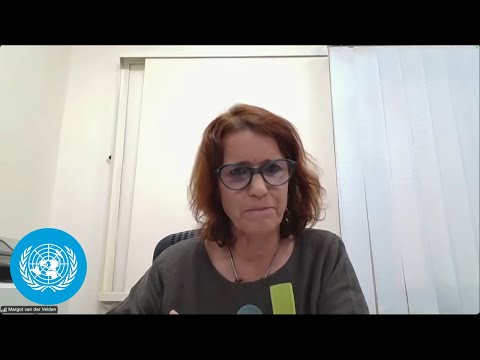
Margot Van der Velden, World Food Programme regional director for West and Central Africa, told a UN Correspondents Association briefing that WFP faces critical funding shortfalls that could force suspension of operations in northeast Nigeria in August and leave millions across the region without life-saving assistance.
Margot Van der Velden, Regional Director for the World Food Programme (WFP) in West and Central Africa, said at a United Nations Correspondents Association briefing that the agency urgently needs $130 million to sustain operations in Nigeria for the next six months or face suspending assistance in August.
Van der Velden said the shortfall would affect “over 1,300,000 people” who would lose life‑saving food assistance and nutrition support in northeast Nigeria and that “300,000 children” are at immediate risk of severe acute malnutrition if funding does not arrive. She added that roughly “31,000,000 people are facing acute food insecurity” in Nigeria and that WFP’s capacity in the West and Central Africa region has dropped by about 60 percent compared with last year.
The regional director described a broader pattern across West and Central Africa: rising humanitarian needs driven by escalating violence, mass displacement, crop losses from flooding and sharply higher food prices, while donor funding has declined. Van der Velden said countries including Mali and Niger are facing cuts of more than 80 percent in emergency support, and she cited a combined funding gap of about $415 million for Mali, Mauritania, Niger, Cameroon, Chad and the Central African Republic.
Van der Velden said the reduced funding is forcing WFP to prioritize only the “most life‑threatening situations,” leaving many vulnerable people without assistance. “We are ready to scale up. We’re very present in the region, but we cannot do it alone,” she said.
When asked why funding has fallen, Van der Velden pointed to several factors: global price pressures that shift donor priorities, competing domestic crises in traditional donor countries, and a long‑term lack of investment and media attention for the region. She cautioned against drawing a direct causal line from funding cuts to instability but said cuts “are obviously aggravating the situation” and increase the risk of further displacement and conflict.
Van der Velden provided additional regional figures during the question-and-answer period: WFP estimates about 10,000,000 people are forcibly displaced across the region, with approximately 2,000,000 in areas of northeast Nigeria and about 1,700,000 refugees in Chad from Sudan. She said that unless funding is secured, operations risk halting in the coming weeks in several countries.
Reporters pressed for more detail on the children WFP supports. Van der Velden reiterated that without new funding roughly 300,000 children would be at immediate risk of not receiving treatment for moderate acute malnutrition in northeast Nigeria.
Van der Velden closed by emphasizing the potential consequences if assistance disappears: deepening hunger, rising tensions among communities and greater instability. She said WFP will continue to appeal to donors and partners and invited further questions.
Van der Velden spoke from Niamey, Niger, and took questions from journalists including Edie Lederer of the Associated Press, Prudence Arobani of the News Agency of Nigeria and Noreen Hussain of IPS News.