Get Full Government Meeting Transcripts, Videos, & Alerts Forever!
Get email alerts on the Zoning topic
No spam. Unsubscribe anytime.
Buncombe County to begin rezoning unzoned "donut hole" parcels; first 106‑acre area slated for public hearing
Summary
County planning staff outlined steps to close remaining unzoned "donut holes" created by earlier countywide zoning, deannexations and resurveying. Staff said the first area — about 106 acres — is planned for owner contact and a planning‑board public hearing in August or September.
Buncombe County planning staff told the county Planning Board on July 21 that staff will begin initial rezoning of remaining unzoned "donut hole" parcels left from the countywide zoning effort in 2009 and subsequent boundary changes. Staff said the first area to be considered, called "Donut Hole Number 1," is about 106 acres and is currently vacant residential land served by septic and wells.
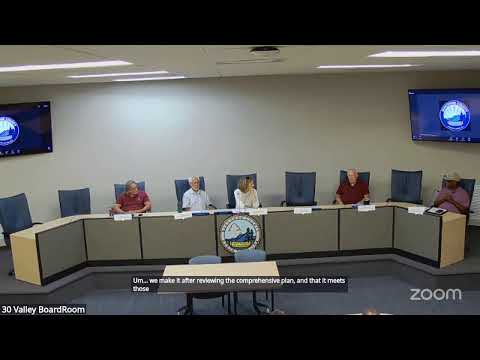
The update came during a regular Planning Board meeting where staff described multiple reasons the unzoned parcels exist: limits in the 2009 countywide zoning effort (driven at that time by state statute), two deannexations that returned properties to county jurisdiction, and county‑boundary resurveying that produced small pockets previously not zoned. A staff presenter said, "It's Donut Hole we're calling it Donut Hole Number 1. It's about a 106 acres. It's current use, vacant, residential, septic, and well." The presenter said staff expects to contact property owners this month and to hold a public hearing before the Planning Board in August or September, followed by a Board of Commissioners hearing.
Why it matters: closing remaining unzoned parcels completes the countywide zoning layer and clarifies land‑use rules for property owners, emergency services and election jurisdictions. Staff said rezoning will generally follow the current zoning and adopted land‑use maps for adjacent areas, including overlays such as protected ridge, steep slope and high‑elevation protections where those apply.
What staff described of the process: staff will notify property owners, post signs when appropriate, publish required legal ads, prepare a shortened staff report and make a formal recommendation to the Planning Board. After the Planning Board hearing, the item would move to the Board of Commissioners for final action. Staff noted several specific drivers for the remaining unzoned spots: two deannexations (one near Charlotte Highway and another near Royal Pines off Sweeten Creek) that returned formerly annexed land to the county, and recent boundary resurveying with neighboring counties that created small pockets of unzoned land along county lines.
Board members asked clarifying questions about whether the county gained or lost land in the resurveying and about the statutory process for deannexation. Staff replied that the county both gained and lost some parcels in different places and that most deannexations noted were local acts handled through the North Carolina General Assembly. Staff also said that the statute governing local planning changed and now allows combined findings when adopting rezonings under Chapter 160D of the North Carolina General Statutes.
No formal rezoning vote took place at the July 21 meeting. Staff emphasized it will seek property‑owner outreach before any initial zoning is adopted. The presenter said staff will look at existing zoning and the county's Growth, Equity and Conservation map when recommending a zoning designation for each donut hole area.
Votes at a glance: The meeting approved the agenda and the June 16, 2025 minutes by voice vote and later adjourned by voice vote; those were routine procedural actions and not votes on rezoning items.
What’s next: staff plans owner outreach this month for Donut Hole Number 1 and intends to schedule a Planning Board public hearing in August or September, then forward a recommendation to the Board of Commissioners.