Get Full Government Meeting Transcripts, Videos, & Alerts Forever!
Get email alerts on the Solid Waste Management topic
No spam. Unsubscribe anytime.
Adams‑Clermont Solid Waste District presents 2025 plan aiming for 25% waste reduction, new recycling center
Summary
Adams‑Clermont Solid Waste District director Hannah Louvers outlined the district's 15‑year Solid Waste Management Plan for 2025, highlighting goals set by the state, expanded recycling and special‑item collection services, organics infrastructure planning and a ratification timeline for local governments.
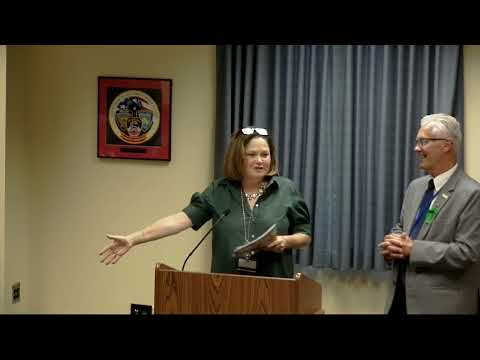
Hannah Louvers, director of the Adams‑Clermont Solid Waste District, presented the district's 2025 Solid Waste Management Plan at the Clermont County Board of Commissioners meeting on Aug. 30, 2025.
Louvers said the plan is a 15‑year document revised every five years to meet requirements of the Ohio EPA and that it includes new state goals, including a target to obtain a 25% waste reduction through recycling, composting or reuse. She told commissioners the plan is structured to ensure landfill capacity and to expand education and outreach.
The plan will continue existing programs and add services to meet the Ohio EPA's revised format, Louvers said. Examples she cited included a recycling drop‑off network (26 county sites in 2024 that diverted 696 tons), a roadside litter and tire program that removed more than 46 tons of trash from 774 miles of roadway in 2024, and a school waste‑reduction program. Louvers described a lunchroom audit at Mark Hook Elementary in Goshen that found only about 3% of a sample was trash; roughly 100 pounds of food waste in one lunch period represented about 48% of that period's discard stream.
"We're working on our 2025 solid waste plan, and this is a 15 year plan," Louvers said. "Part of the plan, we have to address certain goals. Those goals are dictated by the state of Ohio, and some of those goals consist of ensuring that there's waste capacity and obtaining 25% reduction, and that can look like recycling, composting, or reusing materials."
Louvers highlighted a recently opened special‑item recycling center where residents can drop off batteries, e‑waste, fire extinguishers, pesticide and pool chemicals; televisions are accepted for a fee. She said the center has served 168 residents so far and that most drop‑offs have been handled during regular hours. The district also runs an annual scrap‑tire collection event, offers pollution‑prevention internships with industry partners, assists institutions and businesses with waste audits and recycling logistics, and supports emergency debris cleanup after floods or tornadoes.
On organics, Louvers said the district plans to begin funding infrastructure and collection for food‑waste processing starting in 2027. She described the district's end‑of‑year school recycling program that recovered more than a ton of usable classroom supplies to donate to nonprofits and divert material from landfills.
Louvers described the district's funding: about 85% of revenue comes from a $4 generation fee charged per ton of garbage delivered to designated facilities. The district currently has 13 designated facilities and intends to designate two more, including Winding Creek Recycling in Batavia and a new transfer facility in Union Township. She said the district expects to add programs without raising the fee for this plan cycle.
The plan must be submitted by Nov. 9, 2025; Louvers said the ratification period requires resolutions or ordinances from the 46 political subdivisions in the district. She told commissioners the board must pass a supporting resolution by Sept. 14 to meet the schedule.
Commissioners and staff praised the new special‑item center and the district's outreach work. Commissioner comments noted that local access for paint and chemical disposal reduces travel to Cincinnati and keeps hazardous items out of curbside streams and recycling.
The district is in a ratification period and will seek resolutions and ordinances from townships and municipalities that together represent 60% of the district population; Louvers singled out Union and Miami townships as priorities because of their population size.
If approved through ratification, the plan will guide the district's programs, grant allocations and education efforts for the next 15 years and begin targeted funding in 2027 for organics processing infrastructure.