Get Full Government Meeting Transcripts, Videos, & Alerts Forever!
Get email alerts on the Property Tax Reappraisal topic
No spam. Unsubscribe anytime.
Residents, advocates press Buncombe County for transparency ahead of 2026 reappraisal
Summary
At a Sept. 2 public hearing, residents and education and housing advocates urged Buncombe County to publish unadjusted ratio studies, consider more frequent reappraisals and increase appeals transparency before the board adopts the schedule of values on Sept. 16.
Buncombe County officials opened a public hearing Sept. 2 on the proposed schedule of values that will underpin the countywide 2026 property reappraisal. Community members urged the Board of Commissioners to increase transparency and change procedures before the board votes to adopt the schedule at its Sept. 16 meeting.
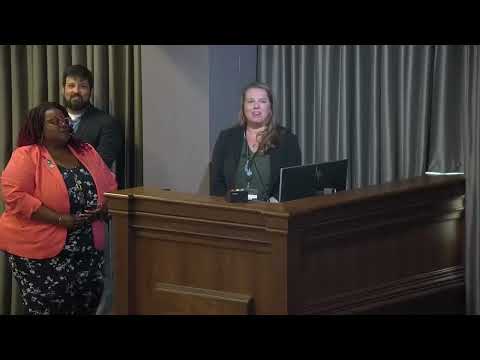
Speakers at the hearing – including parents, teachers, urban planners and policy researchers – said property tax assessments shape school funding, public services and neighborhood stability and recommended specific changes. Christina Shimrock, speaking for an organizing coalition of ACAE, BCAE, Good Trouble WNC, Just Economics, Public School Strong and FAX, asked the county to publish both adjusted and unadjusted ratio studies for at least five years, consider moving to reappraisals every two years and make appeal outcomes public.
The coalition argued that unadjusted sales-ratio studies show the clearest picture of assessment accuracy and that more frequent reappraisals would reduce inequities that emerge between cycles. Lenore Hagerty, an urban planner and co-author of a prior assessment study, called for publishing unadjusted sales ratios and said doing so would help measure progress in equity and accuracy. Multiple speakers tied fair assessments to steady funding for schools and libraries.
Interim Tax Assessor Eric Kreger presented the schedule of values and explained the mass appraisal process, saying state law requires the assessor to provide the board the schedule before a reappraisal takes effect and that the county must set baseline rates for construction, land and depreciation. Kreger described three approaches to value—cost, sales comparison and income approaches—used to produce market-adjusted cost models for structures, and said the schedule sets baseline construction-quality grades and factors used by appraisers.
Kreger said staff had added more granular construction-quality grades (including a new “Q” code for unique properties) and refined size adjustments and land-value calculations. He described steps to identify and value unique high-end properties and said the assessor’s office is increasing site visits, auditing manufactured-home condition ratings and creating separate adjustment tables for manufactured homes.
Commissioners pressed Kreger on metrics the county will use to track performance, and he said the assessor’s office and the state Department of Revenue produce ratio studies. He said the office will run internal ratio studies, is pursuing an external ratio study, and will track standard appraisal metrics such as coefficient of dispersion across geographic areas. Kreger acknowledged reappraisals are resource-intensive and said more frequent reappraisals would require a dedicated reappraisal team and additional staff.
Several speakers raised short-term rentals and other commercial investment properties as an unresolved issue. Citizen and Urban3 founder Joe Manicosi told the board the schedule currently omits Airbnbs/short-term rentals and like properties from the income approach used for commercial investment properties, saying the omission leaves potential tax revenue unaddressed. Kreger noted changing classification of short-term rentals likely requires state-level action.
The board opened the record for public comment and will consider adoption of the schedule of values at its Sept. 16 meeting; Kreger said the county will publish a notice of adoption for four consecutive weeks and that the appeal period will end Oct. 17. He also explained that appeals to the schedule itself would be heard by the Property Tax Commission in Raleigh once the county adopts the schedule and the appeal period opens.
Speakers also pressed the assessor’s office to publish appeal outcomes—how many appeals succeed and the average reductions—so the public can evaluate whether the appeals process is equitable. Kreger said the office has improved data systems, increased staffing and is performing targeted site visits in response to prior audit recommendations and public feedback.
Why this matters: The schedule of values sets how the assessor’s office translates sales and construction data into taxable values. Community members warned that if the schedule does not explicitly include methodologies or categories for certain property types, the assessor cannot apply them in the reappraisal. The board will vote on adoption Sept. 16, starting a formal four-week notice period and a subsequent appeals window that closes Oct. 17.