Get Full Government Meeting Transcripts, Videos, & Alerts Forever!
Get email alerts on the Affordable Housing topic
No spam. Unsubscribe anytime.
Genesco outlines modular housing production, urges regulatory and resource changes
Summary
Genesco Development Company presented its Romulus modular manufacturing operation and asked the committee to streamline state review processes and provide more resources to the Bureau of Construction Codes to accelerate affordable housing delivered through modular construction.
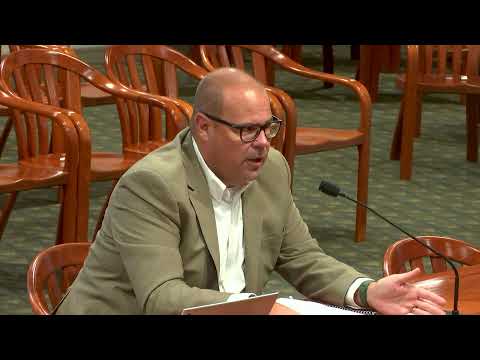
Mike Stefanko, vice president of development and general counsel for Genesco Development Company, told the House Regulatory Reform Committee that the company has opened a modular housing manufacturing facility in Romulus and is producing affordable apartments designed to reduce construction time and cost.
Stefanko said Genesco’s development arm owns or controls about 40 properties totaling approximately 5,000 units across the Midwest and described a statewide need for about 75,000 affordable units, citing a statewide assessment from the Michigan State Housing Development Authority (MSHDA). He said the company’s modular factory began operations in late 2023, closed financing in 2022, and completed its first transaction at 7850 East Jefferson: a 75-unit affordable housing building with a second building on the same site expected to be set in October.
Stefanko described the manufacturing capacity and timelines: the factory produces about 6–8 modules per week; when site work and manufacturing are coordinated, Genesco set a 75-unit building in about seven working days (vertical set), compared with an estimated six to seven months for the same vertical construction using traditional stick-built methods. He said modular construction reduces interest-carry costs and overall deal expense but noted that design choices affect realized savings.
Stefanko asked the committee to help review and, if needed, revise state rules and to increase staffing and resources at the Michigan Department of Licensing and Regulatory Affairs’ Bureau of Construction Codes (LARA/BCC). He said Genesco faces an extra layer of state review for each module; Genesco has roughly 900 units in its pipeline that will require state review, and LARA recently received about 500 units worth of school submissions, stretching its review capacity.
Committee members asked about code compatibility, transport constraints and workforce. Stefanko said the modular units meet existing codes and MSHDA design standards; the company employed about 100 workers at the Romulus factory and is coordinating with trade schools. He said some logistics, such as importing specialized set crews and crane availability, currently raise costs but would be alleviated as the industry scales locally.
Questions from members covered distinctions between manufactured and modular units, municipal and state inspection sequencing, zoning and code compliance, senior housing adaptations, and whether the company could produce single-family units. Genesco said their volumetric 3-D modular units are fully finished in the factory, can be designed for senior-accessible layouts, and are compatible with local codes; further collaboration with state and municipal officials was offered.