Get Full Government Meeting Transcripts, Videos, & Alerts Forever!
Get email alerts on the Healthy School Meals topic
No spam. Unsubscribe anytime.
Senate passes bill to broaden ballot language and uses for Healthy School Meals funding
Summary
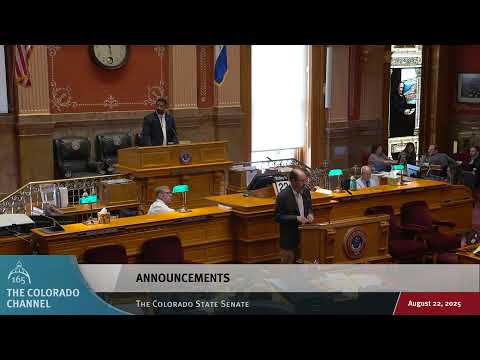
The Colorado Senate approved Senate Bill 003 to expand ballot language and allow broader uses of funds tied to the Healthy School Meals for All program, a move sponsors said responds to federal changes to SNAP funding; the measure passed 23-12.
The Colorado Senate on third reading passed Senate Bill 003 to broaden ballot-language and the permissible uses of the Healthy School Meals for All cash fund, a change sponsors said is needed after recent federal changes affecting SNAP and related programs. Sponsor Senator Wallace moved for passage; the measure passed by voice with a recorded tally of 23 ayes and 12 noes.
Supporters said the change gives Colorado voters an accurate choice on how a new revenue stream could be used. "We have the opportunity to help ensure that no child in Colorado goes hungry at home or at school," Senator Wallace said, adding that the Healthy School Meals for All program is now serving more than 600,000 meals every day and has saved families up to $1,300 per child per year.
The bill’s backers framed the move as a response to federal legislation (referred to in debate as "HR 1") that they said reduces federal support for SNAP and changes how administrative costs are shared. Senator Weisman said the federal law reduced federal money flowing into states and that the change makes the expanded ballot language necessary to let voters decide whether revenue can be used more broadly.
Opponents raised concerns about accountability, program scope and whether the state should use the proposed revenue for administrative costs rather than direct meal service. Senator Frizzell said voters were told earlier that a specified tax increase would fund school meals and that the original funding estimate was inadequate; she urged a no vote. Senator Kirkmeyer and others questioned whether HR 1 actually cut benefits or primarily shifted administrative costs to states and counties.
Members debated program administration details during the floor discussion: senators cited the state’s SNAP error rate and the possibility that higher state administrative costs could result if error rates remain above federal thresholds; Kirkmeyer and others pressed for clearer information on whether and how benefits or implementation costs will change. Senator McPheron described constituent accounts about meal quality, saying some students are choosing not to eat school meals because of menu concerns.
After debate, the roll-call recorded 23 ayes and 12 noes and the bill was passed. The bill’s passage will broaden the ballot question language that voters will see in November to include supporting access to healthy food for Coloradans in addition to the existing school-meals program language.
Votes at a glance: Senate Bill 003 — Passage, 23 ayes, 12 noes.
The measure’s next steps are placement on the November 2025 ballot in its revised form (the bill changes ballot language). No additional implementation directions were recorded on the floor during the vote.