Get Full Government Meeting Transcripts, Videos, & Alerts Forever!
Get email alerts on the Student Technology Policy topic
No spam. Unsubscribe anytime.
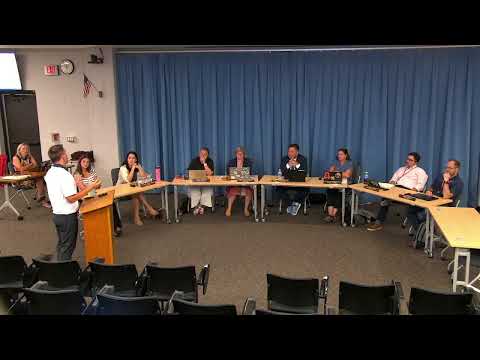
Fairport reviews new personal electronic device regulation; staff describe enforcement, exceptions and supports
Summary
District administrators described results of a June stakeholder survey and the district's approach to implementing a state-directed personal electronic device policy, emphasizing consistency, accommodations for medical or special‑education needs, and communication supports for families.
Fairport Central School District administrators on Monday reviewed stakeholder feedback and implementation plans for a new personal electronic device regulation required by recent guidance from the governor's office. District staff said they surveyed parents, guardians, students and staff in June and used the responses to build FAQs, enforcement guidance and communication materials.
Lindsey Redick said the district collected survey responses through ParentSquare and received substantial engagement: "We had 1,003 parents and guardians, and we had actually a 163 folks who responded who were staff members and parents in the district," she said. Redick added that staff combined written comments and posted distilled FAQs on a dedicated cell phone policy web page.
Principal Clark addressed classroom practices and consistency across buildings. He said prior approaches such as classroom "caddies" created inconsistent outcomes and that the new expectation will be "off and away all day" for students, with staff focused on reminders rather than power struggles. "The focus really is on off and away all day," Clark said, describing the district's goal of minimizing teacher–student confrontations over phones and reinforcing the expectation with repeated, consistent messaging.
Staff said the regulation allows limited exceptions and that accommodations will be handled on a team basis. Clark called medical needs "a no doubter" when they are documented in a student's education or medical plan. For other requests, including accommodations tied to anxiety or assistive apps, Clark said teams will review plans and consider whether district‑issued devices or alternate strategies can meet needs without broadly undermining the policy.
Students involved in the committee stressed enforcement and classroom impact. Student advisor Mallory Foote said participation on the committee was "eye opening" and described how even small distractions such as a phone vibration can pull students' attention away from instruction or, in testing situations, disrupt performance.
The district also discussed logistics: staff will reintroduce locker use, provide printed locker directions and open schools for brief windows before school to allow students to set lockers. Technology director Tom (last name not given) said the district will expand district‑issued device options and explore limited access to music or assistive apps on district devices when appropriate. He also described ParentSquare features that can substitute for staff or coach personal phone numbers when communicating with families.
Administrators acknowledged outstanding questions. Staff said they will report back to the board with data on implementation and efficacy and that student representatives will continue to provide feedback. The workshop portion of the meeting included no formal disciplinary actions related to the regulation; administrators described rollout steps and a process for case‑by‑case exceptions.