Get Full Government Meeting Transcripts, Videos, & Alerts Forever!
Get email alerts on the Insurance Risk Management topic
No spam. Unsubscribe anytime.
Wake County Schools outlines $9.5 million in insurance premiums for 2025–26 and flags rising property and liability costs
Summary
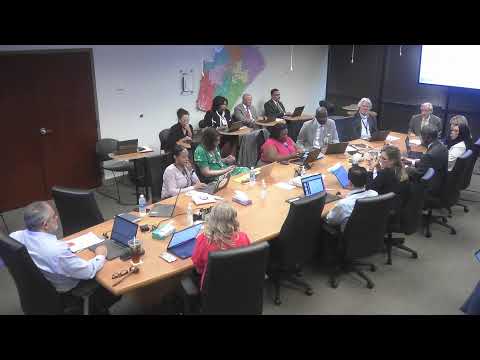
At the Aug. 19 work session, the district’s risk management team reviewed the scope of the school system’s insurance portfolio, said the 2025–26 premiums total about $9.5 million, and told the board the largest share of premium costs is property coverage tied to the district’s $6.6 billion in insured assets.
Wake County Public School System risk management staff told the Wake County Board of Education at its Aug. 19 work session that the district’s total premiums for its insurance portfolio for 2025–26 are about $9.5 million and that property insurance is the largest single premium driver due to the district’s large asset base.
David Nieder and risk management staff introduced Nathan Barnett (senior director, risk management) and Trish (Philbrook) during the presentation and said the insurance program covers roughly 180,000 individuals including students, staff, drivers and volunteers.
What the district reported
- Total premiums and allocation: Staff said total premiums for 2025–26 are roughly $9,500,000. The largest share of those premiums is property insurance, reflecting the district’s insured property value of about $6.6 billion.
- Student accident and catastrophic coverage: The district purchases a student accident program that the presentation noted covers athletics (including football), marching band and other supervised school activities. Staff said the district‑paid student accident premiums for the upcoming school year total about $130,599, which covers base and catastrophic layers the district provides; voluntary policies are also made available for families.
- Workers’ compensation and self‑retention: Wake County Schools is self‑insured for workers’ compensation claims. Staff said the district maintains a self‑insured retention (a retention layer before external insurance applies) set at $850,000.
- Fleet and other coverages: The district insures about 820 vehicles in its main auto fleet and maintains a separate drivers‑education fleet of about 110 vehicles. Staff said the district also purchases cyber coverage and flood coverage (the presentation noted use of the National Flood Insurance Program for high‑risk sites such as Vernon Malone). Staff also described an ongoing migration of several legacy policies to updated contracts and said some older policies (including a liability policy dating to the 1970s) remain to be reviewed and migrated.
- Procurement and market trends: Risk staff described routine procurement practices for insurance (bids every three to five years, use of brokers and third‑party consultants to validate market pricing) and warned that both property and liability premiums have been rising nationwide because of catastrophic losses and an increasingly litigious environment.
Board discussion and requests
Board members sought examples of how insurance limits or carrier decisions can affect extracurricular activities. Chair Jared Haggerty and other board members asked staff to research whether sister districts that allow certain activities (for example, nontraditional physical‑activity clubs) have coverage, and whether adding or expanding coverage to permit additional school activities would be cost feasible. Nieder and staff agreed to follow up and provide information to the board in roughly 45–60 days.
Legal and policy context
Staff reminded the board that some coverages are required by law or board policy (for example, workers’ compensation requirements under North Carolina law) while others are discretionary. Staff also said insurance is only one part of a broader risk management strategy that includes safety training, maintenance, and procedural controls.
Ending note
Board members thanked the risk management team and asked staff to return with more detail about costs and conditions for expanding extracurricular coverage; no formal action or vote was taken during the work session.