Get Full Government Meeting Transcripts, Videos, & Alerts Forever!
Get email alerts on the School Transportation topic
No spam. Unsubscribe anytime.
Wake County Schools reports driver gains but officials say hundreds more drivers and buses would be needed to stop double‑back routes
Summary
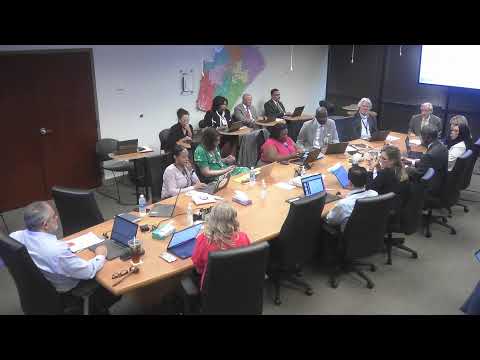
At an Aug. 19 work session, Wake County School System transportation staff reported gains in driver recruitment and several operational metrics for 2025–26 — but said the district still needs substantially more buses and drivers to eliminate double‑back routes and to reduce long morning windows for families.
Wake County School System transportation staff told the Wake County Board of Education at its Aug. 19 work session that the district has improved driver recruitment and fleet readiness for the 2025–26 school year but still lacks the scale to eliminate “double‑back” runs and shorten some morning pickup windows.
Bob Snyder, a transportation staff member who presented the update, said the district had 605 filled bus driver positions as of the previous Thursday, an increase of 32 drivers from the same point a year earlier. Snyder said the district has 564 routes planned for the coming year and just under 90,000 registered riders, and that typical measured ridership is about 70 percent of those assigned when the state’s count is taken.
Snyder said recruitment and retention have benefited from a dedicated HR recruiter and a marketing campaign that includes TV, radio and social media. He described the district’s pay incentives for drivers: a $1,000 retention bonus paid in September to drivers returning from the prior year, a $1,000 standing bonus paid in two $500 installments (end of first and second semester), and a $2,000 perfect‑attendance bonus paid at $200 per month over the 10‑month traditional calendar. "Every bus driver has the opportunity to earn up to $4,000 a year in bonuses," Snyder said.
Why it matters: board members said the gains are welcome but repeatedly pressed staff on who still bears the burden of long morning windows, and on how many more buses and drivers the district would need to move from a 40‑minute window toward a 30‑minute target that the district considers a better service standard.
Key metrics and service details
- Drivers and routes: Snyder reported 605 filled driver positions and 564 planned routes, leaving a cushion of 41 drivers to cover absences and call‑outs, up from a 34‑driver cushion last year. He said the district averages roughly 6.26 planned runs per bus and that 159 riders are assigned per bus on average.
- Ridership and assignment rules: With nearly 90,000 registered riders, staff told the board the district typically expects about 70 percent of assigned students to be on buses during the state count week. Snyder explained the district’s "10/10/10" rule of thumb: roughly 10 percent of assigned students never intend to ride, another ~10 percent miss the count because of sports or activities, and another ~10 percent are absent during the count.
- Vendor transportation and stipends: Last year the district recorded about 3,357 vendor rides (largely special‑needs, pre‑K and McKinney‑Vento students). Vendors provided roughly 240 drivers and 240 vendor routes. The district said it paid about 1,034 families a parent‑stipend last year at a cost of about $2,300,000; staff projected roughly 1,200 stipend families this year at an estimated $2,700,000.
- Fleet and maintenance: Snyder said about 95 percent of the fleet is operable; about 5 percent is in for repair. Mechanic vacancy improved from 30 percent to about 25 percent after adding five positions. The district is piloting propane buses and ordered five more to bring that pilot to 15 buses total.
- Safety and inspections: Snyder said the North Carolina Department of Public Instruction (DPI) inspects roughly 10 percent of the fleet annually; inspectors review hundreds of items and can take a bus out of service if it fails. He reported a district statistic of about 135,000 miles between accidents and an on‑time arrival rate of about 98.43 percent for the previous year’s web‑posted runs (staff said the figure may understate actual performance because staff sometimes post late notices preemptively).
Recruitment, capacity and the “sweet spot”
Snyder told the board the district’s routing depends on available drivers. To eliminate all first‑tier double‑back runs the transportation presentation said the district would need about 183 additional buses; staff estimated the ideal staffing improvement to reach what they called a “sweet spot” could require more than 200 additional bus drivers compared with current counts. "I personally would say we're not close to the sweet spot," Snyder said.
Board questions and district responses
Board members asked about student safety while waiting at schools when buses arrive up to 40 minutes before the bell. Dr. Robert P. Taylor (Superintendent) said coverage before and after school is part of each school’s extended‑care arrangements and that individual schools set the earliest drop‑off time; he said about 18 percent of students using extended care were in low‑performing schools and the rest were elsewhere. Area Superintendent Mr. Williams confirmed that extended care has been used historically to cover staggered arrival windows.
On parent notifications, Snyder said the district posts bus assignments to Infinite Campus roughly 10 days before a school calendar begins and uses a push‑notification system tied to rider contact information to alert families when runs are running behind by increments (e.g., 10–20 minutes, 20–30 minutes, more than 30 minutes). "Our folks in the field... will post that to the web," Snyder said.
On the effect of bonuses and recruitment efforts, Snyder said roughly half of drivers qualify for the monthly $200 perfect‑attendance incentive and that the program has improved attendance and retention.
Looking ahead
Snyder and staff said they will continue recruitment, vendor contract work to expand vendor driver counts, and monitoring of bus loads in the first weeks of school. Staff warned that traditional‑calendar start weeks often slow runs as parents and drivers adjust, and they said they will monitor overcrowding and make adjustments where state rules permit it.
Ending note
Board members thanked transportation staff for the update and recommended follow‑up monitoring in the opening weeks of school; no formal board action or vote on transportation policy or funding occurred during the work session.