Get Full Government Meeting Transcripts, Videos, & Alerts Forever!
Get email alerts on the Environment Trees topic
No spam. Unsubscribe anytime.
Port Jervis students present field-study findings on emerald ash borer, urge targeted removals and monitoring
Summary
Students in Port Jervis High School’s ESF field-studies course presented findings on emerald ash borer infestation and recommended management steps at the board meeting on Aug. 19.
Students in Port Jervis High School’s ESF field-studies course presented findings on the emerald ash borer infestation and recommended management steps at the board meeting on Aug. 19.
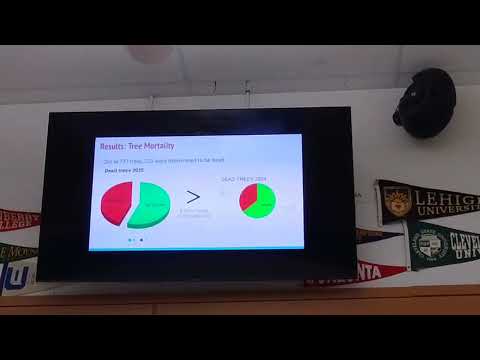
The student presenters said their team surveyed more than 700 trees and detected a rise in mortality compared with the prior year. "We had a little over 8% increase in tree mortality rate compared to last year," said Thomas Caputo, who identified himself as a senior and described field protocols used in the course. The students used indicators such as "D holes" (small D-shaped exit holes), woodpecker damage and a canopy-rating scale; they reported many trees at canopy level 5, a designation they said indicates little or no canopy and that the tree is effectively dead.
Why it matters: Ash trees weakened and killed by emerald ash borer (Agrilus planipennis) become hazards and can serve as reservoirs for the insect for years. The students’ recommendations aim to slow spread in denser stands and reduce risks to remaining trees.
What the students described and recommended - Survey methods: student teams inspected tree canopies and bark for D-shaped exit holes and signs of "peppercorn shoots" and other damage; students noted limitations including dense brush and mapping inconsistencies that made repeated monitoring difficult. - Findings: the group said a substantial portion of the surveyed trees were dead or declining and that denser stands tend to show clustered mortality while more isolated trees die singly. - Recommended actions: remove dead or heavily infested ash trees in dense areas to limit spread; replace removed ash with pine plantings to attract woodpeckers (native predators) and consider installing bird houses to increase woodpecker presence; trial release of parasitoid wasps and continue trapping and biological monitoring; clear brush in research zones to improve access and surveying accuracy.
"We're proposing that we could find a way to cut down dead ash trees in order to make a more viable environment for the living ones so that they aren't under threat of the spread of infestation," a student presenter said during the discussion.
Community response and next steps Several members of the public and staff offered logistical support: one attendee offered labor or tools for next summer; a school staff member said the tech department could help build birdhouses as an educational project. A volunteer who organizes the district’s Sept. 11 memorial encouraged class participation in return projects. The students said they would like support for brush-clearing tools, clearer tree-location mapping and an established canopy-rating standard to improve year-to-year comparability.
Limitations noted by presenters included interference from poison ivy and thorny undergrowth, hornets in the research area and inconsistently numbered trees or maps that made relocation hard. The presentation emphasized that some individual trees showed unusual resilience and that monitoring should continue.
What the board or administration will do: The presentation was given as part of the meeting’s presentations section; students asked for help with tools and potential collaboration. No formal board action or funding commitment was recorded in the meeting transcript; students and community volunteers said they plan follow-up work and outreach to staff for potential support.
Provenance: Student presentations begin with Thomas Caputo’s remarks identifying himself and his group and conclude with audience comments and the board’s thanks to student presenters.