Get Full Government Meeting Transcripts, Videos, & Alerts Forever!
Get email alerts on the Building Electrification topic
No spam. Unsubscribe anytime.
Glendale council directs staff to draft AC-to-heat-pump reach code, asks for rebate plan
Summary
The council directed staff to prepare a local reach code encouraging or requiring heat pumps when central air systems are installed or replaced, and asked Glendale Water & Power to propose an upfront rebate structure to offset cost differentials for homeowners.
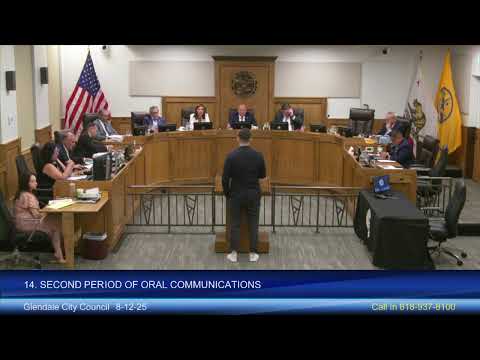
The Glendale City Council voted 4-1 on Aug. 12 to direct staff to prepare a local reach code that would require heat-pump (two-way) systems or equivalent energy improvements when central air conditioning systems are added or replaced in single-family homes, duplexes and townhomes.
Assistant City Manager and sustainability staff presented the proposal and a state-mandated cost-effectiveness study that evaluated whether converting to heat pumps would be financially viable for homeowners under different gas-price scenarios. Staff said the analysis showed the reach code could be supported for submission to the California Energy Commission, but noted compliance pathways and exemptions for cases where electric-panel capacity cannot safely support a heat pump.
Council members also asked Glendale Water & Power (GWP) to bring back a rebate program that would cover the upfront cost differential between a conventional air conditioner and a heat pump. Council specifically requested staff design rebates as upfront payments (checks) rather than bill credits to help homeowners afford installations without an initial outlay.
Why it matters: Heat pumps replace on-site gas combustion for space heating and are more energy efficient than gas furnaces, which reduces local greenhouse-gas emissions and indoor air risks from combustion. Glendale's reach-code proposal would go beyond state building codes by making certain electrification measures local requirements at time of system replacement.
Key provisions discussed: Staff described three compliance pathways: installing a heat pump as primary heat source and meeting state code; retaining an existing gas furnace and doing additional efficiency upgrades; or qualifying for exemptions (insufficient panel capacity; certain climate-zone exceptions). Staff noted the state's AB 130 and the 2025 California Green Building Standards Code create timing and legal constraints; the council instructed staff to draft an ordinance and return with language and a rebate program.
Council vote and next steps: The motion directing staff to develop and return with ordinance language and a GWP rebate proposal passed 4-1. Council also asked staff to clarify repair vs. replacement language (repairs would not trigger the reach code) and to return with outreach materials and cost details. Staff said it would prepare ordinance language, incentive details and the required cost-effectiveness documentation for later council review.
Ending: Supporters at the meeting called the policy a cost-effective way to reduce emissions and improve indoor air quality; some residents raised concerns about upfront cost and electric rates and urged robust incentives and protections for low-income households.