Get Full Government Meeting Transcripts, Videos, & Alerts Forever!
Get email alerts on the Public Safety Budget topic
No spam. Unsubscribe anytime.
Long Beach leaders press police, fire chiefs on staffing, new tech and rescue coverage during FY‑26 budget hearing
Summary
Police and fire chiefs outlined FY‑26 budget requests to expand technology, training and emergency medical capacity; council members pressed for details on paramedic assessment pilots, rescue coverage and officer wellness.
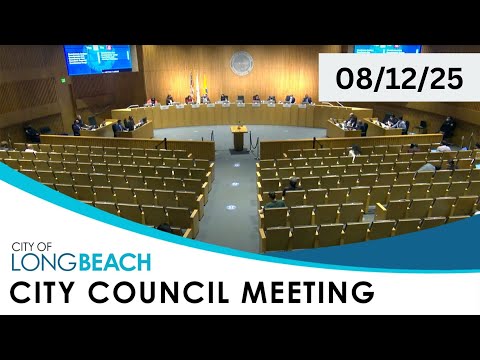
Long Beach Police Chief Heebisch and Fire Chief Dennis Buchanan presented separate FY‑26 budget briefings to the City Council on Aug. 13, describing initiatives intended to maintain emergency response capacity while addressing staffing shortages, technology upgrades and rising emergency‑medical workload.
The city’s police chief said the department is managing about 100,000 calls for service a year and asked council to support several one‑time investments for violent‑crime response and modernized operations. “When I say Long Beach has the best police department in the nation, I mean it,” Chief Heebisch said, then reviewed outcomes the department reported through June 30: property crime down 23.6%, murders down 27.8% and shootings down 29.2% year‑to‑date. He described proposed one‑time requests including $1.3 million for the high‑crime focus team, $1.5 million to expand a real‑time crime center, $1.5 million to replace helicopter camera systems and $300,000 to start a drone‑for‑patrol pilot.
Heebisch outlined operational changes the department will make in FY‑26: reorganizing special investigations into a consolidated “societal crime” section, expanding the community service assistant (CSA) program by eight full‑time positions to free sworn officers for higher‑priority calls, and redeploying eight Metro officers and three supervisors returned to the city after a later contract ended. He described new training for sergeants, a recruit readiness program and expanded youth engagement programs including cadet and explorer pathways.
Fire Chief Buchanan told council the Long Beach Fire Department is experiencing growing medical demand and its emergency medical transports have risen from about 15,000 in FY‑2020 to nearly 20,000 the most recent year — a roughly 30% increase. The fire chief described ambulance staffing proposals and a request to make a previously funded “peak‑load” Rescue 2 a structural (ongoing) 12‑hour ALS unit at a cost of about $1.3 million, and he said making Rescue 2 a 24‑hour unit would require roughly $600,000 more. Buchanan also outlined planned investments to replace ambulance equipment, fund paramedic training, and make one‑time improvements to station dormitories and the regional training center.
Council questions focused on several recurring operational issues: response times, the Paramedic Assessment Unit (PAU) pilots, rescue availability, and employee wellness. Multiple council members asked for prompt data from the PAU and other pilot programs. Chief Buchanan said the city will publish a memo with PAU pilot data in the coming weeks, and he told council that Rescue units had been unavailable ("out of rescue") more than 200 times from Jan. 1 through July 31, 2025 (207 instances >1 minute; 75 >5 minutes). He emphasized that transport volume is the key driver of EMS workload and said the city will form a service‑delivery evaluation committee to study delivery models and alternatives to reduce transport strain.
Council members pressed the police chief about lateral recruitment, overtime and officer wellness; Heebisch said the department has a comprehensive incentive package and an active recruitment pipeline and reported that 10–15 lateral candidates were in process and that several laterals already joined upcoming classes. He described new scheduling and wellness units and the expansion of a department scheduling team and peer support programs.
Why this matters: Both chiefs described sustained operational pressure from increasing EMS transports, special events and continuing technology and legislative mandates that require more staff time. Council members repeatedly tied the budget decisions to operational outcomes — whether to maintain current response targets, expand EMS transport capacity, or change deployment models. Chief Buchanan emphasized that remediation of contaminated training and operational sites and station upgrades are also needed to support the department long term.
What’s next: The FY‑26 budget process will continue through the city’s finance review and midyear cycles. Councilmembers said they expect additional memos on PAU outcomes, Rescue 2 availability, and the proposed real‑time crime‑center build‑out, and they asked staff to provide clearer cost options for full‑time rescue coverage, PAU expansion and other structural improvements.
Sources: Presentations and answers to council questions from Chief Heebisch (Long Beach Police Department), Chief Dennis Buchanan (Long Beach Fire Department), Assistant City Manager Walker and Mayor Rex Richardson during the Aug. 13, 2025 Long Beach City Council budget hearing.