Get Full Government Meeting Transcripts, Videos, & Alerts Forever!
Get email alerts on the Climate Action topic
No spam. Unsubscribe anytime.
Glendale council adopts Climate Action and Adaptation Plan after amending language on implementation
Summary
The Glendale City Council voted to adopt a Climate Action and Adaptation Plan that lays out greenhouse gas reduction and resilience goals, after amending motion language to clarify the plan's recommendations and asking staff to add a front-page disclaimer that actions would require separate council approval.
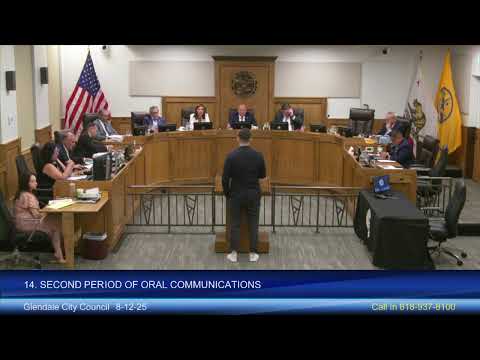
The Glendale City Council on Aug. 12 adopted the city's Climate Action and Adaptation Plan (CAAP), a document that sets local greenhouse-gas reduction targets and adaptation measures, after amending the motion to clarify that the plan's policies, measures and actions are to be considered by council rather than automatically implemented.
The council voted 4-1 to adopt the plan after a months-long public outreach process and a final presentation from staff and consultants. Sustainability officer David Jones and consultant Hannah Mize of Rincon Associates described the plan as a combined mitigation-and-adaptation strategy that identifies systems-based measures, community-prioritized actions and a funding assessment.
The council's amendment changed the motion language from directing the city to "establish policies, measures and actions" to directing staff and council to "consider" those policies, and the council asked the city attorney's office to draft a brief, plain-language disclaimer for the plan's front pages clarifying that any specific action or expenditure would come back to council for separate approval. Mayor Vartan Najarian and three council members supported the revised motion; one council member voted no.
Why it matters: The CAAP coordinates greenhouse-gas reduction targets, identifies priority actions (such as building electrification, tree canopy expansion and heat mitigation), and is intended to make Glendale eligible for state and federal funding streams tied to having an adopted climate plan. Staff said the plan also can streamline certain environmental reviews for future projects that align with its measures.
What the plan sets out: Jones and consultants presented a technical foundation including a greenhouse-gas inventory, a vulnerability assessment (using Cal-Adapt data), an equity-informed prioritization of neighborhoods and an action framework organized by systems (buildings, mobility/land use, urban ecosystems and governance). The draft includes near-term (phase 1) actions the city could pursue and longer-term measures to study and implement.
Public and council reaction: Supporters who spoke during public comment praised the plan as a resilience and public-health tool and urged council adoption. Some residents and speakers asked for clearer, concise summaries of costs and for reassurances that the plan would not impose immediate mandates on residents. Several council members agreed on the need for an explanatory front-page note to prevent misunderstanding that adoption equals immediate policy changes.
Next steps: Staff will finalize the front-page language requested by council and return with any follow-up materials on funding and implementation. Project leads also said they will present specific feasibility studies and proposed projects to council individually for approval and budgeting.
Ending: Council members and staff said they expect the CAAP to be a working document that will guide grant seeking, prioritize investments and be updated as technologies and funding opportunities evolve.