Get Full Government Meeting Transcripts, Videos, & Alerts Forever!
Get email alerts on the Budget topic
No spam. Unsubscribe anytime.
Dallas city manager presents $5.2 billion FY26 proposed budget, recommends half‑cent property tax cut
Summary
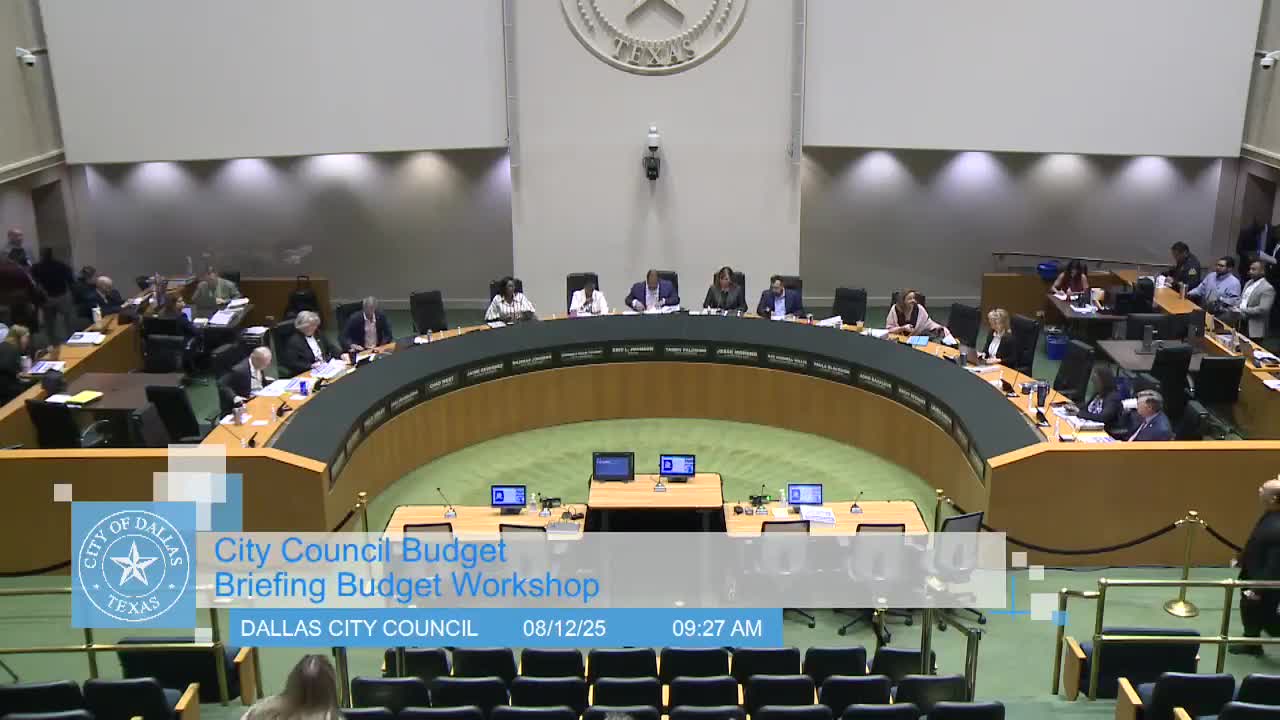
City Manager (Ms. Tolbert) and the city finance team on Aug. 12 presented a $5.2 billion proposed operating and capital budget for fiscal year 2026 that would reduce the city property tax rate by one‑half of a cent per $100 of valuation and increase spending for police and fire hiring, pensions and capital projects.
City Manager (Ms. Tolbert) and the city finance team on Aug. 12 presented a $5.2 billion proposed operating and capital budget for fiscal year 2026 that would reduce the city property tax rate by one‑half of a cent per $100 of valuation and increase spending for police and fire recruitment, pensions and a range of capital projects.
“This morning, we will present to you the fiscal year 26 budget that focuses on investing in priority programs and people,” Chief Financial Officer Jack Ireland told the council during the presentation. The recommended total for FY26 is $5.20 billion; the general fund portion is $1.97 billion.
Why it matters: The proposal would lower the municipal tax rate from 70.47¢ to 69.97¢ per $100 of assessed value while funding higher starting pay for recruits, stepped increases in pension contributions and a multiyear capital program. Council members used the briefing to press staff for more detail on a promised shift to priority‑based budgeting, rate and fee changes for utilities and sanitation, and several operational consolidations the city manager proposed.
Key numbers and highlights
- Total recommended budget (all funds): $5.20 billion, a roughly $230 million (4.6%) increase from the current year adopted budget. - General fund: $1.97 billion (a 3.2% increase vs. FY25 adopted). - Property tax rate proposal: reduce by 0.5¢, from 70.47¢ to 69.97¢ per $100 of valuation. - Capital and debt: $514.8 million in capital improvement projects funded through debt issuance and pay‑as‑you‑go; $250 million tranche of general obligation bonds planned for issuance this fall; total FY26 debt service budget of about $491 million. - Public safety: plan to hire 350 police recruits in FY26 and 400 in FY27 with a projected year‑end sworn officer count of 3,424; starting police officer salary proposed at $81,232; a $20.6 million increase in the city contribution to the Dallas Police and Fire Pension System for a total pension contribution in the recommended budget of approximately $225.7 million. - Utilities and fees: Dallas Water Utilities revenue adjustment would raise an illustrative typical residential bill from about $72 to $77 per month; stormwater monthly charge projected to rise from about $10.16 to $10.72; sanitation residential fee changes under 1% in the proposed year and landfill gate rate about 3%.
Programs, priorities and organizational changes
Staff said the recommendation was informed by a year of program reviews and community engagement. Finance and budget staff reported they identified 291 programs for review as the city moves from an incremental approach toward a priority‑based budget model; the city manager and CFO said the work must continue into the next budget cycle to produce a full program inventory with prioritization scores, cost and performance measures. Councilmembers pressed staff for a fuller program listing and for clearer links between programs, staffing and budget changes.
The proposed budget consolidates several functions into a newly described Department of Housing and Community Empowerment (combining elements of housing, homeless solutions and related services), reallocates some economic development functions, and repurposes 272 existing positions (the budget deletes 282 positions and repurposes 272). Staff said most repurposed positions will support police hiring, fire rescue and parks operations.
Public safety and personnel costs
The presentation emphasized market‑based pay adjustments and targeted recruitment/retention measures for sworn officers and fire personnel. The budget includes compensation increases from market survey results and a strengthened starting salary to improve regional competitiveness. Officials said the budget implements the second year of the council‑approved pension funding plan adopted Sept. 11, 2024, and that the five‑year stepup toward the actuarial determined contribution continues in FY26.
Technology, enforcement and new tools
The proposed budget includes investments in technology across departments. Notably, the city would implement an AI‑assisted camera system mounted to sanitation trucks for proactive code enforcement (100 cameras on 50 trucks; roughly $900,000 in initial funding). Code Compliance Director Chris Christian told the council the system is “human in the loop”: AI will flag likely violations, and staff will review images before cases are opened.
Capital, bonds and enterprise funds
Capital highlights include continued funding for the 2024 bond program (residents approved $1.25 billion in 2024 bonds), issuance of the second $250 million tranche this fall, ongoing investments in water, wastewater and airport projects (including Love Field terminal improvements), and a planned $162 million for street improvements to increase lane‑mile maintenance. Enterprise funds are budgeted to maintain operations and capital programs; water and stormwater rate adjustments were presented to support major capital and regulatory needs.
Community engagement and schedule
Staff outlined community outreach including a statistically valid community survey, council‑hosted budget town halls beginning Aug. 14 and 27, and required public hearings. The schedule presented calls for a first reading of the tax rate and budget on Sept. 3 and final adoption and tax rate setting on Sept. 17; FY26 would begin Oct. 1.
Council questions and next steps
Members asked for earlier and more detailed program inventories and for clearer performance measures tied to the priority‑based process. Several members sought additional detail on police pay comparisons, pension schedule implications, the proposed AI camera program’s accuracy and staffing impacts, and fee increases for utilities and sanitation. City staff said the program inventory and priority scoring will continue after adoption and that staff will publish no‑new‑revenue and alternative scenarios as requested.
Ending note
Staff emphasized the recommendation is a proposed budget; council action on the tax ceiling, required public hearings and final adoption remains scheduled for September. City officials said their next work is deepening program‑level analysis and responding to council and public input during the town hall process.