Get Full Government Meeting Transcripts, Videos, & Alerts Forever!
Get email alerts on the Tourism Strategic Plan topic
No spam. Unsubscribe anytime.
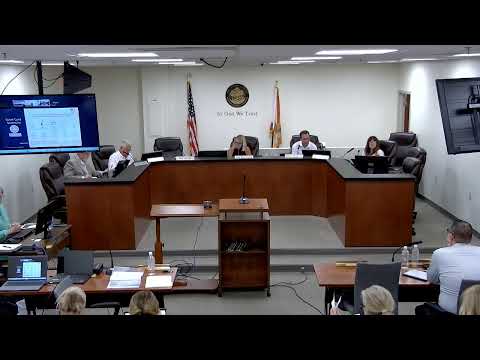
Walton County TDC steering committee reviews draft strategic-plan tools, schedules public outreach
Summary
Consultants from Jones Lang LaSalle Americas briefed the Walton County TDC steering committee on a six‑month strategic master plan, presenting a tourism‑readiness index, competitive‑set analysis, event matrix and demand‑driver scorecard and scheduling public outreach for late August–early September.
Consultants from Jones Lang LaSalle Americas briefed the Walton County Tourist Development Council (TDC) steering committee on the outline and tools for a six‑month strategic master plan, including a tourism‑readiness index, a competitive set comparison, an event matrix and a demand‑driver scorecard. The steering committee confirmed public outreach will begin late August–early September and the final plan presentation is planned for late October or early November, followed by 90‑ and 180‑day check‑ins.
The presentation, led by Scott Beck of Jones Lang LaSalle Americas and Dan Fenton, who oversees JLL’s global tourism practice, introduced the project scope and three analytical tools the consultants said will underpin recommendations. "We don't intend to do a deep dive in all of the content" at the kickoff, Scott Beck said, describing the meeting as an orientation and an opportunity for the steering committee to flag items for deeper study.
Why it matters: the strategic plan will guide how the TDC and county prioritize tourism marketing, event investment and product development, using data‑driven scoring to balance marketing with longer‑term product and infrastructure needs. The consultants said the plan is intended to be actionable and followed by post‑plan advisory support.
Key takeaways
Project timeline and outreach: JLL described a six‑month engagement that began with site visits in May and July, public outreach slated for late August–early September, and a final in‑person plan presentation in late October–early November. The team also plans two post‑plan check‑ins at roughly 90 and 180 days.
Analytical tools presented: the consultants reviewed three primary tools that will shape recommendations: - A tourism‑readiness index that scores county attributes across pillars including scale, leisure, environmental readiness, safety and security, concentration and urban readiness. - A competitive‑set analysis comparing Walton County to similar counties (examples named by the presenters included Beaufort County/Hilton Head, Horry County/Myrtle Beach, Collier County/Naples, Nassau County/Amelia Island and Dare County/Outer Banks). - An event matrix and a demand‑driver scorecard to evaluate which events and visitor products most strongly drive overnight stays and off‑season demand.
Inventory and lodging structure: presenters highlighted the strong role of short‑term home rentals in Walton County’s lodging supply. "You can see our inventory at almost 18,000 home rental listing[s] is well above accommodations," Scott Beck said, noting that strategy should account for that inventory when setting marketing and product objectives.
Safety and visitor perception: committee members and consultants discussed safety as a primary perceived asset. One steering‑committee member summarized the point: "The safety and security... that's the only reason we've got this kind of money to spend here is this is so safe, so nice." Consultants said qualitative and stakeholder feedback to date shows guest perception of safety is high, and recommended continuing engagement with law‑enforcement partners to identify collaborative opportunities.
Housing, workforce and development tradeoffs: steering‑committee members raised housing affordability and workforce availability as policy areas that intersect with tourism. The presenters noted housing affordability is indexed in the competitive analysis and that inventory has increased in recent years; they flagged workforce availability and housing as items the steering committee may want the plan to address or support through partnerships.
Event strategy and product development: JLL framed events as serving two purposes—community experiences and destination drivers that can grow off‑season occupancy. The consultants recommended prioritizing events that align with the county’s strategic goals rather than supporting every existing event equally. The demand‑driver work identified arts and culture and ecotourism as potential growth areas.
Next steps and meeting schedule: the steering committee will align future steering‑committee meetings with TDC board meetings; consultants asked members to flag specific places or competitors to include in the comp set and invited committee input on survey content and distribution plans.
Votes at a glance
- Motion to adjourn the meeting: moved by Josh (first name only in record), seconded by Tim (first name only in record); outcome: approved (unanimous). The committee recorded the meeting as adjourned.
Ending: The consultants asked committee members to submit topics they want emphasized in the public survey and said they will return for deeper dives on the index, event matrix and demand drivers at subsequent steering‑committee meetings.