Get Full Government Meeting Transcripts, Videos, & Alerts Forever!
Get email alerts on the Early Childhood Funding topic
No spam. Unsubscribe anytime.
Buncombe County committee reviews provider survey, funding strategy and available carryforward funds
Summary
The Buncombe County Early Childhood Committee reviewed its end-of-year provider survey data, discussed a funding-strategy series toward a fiscal‑year 2026 roadmap and was told about $236,797.06 in available carryforward funds. Staff and commissioners urged more data on wait lists, workforce and parent demand to guide future investments.
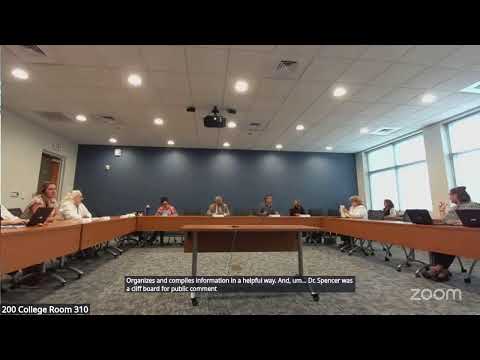
The Buncombe County Early Childhood Committee on Oct. 25 reviewed end-of-year provider survey results, heard staff outline a four-part funding‑strategy series to guide fiscal‑year 2026 planning and was told $236,797.06 remained available in the county early childhood fund.
The discussions focused on how the county’s roughly $4 million‑a‑year early childhood fund fits into state and federal programs such as NC Pre‑K, Head Start and the state childcare subsidy, and what local data the committee needs to demonstrate system‑level impact and prioritize investments.
Rachel, a county staff member presenting survey results and analysis, told the committee that the packet compared beginning‑of‑year and end‑of‑year figures for licensed slots, “ideal” slots (what centers say they would like to enroll given resources), enrollment, wait lists and workforce metrics for the seven funded provider organizations that operate grantee centers. Rachel said the county’s grant reports showed three grantees returned underspent funds and that staff had worked with providers to project end‑of‑year spending for fiscal 2025.
“Three grantees reported carryforward amounts,” Rachel said. “That included ABTech and Buncombe Partnership for Children; staff will follow up with the other organizations on the specifics.”
Commissioner Al Whitesides, who addressed the committee as an elected leader, urged the group not to abandon the county fund and said the program has produced results the county can point to. “We can’t forget why we started this program,” Whitesides said. He described the fund’s original purpose as keeping parents — and particularly women — in the workforce by increasing available child care and improving early‑learning readiness.
The presentation included system‑level data staff said came from local sources and the Partnership for Children. Highlights cited by staff included: 93 licensed providers in Buncombe County (including family child‑care homes); 6,400 licensed slots in 2024; roughly 84% of voluntary participants rated four or five stars in the state quality rating system; about 31% of children ages 0–5 enrolled in licensed care (staff noted that the figure is a system measure and that methods vary by jurisdiction); and that county grants reported supporting 947 slots across grantees (about 24% of community slots). Staff also reported that grantees documented only 16 new slots created in fiscal 2024.
Committee members and staff spent substantial time digging into two recurring problems: why centers report extensive wait lists while many licensed slots appear unfilled, and whether wait‑list counts are inflated by duplicate entries. Stacy Anderson and others observed that families often add the same child to multiple center wait lists, a practice that makes aggregate wait‑list totals misleading.
“There are lots of intricacies within and below the data,” Rachel said. She and other members proposed follow‑up work to estimate unique families on wait lists and to study parent demand (why families decline openings when offered) so the county can better match investment strategy to actual need.
Members also discussed funding mechanics. Staff explained that state subsidy rates and NC Pre‑K reimbursement levels influence providers’ choices about which public programs to participate in; subsidy reimbursement does not always cover providers’ delivery costs, which can affect whether they accept more subsidized slots. Committee members asked staff to compare Buncombe County’s subsidy and pre‑K funding context with peer counties and to bring evidence on how changes to reimbursement or targeted supplements (for example, to expand NC Pre‑K enrollment) might affect slot availability.
On county finances, staff reported a current fund balance that includes $236,797.06 in carryforward and noted that earlier allocations left roughly $78,584 unallocated from previous years; staff said they will supply an itemized accounting and follow‑up details to the committee. Rachel described the county fund as “one player” in a larger system of state and federal programs and recommended re‑visiting the committee’s authorizing resolution and system‑level outcome measures at a future meeting.
Committee members asked for additional data in advance of the FY26 roadmap: a study of unique individuals on wait lists (to estimate true demand), workforce retention and turnover data beyond self‑reported surveys, and parent‑side information about what families seek and barriers they face. Staff said some data sources exist — the Partnership for Children’s unified NC Pre‑K sign‑up portal was cited as an example — but that no single county‑wide portal captures all wait‑list or parent‑side demand data.
Before the discussion, the committee approved the June meeting minutes by voice vote. Rachel confirmed eight members were present, which the committee said constituted a quorum under its bylaws.
Committee leadership said they expect to return to the questions raised at a future meeting: refine which age ranges or program types the county should prioritize (for example, birth‑to‑5 versus targeted NC Pre‑K expansion), whether the fund should focus on classroom operations, workforce development, or system‑level investments, and how to measure impact consistently across grantees.
Staff and committee members asked members to email additional ideas and requested staff prepare comparative county analyses, the itemized carryforward accounting and proposals for data work on wait lists and parent demand prior to the next meeting.