Get Full Government Meeting Transcripts, Videos, & Alerts Forever!
Get email alerts on the Economic Development Projects topic
No spam. Unsubscribe anytime.
Related Group riverfront project: permits and escrow timeline explained; councilors question debt-funded incentive
Summary
Developer Related submitted civil permits and 70% construction drawings; the development agreement requires the city to escrow completion funds when permits are filed or on Oct. 1, and several council members objected to financing the incentive with debt.
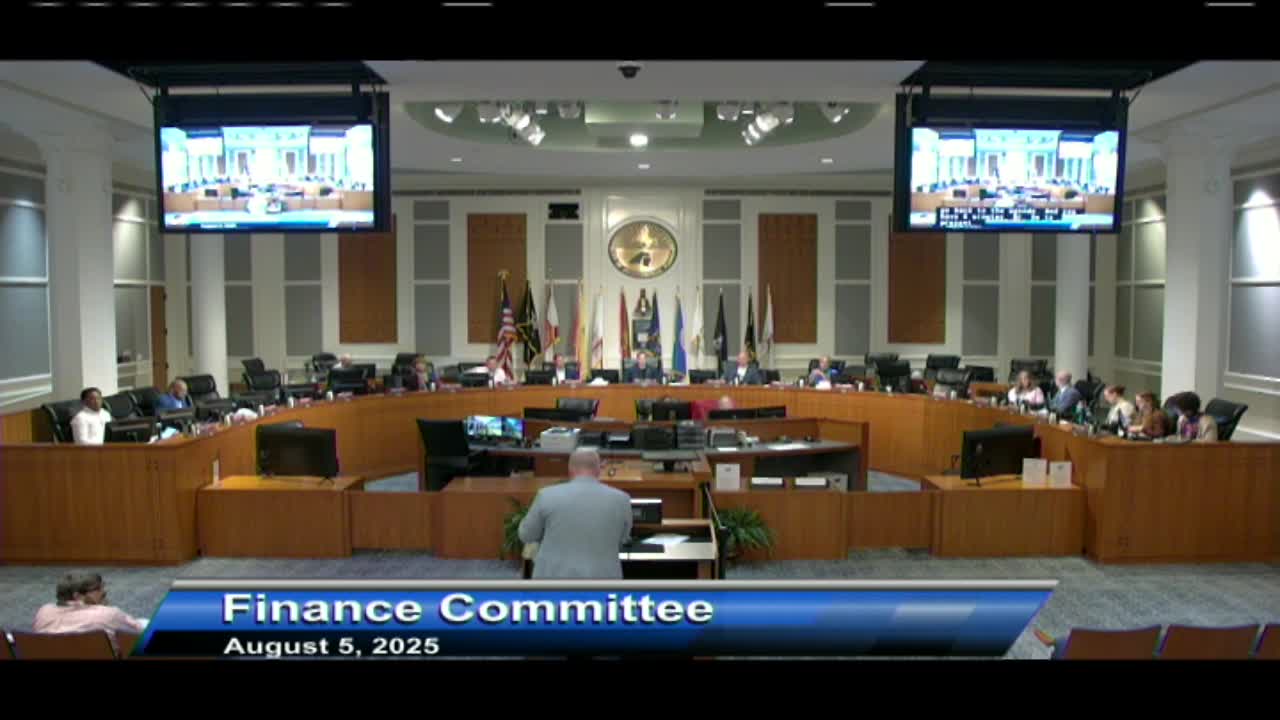
A Related Group development on the former River City Brewing Company site is on track for its civil permits and construction timeline, a representative for the developer told the Jacksonville City Council Finance Committee on Aug. 5.
Steve Diebenow, representing the Related Group, said civil permit applications were submitted June 13 and the developer expects to receive final city comments, respond within 30 days, and have civil permits finalized in roughly 30 days from the Aug. 5 meeting. "We're on track to have the civil permits in final form in the next 30 days or so," Diebenow said. He said 70% construction drawings were received July 18, two contractors already are pricing the work, and 90% drawings are expected Sept. 1. Diebenow said the project is scheduled to start vertical (building) construction after permits are filed and to meet the development agreement requirement to commence horizontal construction by Dec. 15 and to substantially complete by April 30, 2029.
Diebenow also clarified the timing for the city's obligation to escrow completion-grant funds under the development agreement. The obligation is triggered by the later of Oct. 1 or the day the developer submits the building-permit application. "So if we have all our building permits and everything's in order on Oct. 1, those dollars would be be escrowed. If we don't have our building permits until Oct. 15, then the city would have a requirement to escrow the dollars by Oct. 15," Diebenow said. He said that, once escrowed, the city retains the interest and releases funds in accordance with the agreement after the developer has invested its own money in the project.
Several council members raised concerns about how the incentive is funded. Councilman Will Landon and Councilman Ron Salem said the proposed budget records the incentive as debt-funded rather than paid from reserves or PAYGO. Councilman Landon said he would not have approved an upfront, debt-funded cash incentive and expressed concern that debt-funded escrow could cost the city more in interest than the escrow account would earn. "We're probably still gonna be losing money. We're gonna be paying more on our debt than what we're getting in interest on this escrow account," Landon said.
Salem said in his view the city should not use debt to finance economic development incentives and said he would prioritize correcting that approach. "In my six years on the council, we have never used debt to finance an economic development project. I believe this was done so there could be a claim we didn't use reserves in this budget. This is a horrible decision, and we need to correct it," Salem said.
Diebenow said the escrow timing and the agreement terms contain provisions to adjust dates if funds are not placed by Nov. 1 and that the parties will follow the written terms. He did not give an exact draw schedule but said funds would likely not be drawn down until next year after permits and construction activity advance.
The committee did not take a vote on the development schedule or on the financing question; council members asked for additional clarification during the budget process.