Get Full Government Meeting Transcripts, Videos, & Alerts Forever!
Get email alerts on the School Facilities And Bond topic
No spam. Unsubscribe anytime.
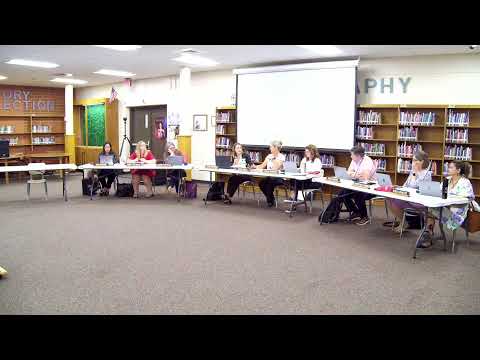
Shawnee Heights board hears building needs assessment, approves placing up-to-$65 million bond on Nov. 4 ballot
Summary
After a district presentation on assessment results, staffing and facility constraints, the Shawnee Heights Board of Education voted unanimously to place a bond resolution for up to $65 million — including ADA-accessible playgrounds, new gym space and a middle-school addition — on the Nov. 4 ballot.
A district staff member presented Shawnee Heights’ annual state assessment review and building needs assessment to the board, and the board voted to place a bond resolution not to exceed $65,000,000 on the Nov. 4 ballot to fund facility improvements including ADA-accessible playgrounds, a large middle-school addition, a new access road, stadium/field-house upgrades and new gyms with bleachers.
The presentation summarized the district’s accountability measures and identified recurring barriers to student success: chronic absenteeism, substitute-teacher shortages, limited targeted reading supports for some secondary students, overcrowded lunchrooms and insufficient flexible classroom space for small-group interventions. The staff member also reviewed how the district uses multiple funds — professional development, bilingual, textbook/digital resources, at-risk, capital outlay, general and special-education funds — and listed recent purchases and contracted alternative programs the district funds, such as JAG, Greenbush Virtual, Orion, SHARP, CRE and Project Plus.
Why it matters: Board members and district staff said facility constraints — crowded elementary classrooms, limited intervention spaces, and insufficient athletics and event facilities — are constraining curriculum delivery and extracurricular programming. The bond measure would give voters the choice to authorize borrowing for building and site work the district says are necessary to address those constraints.
District presentation and student-performance highlights
The district staff member told the board that the accountability reports the district referenced are based on audited state data that lag by about two years because the state finalizes and approves data in the fall. The presentation noted a five-year rolling measure called the “postsecondary effectiveness rate,” a 2024 graduation rate of 91.3 percent for the district (above the state), and an attendance rate of 93.5 percent. The staff member also explained the district’s definition of chronic absenteeism: missing 10 percent or more of the school year (for example, roughly 16.9 days if the year is 169 days).
The presentation flagged that some secondary students who score low on multiple measures lack access to targeted reading instruction because intervention often conflicts with students’ need to earn required graduation credits (U.S. history, government, P.E.). On tutoring, a staff member said after-school tutoring usage at one of the junior highs is “approximately probably about 20 students out of the building that stay after school at any given time throughout a school year.”
Budget and fund uses discussed
The staff member reviewed how the district uses multiple funding sources: professional development funds to train teachers on adopted curricula and interventions (LETRS, AVID, science-of-reading), the bilingual fund to pay interpretation services and placements for English learners, textbook and digital resource funds for curriculum licenses (Canvas, Benchmark, Envision math), and the at-risk fund to hire reading specialists, instructional interventionists, social workers and to support summer school and high-dose tutoring. The special-education fund was described as paying for SPED salaries, related services, specialized transportation and some specialized instructional materials.
Board discussion and clarifications
Board members asked for clarifications about tutoring usage, the inclusion of new athletics and stadium facilities in the bond package, and the fiscal effect on taxpayers. Regarding the bond, district staff said the draft resolution includes the ADA-accessible playground language requested at the prior work session and that the bond proposal would be placed on the November 4 ballot for voter approval.
On cost, the staff cited an estimated tax impact the district had provided: about $17.25 per year on a $100,000 home (about $34.50 per year on a $200,000 home), as presented to the board.
Bond resolution details and vote
Board discussion touched on Section 7 of the resolution language (described in the packet as standard wording from bond counsel concerning contract provisions); the district said it would get a legal clarification on the paragraph before further action. The board then moved to approve placing the bond resolution on the ballot. Motion to approve the resolution was made by Rosa Cavazos (board member) and seconded by Sarah Darding (board member). The motion passed by a recorded vote of 7–0.
Votes at a glance
- Business by consent (routine approvals): approved (motion by Rocky Bousnetz; second by Rosa Cavazos; vote 7–0). - Bond resolution to place up to $65,000,000 on the Nov. 4 ballot: approved to place on ballot (motion by Rosa Cavazos; second by Sarah Darding; vote 7–0). - Disposal of middle-school and high-school math materials: approved for disposal (motion by Lauren Chase Miller; second by Sarah Darding; vote 7–0). - Payment/annual purchase orders (school supplies/paper): approved (motions and seconds on the record; vote 7–0). - Purchase of paper towels, bath tissue and hand soap via Brady Plus (cooperative contract): approved (motion by Rocky Bousnetz; second by Christina Fleming; vote 7–0). - Policy updates, including a new whistleblower policy and nine updates to existing policies: approved (motion by Christina Fleming; second by Christy Vanmeter; vote recorded on the transcript as 6–1).
What happens next
Approving the resolution to place the bond on the ballot does not itself authorize spending; it authorizes the bond question to go to voters on Nov. 4. District staff said they will obtain the legal clarification requested about the contract-provision language and will continue public information and planning work tied to the bond, the district’s capital-outlay prioritization and the summer projects that maintenance and custodial crews have been completing.
Board members also discussed a separate, nonbinding topic: opening conversations about amending and extending the district’s contract with Shawnee County Parks and Recreation (Bettis complex) for use of athletic and event facilities; that discussion was informational and the district asked if board members wished to take part in further talks with the Parks and Rec staff.
The presentation and subsequent exchange included requests for additional detail on equity of athletic facility access (softball storage/practice space), further explanation of items included in the HTK facility needs assessment that informed the bond list, and interest in continuing conversations about repurposing existing district spaces as part of longer-term planning.