Get Full Government Meeting Transcripts, Videos, & Alerts Forever!
Get email alerts on the Parks And Facilities topic
No spam. Unsubscribe anytime.
Seward County sets flat nonprofit rental fee, excludes events with alcohol
Summary
The Seward County Commission approved new flat fees for nonprofit use of the county fairground complex, adopting options intended to cover utilities and insurance while leaving set‑up, clean‑up, kitchen use and alcohol‑related events subject to separate charges.
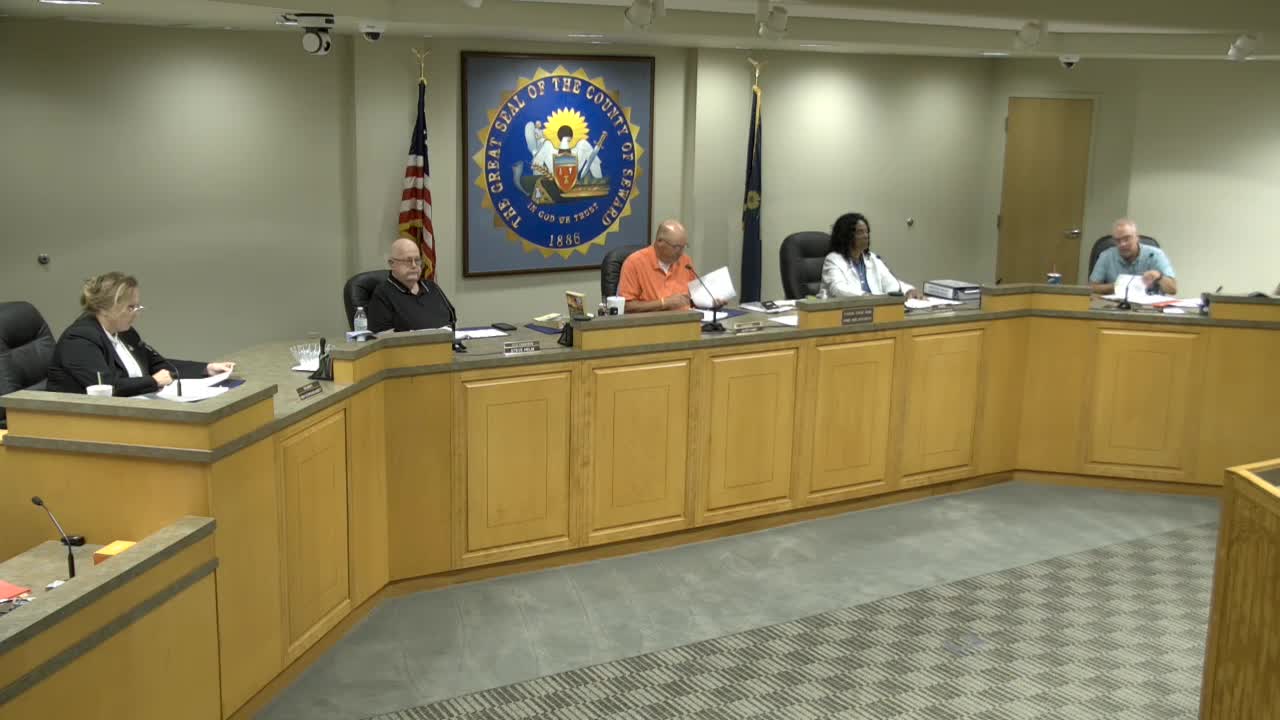
The Seward County Board of County Commissioners voted 5-0 Aug. 4 to adopt a flat-fee approach for nonprofit rentals at the county fairground complex and to remove future fee‑waiver requests from coming before the commission so long as renters meet the new guidelines.
County facilities manager Brock Feiner presented several methods for calculating a nonprofit fee, including formulas that included or excluded labor, benefits and utility costs and a flat‑fee option. “I did it different ways of hours in a work year, hours in a year, with benefits, without benefits, with labor, without labor, and then also a just a flat fee,” Feiner said. He recommended using a simple flat fee and implementing a verification form at the county administration office so staff can confirm nonprofit status.
Commissioners debated how to set the flat fee and what costs should be covered. One commissioner said the county had about $84,000 in fee waivers last year and favored a flat fee so nonprofits have “some skin in the game.” Commissioners agreed the flat fee should be intended to cover utilities and insurance only; costs for setup, teardown, cleaning, damages and kitchen use will remain separate and remain charged according to the existing fee schedule. The commission also decided that any event where alcohol is present would not qualify for the nonprofit fee adjustment, and that if alcohol is discovered during an event the rental would default to the normal (nonadjusted) rate.
The motion approved by the commission directed staff to implement options 7 and 8 from Feiner’s proposals and to update the nonprofit rental form and guidelines. Commissioners instructed county staff to require proof of nonprofit status (for example, a 501(c)(3) determination) or documentation of an authorized fiscal agent when applicable, and to manage verification at the administration level so future qualifying rentals do not require commission action. Feiner said staff would provide the updated guidelines and form to commissioners once finalized.
The decision followed public and commissioner discussion but did not change the existing fee schedule for add‑on charges. Commissioners approved the motion by show of hands with a unanimous vote.
Looking ahead, staff will publish the updated nonprofit rental form and implement the fee changes; the commission removed four waiver requests from the agenda that were rendered unnecessary by the policy change.