Get Full Government Meeting Transcripts, Videos, & Alerts Forever!
Get email alerts on the Small Livestock topic
No spam. Unsubscribe anytime.
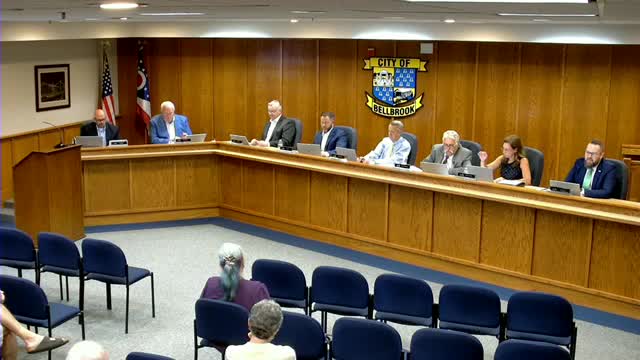
Bellbrook council tables ordinance creating rules for backyard "small livestock" after public concerns
Summary
Bellbrook City Council on Monday postponed a vote on Ordinance 2025‑O‑12, a zoning change that would add Section 18.41 to allow the keeping of "small livestock" in single‑family residential areas under a city zoning permit.
Bellbrook City Council on Monday postponed a vote on Ordinance 2025‑O‑12, a zoning change that would add Section 18.41 to allow the keeping of "small livestock" in single‑family residential areas under a city zoning permit. The council closed the public hearing after extended comment and directed staff to return with amendments addressing transition periods for adding birds, butchering language and whether more than one sheltering structure should be allowed.
The ordinance as introduced requires a zoning permit from the community development administrator and sets density limits by lot size: lots smaller than 0.5 acre — up to three small livestock animals; 0.5 to under 1 acre — up to six; 1 to 2.5 acres — up to 12; and 2.5 to under 5 acres — up to 15. It would require an outdoor, covered, predator‑proof shelter with at least 4 square feet per animal, locate any shelter in the rear yard at least 50 feet from another residential building (and at least 25 feet from an abutting property line), and limit animals to personal or household use (sale of eggs or meat prohibited in residential zones).
Resident Rebecca Langdon, who spoke at length during the public comment period, said she supports backyard chickens but raised multiple questions about definitions, permit requirements, density and the practical effect of setbacks on small lots. "I would like the freedom to have backyard chickens in a way that's respectful to my neighbors," Langdon said, describing concerns over the ordinance's setback, the one‑structure limit and the lack of a clear transition allowance when replacing flocks.
City Manager Rob (City Manager Rob) and others told council the draft covers only the zoning code portion and relies on Chapter 6.18 (animal code) for definitions. Rob said the zoning permit is intended to be similar to permits for accessory structures such as sheds or pools and "is merely the same simple permitting process that would be for any other accessory structure," and does not create routine inspections of animals or homes.
Council members repeatedly said a variance process would remain available for properties with unusual configurations, and several members asked staff to consider specific revisions. Deputy Mayor Ernie Havens and Councilman Greenwood noted enforcement generally operates on a complaint basis and emphasized the ordinance aims to protect neighbors from poorly maintained animals while allowing reasonable home use. Councilwoman Cyphers, Councilman Ashley and Councilman Hoke each asked that staff refine language on transition periods (for adding new birds), clarify butchering limits and reconsider the "one shelter" restriction to allow different species to be housed separately.
After discussion, council agreed to table the ordinance to permit staff to draft amendments reflecting the evening's feedback and to circulate revised language in advance of the next meeting. No final vote on the ordinance was taken.
Council and staff said the next steps will include drafting targeted amendments, circulating them to council members for review and scheduling a new public hearing when changes are ready. The council noted Article 18.41 is intended to work together with a later amendment to Chapter 6.18, which staff said will be introduced after the zoning ordinance is finalized.