Get Full Government Meeting Transcripts, Videos, & Alerts Forever!
Get email alerts on the Medicaid Funding Residential Care topic
No spam. Unsubscribe anytime.
Ottawa County CMH reports $2.59 million Medicaid restoration, flags high-cost residential 'outliers'
Summary
Board heard that $2,590,000 in Medicaid funding the agency had been owed will be released to Ottawa County; staff presented analysis identifying 19 high-cost residential cases accounting for nearly $5 million and urged continued advocacy as the state considers reorganizing regional mental-health management.
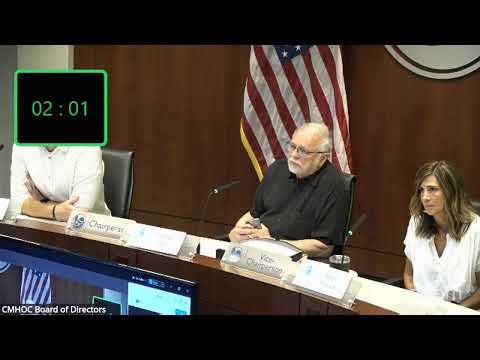
The Ottawa County Community Mental Health Board was told Friday that legislative advocacy had restored $2,590,000 in Medicaid funding to the county and that staff have identified a small group of exceptionally costly residential clients whose care is driving large portions of the agency's residential expenses.
At the board’s July 25 meeting, Director Dr. Brashears said the Michigan Legislature appropriated $140 million of previously withheld funds to the public mental-health system and that Ottawa County’s share of that distribution is $2,590,000. "Our portion in Ottawa is actually going to be 2,590,000 — just got it from State sure this morning," he said.
The board also received a finance-committee update and a presentation of a residential cost analysis, which staff described as a multimonth effort to identify how specialized residential funding is being used. Dr. Brashears told the board that the analysis uncovered 19 individuals with service costs that together approach $5 million. "I believe a group of individuals go far beyond what you would normally think happens in a traditional specialized residential home," he said. Staff said they plan to share those findings with the regional entity and the state as part of advocacy for targeted funding.
Why it matters: Board members and staff said the findings are relevant to rate-setting and state funding formulas. Dr. Brashears cautioned that, while the agency is building a level-of-care system and decision trees, nothing replaces person-centered planning: guardians and family input will remain central to placement decisions. He said the agency will hold a community meeting in mid-September to review the specialized residential level-of-care system and invite provider feedback before finalizing changes.
The meeting also included discussion of a Michigan Department of Health and Human Services (MDHHS) proposal — still at the concept stage — to re-bid managed-care functions and shrink regional entities from 10 to 3. Dr. Brashears said the agency does not yet know the details of any Request for Proposals but called the proposal a potential threat to the current community mental-health structure. "If the state gets its way in its general terms, it will be the end of community mental health as you know it," he said, and urged advocacy that would preserve local partnerships and input.
Board members pressed staff on next steps. Finance committee members and Dr. Brashears said they will submit the residential-cost analysis to the region to determine whether other community mental-health providers see similar outlier profiles and, if so, press the state for funding that recognizes that subgroup’s needs. The presentation also tied the analysis to ongoing budget work: staff said they will use the data to inform rate and resource requests to the regional entity and MDHHS.
Public commenters at the meeting underlined the urgency. A Jenison resident, Sarah Johnson, described her adult son’s severe autism-related needs and urged the board to secure funding and placements for people who cannot be safely served in typical group homes. Harbor House Ministries’ director told the board that recent rate increases have been critical for paying immediate operating costs at residential facilities.
What the board directed: Staff will present the residential-cost findings to the regional entity and convene a community meeting for providers and families in mid-September. No change to policy or contracts was approved at the meeting; board discussion was framed as direction to develop evidence and continue advocacy.
Looking ahead: Dr. Brashears said the agency will continue to press the region and state to base funding on demonstrated costs and local acuity rather than on raw Medicaid enrollment counts alone. He stressed that continued advocacy will be necessary if the state proceeds with any restructuring of regional management.