Get Full Government Meeting Transcripts, Videos, & Alerts Forever!
Get email alerts on the Immigration Enforcement topic
No spam. Unsubscribe anytime.
Rutherford County sheriff says ICE role limited to jail intake as residents urge opposition to 287(g)
Summary
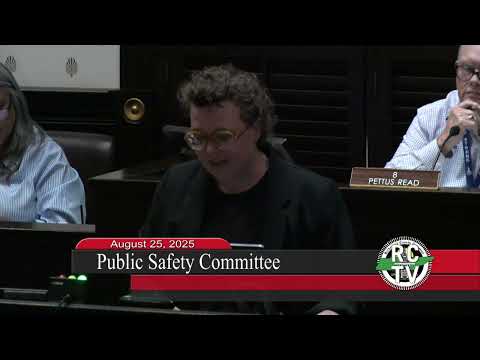
More than a dozen residents urged Rutherford County officials on Aug. 25 to oppose expanding local cooperation with U.S. Immigration and Customs Enforcement, while Sheriff Fitzhugh told the Public Safety Committee the department’s role is limited to jail intake checks and that he will not deputize deputies to enforce immigration law in the community.
More than a dozen residents pressed Rutherford County officials on Aug. 25 to oppose any expansion of local cooperation with U.S. Immigration and Customs Enforcement, saying an agreement commonly described as a “287(g)” contract would harm community trust and impose hidden costs. Sheriff Fitzhugh responded in the meeting’s sheriff’s report that the county is operating under a long-standing memorandum of understanding that allows jail intake access to federal databases for people arrested in Rutherford County, and that he will not authorize deputies to enforce immigration laws in the community.
Residents told the Public Safety Committee that deputizing local officers or expanding an ICE relationship would lead to racial profiling, deter crime reporting and shift county resources away from local public safety needs. “Local law enforcement should not be involved with this. Instead, they should focus on tackling crime here in Rutherford County,” said Amanda Hernandez, a Smyrna resident who spoke during the public comment period. John Mac Green, a Murfreesboro lawyer and longtime resident, told commissioners “participation by the RCSO in a $2.87 g contract will … decrease the health, safety, and well-being of the residents of Rutherford County” and urged the commission to oppose such agreements.
Sheriff: MOU, not a deputization contract
After the public comments the committee moved the sheriff’s report up the agenda so the department could respond. In his remarks the sheriff said the office has had a memorandum of understanding (MOU) with federal immigration authorities since 1996. He said the MOU gives jail staff access to a federal database for people arrested in Rutherford County and incarcerated in the county jail, but it does not authorize deputies to go into the community to enforce immigration laws.
“I’m not gonna sign a contract to do that. We have never done that,” the sheriff said. He described the county’s role as limited to contacting federal authorities when someone is arrested and held in the county jail on local charges; if a federal detainer exists, federal officials decide the next steps.
The sheriff also emphasized his lack of unilateral authority to sign any binding contract with ICE: “I do not have that legal authority. I can’t. That’s commission and the mayor is the only one that can sign the contract,” he said.
Residents cited costs and community impact
Speakers at the meeting shared local and national examples they said demonstrate fiscal and social costs of 287(g)-style programs. Whitney Huffman cited estimated municipal costs in other jurisdictions — figures she said ranged from about $1.2 million to more than $5.5 million annually in some places — and asked how the county would cover overtime, training, equipment and IT costs tied to immigration enforcement. Rio Martinez, Mary Bailey, Alex Sager and others urged commissioners to weigh moral and religious objections and warned of chilling effects on crime reporting.
Commissioner questions and follow-up
Commissioners asked the sheriff clarifying questions about which ICE-related models an MOU could cover. Commissioner Beverly summarized the three models commonly associated with 287(g) arrangements — a jail-enforcement model, a task-force model and a warrant-service model — and the sheriff confirmed Rutherford County is continuing only the jail-enforcement model, which applies after a person is arrested for a local offense and booked into the county jail.
The sheriff repeatedly said he will not direct deputies to engage in community immigration enforcement and that the county does not intend to request taxpayer funds to conduct such enforcement. He invited the public to stay engaged and said he appreciated the opportunity to answer questions at the committee meeting.
What the discussion means and what did not happen
The committee did not consider or vote on any new contract with ICE during the meeting. Commissioners allowed extended public comment and advanced the sheriff’s report so the sheriff could respond to concerns. The sheriff described current practices and legal limits but said the mayor is the signer for any formal contract, so any future change would require further executive and commission-level action.
Votes at a glance
The committee approved its routine business and a slate of grant rollovers, training-grant applications and budget amendments during the same meeting. None of those votes authorized deputizing deputies for community immigration enforcement. See the “Votes at a glance” list below for motions the committee approved during the meeting.
Ending
The discussion drew a full public comment roster — committee staff said 14 people signed up — and several commissioners said they appreciated citizens bringing their concerns to the committee. Residents who spoke asked the full County Commission to actively oppose expanded immigration enforcement partnerships; the sheriff maintained the department’s current, limited practice and said he lacks unilateral authority to sign a new contract.