Get Full Government Meeting Transcripts, Videos, & Alerts Forever!
Get email alerts on the Animal Care Budget topic
No spam. Unsubscribe anytime.
Indianapolis Animal Care Services presents 2026 budget; new shelter slated for March 31, 2026 completion
Summary
Indianapolis Animal Care Services presented its first independent-agency budget to the City-County Council Community Affairs Committee, reviewed planned revenue and expense shifts tied to a 60,300-square-foot shelter and discussed whether to resume a $60 adoption fee set by ordinance.
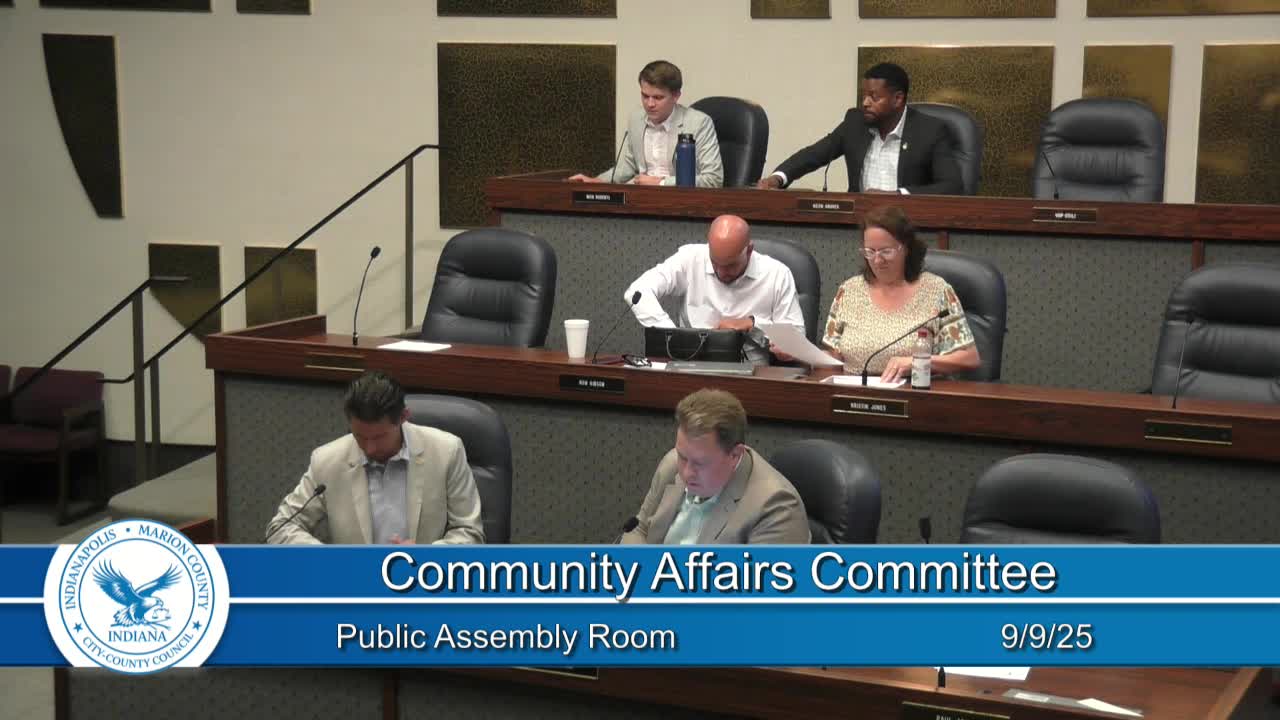
Nick Roberts, the committee’s acting chair and Councilor for District 4, opened the Sept. 9 Community Affairs Committee meeting for the Indianapolis City-County Council to hear a 2026 budget presentation from Indianapolis Animal Care Services and its new leadership.
Amanda Dehoney Hinkle, director of Indianapolis Animal Care Services, told the committee the agency is presenting its first budget as an independent agency and outlined operations metrics, staffing and goals tied to a new shelter scheduled to be complete March 31, 2026, with an anticipated public move-in by May 2026. James Van Layson, the agency’s new chief financial officer, reviewed character-level budget changes and said most revenue will continue to come from consolidated county general funds, kennel and adoption fees, and revenue recovery.
Why this matters: The budget and new facility will change operating costs and revenue streams for the city’s municipal animal shelter while the council and the agency discuss whether to resume a $60 adoption fee set by council ordinance and how any fee revenue should be directed.
The presentation and discussion
Dehoney Hinkle said the new shelter will total about 60,300 square feet, with 234 dog kennels (182 indoor-outdoor), 10 indoor public visitation rooms, a single indoor dog play area, five puppy kennels, 12 outdoor dog-run kennels, a 3,200-square-foot meet-and-greet dog park area, about 80 cat cages plus three indoor cat play areas, 3,700 square feet of veterinary space, two acres of pasture for livestock animals, a 2,400-foot walking path around a pond and a two-acre public dog park. She said the facility is designed so “100% of our dog and cats have access to natural daylight through windows and skylights.”
James Van Layson said the agency followed OFM direction on reserves and that the overall 2026 budget shows a net reduction of roughly 1.5% overall, with specific shifts driven by new building chargebacks and reallocations between budget characters. He said character 1 (personnel and core operations) grew by $49,810 to fund a 2.6% cost-of-living adjustment for most staff and a 3% increase for AFSCME-covered staff, plus increases in health insurance and workers’ compensation. Character 2 showed an approximate $100,000 reduction (office and medical supplies shifting or being absorbed), and character 3 increased by about $131,000 largely because of rent/chargebacks associated with the new facility.
The presentation included operational metrics for 2024: more than 2,000 high‑risk animals transferred to rescue partners, a 10% increase in adoptions, roughly 27.5 additional animals placed in foster care, and an average live-release rate of 91%, up from 84% the previous year. Current staffing is 67.5 full-time equivalent positions with 16 vacancies; the agency reported a vacancy-rate improvement from 38% (August 2024) to 19% (July 2025). The director and CFO said reduced emergency repair spending and ending a kennel-cleaning contract are among the savings anticipated with the new facility.
Questions from the committee
Councilor Michael Paul Hart asked about the move-in date; Dehoney Hinkle said the building contractor is “slated to be complete March 31 at the latest” and that agency staff would still need to complete a punch list and move-in logistics before opening to the public. Hart also asked how the building rent is structured; the director and CFO said the project is financed through the building authority (and related bond processes) and that the agency will pay a rent/chargeback to that authority.
Councilor Derek Cahill raised the adoption-fee issue. He noted the council-set ordinance fee of $60 and asked what resuming collection at that amount might generate. Dehoney Hinkle estimated that bringing adoptions to 100% of the ordinance rate could yield around $200,000 annually “depending on how many animals we’re adopting out.” She confirmed the agency has largely been waiving the fee in recent years to keep shelter capacity available and said staff would engage OCC (City/County administrative offices) to explore pathways for either restoring the fee or directing any revenue to IACS rather than the general fund.
Dehoney Hinkle said: “We could definitely… put it in talks and take it to OCC and see… what that would look like for the city.” The committee also asked the agency to provide additional detail on an increase in OCC chargebacks reflected in character 5 of the budget; the CFO said he would follow up with OCC to identify the source of that chargeback increase.
Public comment and governance
Chris Roberson, a long-time volunteer and mayoral appointee to the agency’s board, told the committee he supported the new director and the agency’s progress but warned that “we have not solved the animal welfare crisis in Marion County” and urged the council to weigh any funding decreases carefully.
No formal motions or votes were taken on the budget at the committee meeting. Committee members signaled they want follow-up information on (1) the OCC chargeback increase, (2) a benchmarking and fiscal analysis of the $60 adoption fee and options for directing revenue to IACS, and (3) details about operational changes tied to the new facility.
What’s next
The agency said it will return with more information requested by councilors, including a breakdown of OCC chargebacks and the feasibility and implications of resuming or redirecting the ordinance adoption fee. The new shelter’s construction completion date remains March 31, 2026, per the contractor schedule cited by agency staff; move-in and public opening dates will depend on punch-list completion and operational readiness.