Get Full Government Meeting Transcripts, Videos, & Alerts Forever!
Get email alerts on the Personnel Contracts topic
No spam. Unsubscribe anytime.
Commission rejects proposed county attorney contract after extended debate over conflicts, pay and termination terms
Summary
The Walton County Board debated and then rejected a proposed contract for county attorney Clay Atkinson. Commissioners and public commenters clashed over compensation, conflict-of-interest risks given the firm’s other municipal clients, and a clause requiring a supermajority vote for termination; the motion failed 3–2.
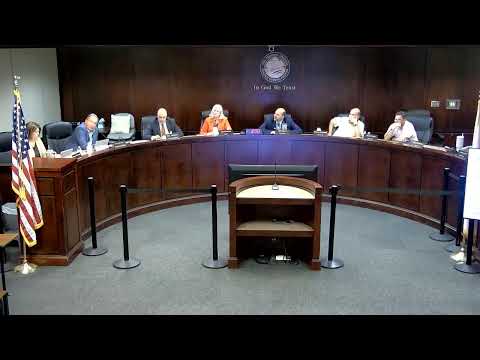
DeFuniak Springs — A contested motion to approve a contract with Atkinson Law Firm for county attorney services failed at the Walton County Board of County Commissioners meeting on Aug. 12 after hours of debate by commissioners and public comment.
The proposed contract would have replaced the interim arrangement and moved the county to a retainer model that staff presented as a cost-saving alternative to a full-time in-house county-attorney FTE. The contract terms discussed on the dais included a flat monthly retainer to cover most county legal work, a rate for litigation work outside the retainer, several categories of legal services covered, and a termination/severance provision. Staff presented comparative budget figures showing in-house salary-plus-benefits scenarios across a $200,000–$400,000 range to illustrate total employee cost. The contract presented to commissioners would have cost significantly less than staff projected for an in-house equivalent at the high range, according to staff and the candidate’s remarks.
Public comment and commissioner questioning focused on three principal issues: (1) whether the law firm’s ongoing representation of other local governments and private clients created unacceptable conflicts when the firm would also represent Walton County; (2) the proposed compensation and whether it constituted an appropriate use of public funds compared with an in‑house FTE model or other counties’ legal budgets; and (3) a clause in the draft requiring a supermajority (4 of 5) to terminate the contract, which some commissioners and members of the public argued inappropriately limited the board’s oversight and accountability.
Supporters of the proposed contract, including the candidate, said the arrangement would centralize legal work, reduce overall litigation spending and provide stable legal support while saving public money compared with prior years when outside counsel was widely used. Opponents questioned whether the firm could properly represent the county while holding ongoing municipal and private engagements and whether the severance/termination structure and litigation rate created poor incentives.
After discussion and extensive public comment, the motion to approve the county attorney agreement failed on a 3–2 vote. The board did not vote to terminate the interim relationship; the acting county attorney will continue to provide services under the existing arrangements until the board determines next steps.