Get Full Government Meeting Transcripts, Videos, & Alerts Forever!
Get email alerts on the Community Justice Audit topic
No spam. Unsubscribe anytime.
County auditor releases audit of Department of Community Justice, recommends reducing jail sanctions and improving referrals and grievance process
Summary
The Multnomah County auditor delivered an audit of the Department of Community Justice’s adult services that found racial disparities in sanctioning, increased technical sanction days since 2019, gaps in referrals for mental health and housing needs, and problems with the grievance process.
The Multnomah County auditor presented an audit of the Department of Community Justice’s adult services, concluding that current sanctioning practices and documentation gaps worsen outcomes for people under supervision and disproportionately affect Black and Native American individuals.
Auditor Jennifer McGurk and audit director Nicole Duweez summarized methods — interviews with people with lived experience, DCJ staff and external experts, case file reviews and data analysis. The audit reported that the population under supervision declined from 11,089 in 2019 to 6,613 in 2024 while technical sanction days increased over the same period. Auditors said 38% of people on supervision had a documented history of homelessness and 26% had documented serious mental illness.
Key findings and recommendations included: (1) reduce reliance on jail sanctions for technical violations and create a written policy that limits jail sanctions to clear public safety threats with measurable criteria; (2) address racial disparities by publishing quarterly, disaggregated data dashboards on sanctions and absconsions; (3) develop a strategy and minimum documented efforts to locate and support people at risk of absconding, particularly those experiencing homelessness or mental illness; (4) improve documentation and set clear staff expectations for providing and recording referrals to mental health, housing, and treatment services; (5) expand low‑barrier resource models such as stabilization and readiness programs; and (6) reform the grievance process to ensure accessibility, consistent retention and investigation of complaints, online submission, a responsible staff point of contact, and annual trend reporting to the board.
Auditors emphasized that many of the harms documented — interruption of treatment, housing loss, and employment disruption — extend beyond the individual to families and communities. The report included 24 recommendations, all with implementation targets and a full implementation due date of May 31, 2027. The auditor’s office said it will follow up on implementation after recommendations’ due dates.
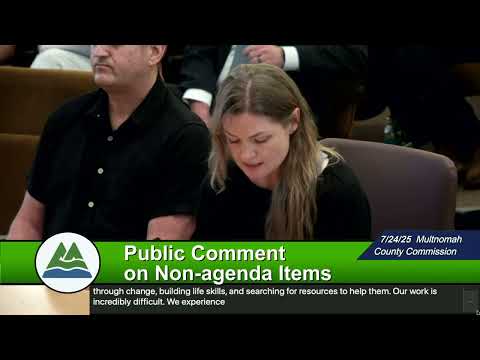
Public commenters during the meeting included Sonya Weber, a Multnomah County parole and probation officer who said the audit showed bias and understates victim safety, and Matt Scott, who criticized the audit’s methods and said that jail sanctions respond to behaviors that can pose real public safety risks. Several commissioners pressed the auditors and DCJ leadership on which aspects of sanctioning were constrained by state law and which were subject to DCJ policy. DCJ Director Denise Peña and Adult Services Director Tara Hubbard acknowledged statutory constraints (reporting absconsions to sentencing authorities or parole board and the resulting warrants) but said the department is already taking steps such as revising policies, limiting short jail sanctions without manager approval, improving documentation of referrals, and integrating racial equity reviews into sanctioning practice oversight.
The board discussed the audit at length. Commissioners raised concerns about data fragmentation across systems, the need to coordinate county departments for housing and mental health capacity, and the difference between documenting referrals and ensuring services exist. Auditor McGurk said the audit’s scope concentrated on people under supervision and recommended system‑level actions for the board to evaluate capacity (housing, inpatient mental health beds) and to fund culturally responsive and low‑barrier services. The auditor’s team will publish the report and follow up on the recommendations with a public implementation review dated May 31, 2027.