Get Full Government Meeting Transcripts, Videos, & Alerts Forever!
Get email alerts on the Employee Health Insurance topic
No spam. Unsubscribe anytime.
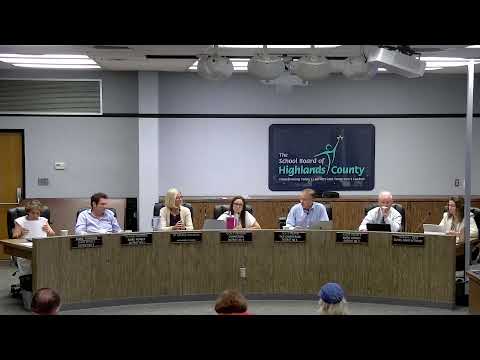
Highlands County school board backs insurance committee plan, approves employee clinic contract
Summary
Andrew Lethbridge, deputy superintendent, told the Highlands County School Board that the district faces a roughly $2 million shortfall in its self-funded employee health plan and presented a set of recommendations from the district's insurance committee aimed at restoring solvency.
Andrew Lethbridge, deputy superintendent, told the Highlands County School Board that the district faces a roughly $2 million shortfall in its self-funded employee health plan and presented a set of recommendations from the district's insurance committee aimed at restoring solvency.
The board voted to adopt the committee's recommendation, which includes a $15 per-pay-period increase in employee contributions for employees who participate in the plan, a reduction in the health reimbursement arrangement (HRA) payment to $200, and staged changes to dependent rates intended to move grandfathered and non-grandfathered employees toward a single rate over time. The motion was approved 4–1 (Dr. Durance, Mr. Martin, Mr. Whitten and the board chair voting yes; Ms. Howerton voting no).
Why it matters: Lethbridge said the district's claims have run “hot” for two consecutive years, leaving claims about $2 million higher than revenues and depleting reserve balances. As a self-funded plan the district bears its own claims risk; Lethbridge said the district used one-time ESSER federal funds, dental-fund surpluses and transfers from the general fund to cover prior shortfalls but has limited further reserve options. The insurance audit required under Florida statutes could flag the plan as not solvent if reserves are insufficient, triggering state-level review, Lethbridge said.
What was discussed: Lethbridge described the insurance committee as a long-standing subcommittee that includes union and administrative representatives and said the committee voted unanimously for the compromise package after months of meetings. He described alternatives the district is pursuing in parallel, including working with brokers, joining a new state risk-sharing pool called “Fleet” for pharmacy and stop-loss purchasing, and changing the clinic model. The committee estimates the recommended changes will generate about $1.5 million in additional revenue; Lethbridge said that will not erase the full $2 million shortfall but is a “big step.”
Union and employee response: Jean Federico, president of the Highlands County Education Association (HCEA), urged the board to delay final action and review recently obtained carryover figures after a public-records request. Federico said principals' discretionary carryover totaled $1,029,000 and suggested the board could consider using a portion of those funds — or at least revisit the plan — before finalizing decisions that will reduce an HRA employees had been told they would earn through wellness activities.
Clarifying details offered in the meeting included: 271 employees were identified as beneficiaries of the grandfathered dependent-rate structure; maintaining grandfathered dependent rates is costing the district roughly $800,000 annually; the HRA change was estimated to preserve roughly $700,000 in the plan; the district's stop-loss attachment point is $500,000; and the committee composition reported by staff was three teachers, two non-instructional employees and five administrators.
Board debate and public comment: Several board members and public speakers expressed sympathy for employees on low salaries and suggested investigating additional options or delaying the decision to gather more data. The board held an interim motion to open public comment; multiple employees and union leaders described the financial impact on staff and asked the board to consider using carryover funds, restoring the $750 HRA payment or otherwise softening immediate impacts. Lethbridge and Angelica Tenajero (business operations) answered questions about fund balance and what reserves remain. Tenajero said the district's unassigned fund balance (excluding daycare monies) is approximately $910,000 and clarified the published fund-balance figures.
Clinic contract approved: Separately, the board approved a contract with Care ATC to provide an employee-only clinic. The contract the board approved is priced at an estimated $1.2 million annual cost compared with about $800,000 the district currently pays for its hybrid clinic model. Care ATC representatives described flexible hours, telehealth options, and services intended to reduce downstream costs (for example, directing patients to lower-cost imaging providers and offering a “surgery plus/Lantern” option for scheduled procedures). The contract vote carried (motion by Ms. Howerton, second by Mr. Whitten; recorded yes votes included Mr. Whitten and Mr. Martin, Dr. Durance voted no; the chair voted yes). Board members and union representatives asked the vendor to collect and report satisfaction metrics and to work with district staff on hours, location and communications.
Distinction: The board's vote to adopt the insurance committee recommendation is a formal action to change employee cost-sharing and HRA structure; the approved Care ATC contract is a separate action to change clinic operations. Staff emphasized both are part of a broader strategy to manage claims and stabilize the plan, not a single omnibus policy.
Next steps and implementation: Lethbridge said the $15-per-pay change is time-sensitive because payroll deduction timing affects how much revenue will be generated in 2025–26; the HRA and dependent-rate changes would be effective in the 2025–26 plan year (deductions beginning December 2025 for coverage months). The district will continue exploring broker options, Fleet participation, pharmacy strategies and the clinic build-out or lease costs. Lethbridge said the committee and staff will return with more data on broker proposals, Fleet pharmacy savings, and any recovered stop-loss reimbursements (he estimated pending reimbursements up to about $200,000 from reversed claims).