Get Full Government Meeting Transcripts, Videos, & Alerts Forever!
Get email alerts on the Land Use topic
No spam. Unsubscribe anytime.
Saint Helena council approves first reading to alter vision-triangle rules, raising allowable sight-line height
Summary
The Saint Helena City Council introduced and waived the first reading of a zoning ordinance amendment that would raise the maximum allowable height in intersection sight lines from 2 feet to 42 inches and shorten the measured triangle from 35 to 25 feet.
The Saint Helena City Council introduced and waived the first reading of an ordinance to change the city’s vision-triangle rules in Title 17 of the municipal code, in a 5-0 roll-call vote.
City planning staff told the council that the proposed amendment would replace the current 2-foot maximum height in intersection sight lines with a 42-inch limit and shorten the triangle length from 35 feet to 25 feet. The council voted to introduce and waive the first reading of the ordinance and to direct staff to prepare the final ordinance for adoption.
The change stems from a yearlong review of the city’s vision-triangle standard. A staff presentation said the city surveyed 299 street corners in January 2024; 66 were out of compliance with the code measuring 35 feet along each curb and limiting vegetation and other objects to 2 feet high. Staff and the planning commission concluded that moving to a 25-foot length and a 42-inch height would bring the vast majority of sites into compliance while maintaining sight-line safety. "If we were to change the line into 25 feet and raise it to 42 allowable height, it would comply," a staff member said during the presentation, citing illustrations at known intersections such as Spring and Oak near Grace Episcopal Church.
The planning commission reviewed the changes and generally recommended them. The report said the police and public-works departments raised no objections; staff cited Caltrans guidance indicating a 42-inch sight-line is appropriate for drivers. The staff report also recommended a CEQA exemption under Public Resources Code section 15061(b)(3), the so-called "commonsense exemption" for projects with no possibility of causing a significant environmental effect.
Council members who spoke at the hearing described the amendment as a pragmatic response to older standards that caused compliance conflicts with historic walls, fences and plantings. Council member Barrick said he had tracked the issue and supported the changes, noting they targeted specific safety problem corners without broadly imposing new burdens on residents.
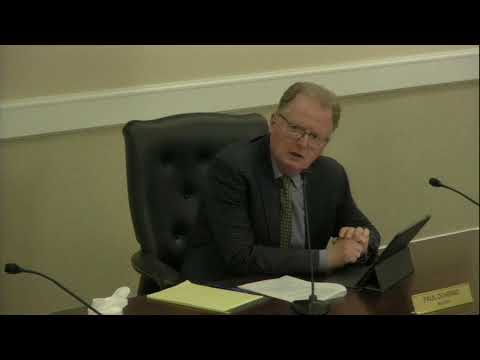
The motion to introduce and waive the first reading passed on a roll call recorded as: Council member Barrick — yes; Council member Spatarotto — yes; Council member Summers — yes; Vice Mayor Deasy — yes; Mayor Doring — yes.
Staff told the council the amendment would reduce the number of noncompliant corners from 66 to eight based on the city’s survey, and that the fire department had prepared materials to help property owners visualize the difference between 24-inch, 36-inch and 42-inch height limits.
The ordinance moves to final adoption at a future hearing. The council’s action tonight was an introduction and procedural waiver; no change to the code is in effect until final adoption and publication.
Ending
Staff said they would return with the final ordinance for adoption and materials to help property owners comply. The fire department and planning staff will continue outreach to property owners who remain out of compliance under the proposed standard.