Get Full Government Meeting Transcripts, Videos, & Alerts Forever!
Get email alerts on the State Education Policy topic
No spam. Unsubscribe anytime.
State proposed SOL cut‑score changes could sharply lower Clarke County pass rates, superintendent warns
Summary
Dr. Bolling briefed the school board on proposed Virginia Board of Education changes to Standards of Learning (SOL) cut scores for reading and mathematics, showing steep rises in the pass thresholds and a modeled drop in Clarke County pass rates if immediately implemented.
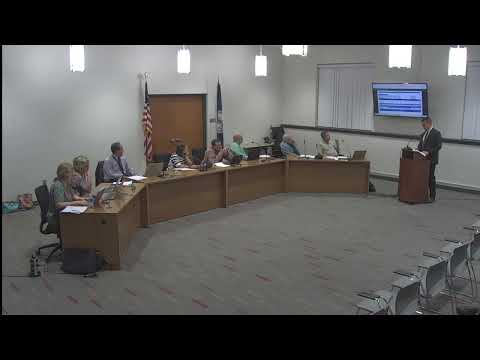
Dr. Bolling, a district administrator, briefed the Clarke County Public Schools Board on Sept. 22, 2025, about proposed changes to Standards of Learning (SOL) cut scores released by the Virginia Board of Education and the potential local impact if the changes are implemented without phasing.
The superintendent described the state proposal as a significant increase in the numerical thresholds that define “proficient” (passing) on SOL reading and mathematics tests. “Every SOL test has the same pass number…Since 1998, 400 has always been proficient,” Bolling said, then noted the draft motion would raise many passing cut scores well above 400 for reading and math end‑of‑grade and end‑of‑course tests.
Why it matters: local accountability measures and graduation‑related verified credits are tied to SOL results. Bolling presented district data and state comparisons to show that, if the proposed cut scores take effect immediately, Clarke County Public Schools’ overall reading pass rate would fall from 75.87% to an estimated 39.32% and math from 72.90% to roughly 39.3% under the draft numbers he displayed.
What the proposal would change: the draft would raise passing thresholds for multiple grade levels — for example, the proposed passing cut for 11th‑grade end‑of‑course reading would move from 400 to 479 in the draft motion Bolling showed. In mathematics, Algebra I’s proposed passing cut rose to the mid‑400s in the draft. Bolling noted the state has not changed the proficient (400) and advanced (500) split consistently since 1998; the draft would make the thresholds test‑ and grade‑specific.
Potential consequences and district concerns: Bolling warned of the operational and equity implications. Because Algebra I has no substitute assessment for graduation, a sharp rise in its passing threshold could affect future cohorts’ graduation rates. He urged a phased approach and a start‑of‑school‑year implementation if the state adopts higher cut scores. “I am all for increased expectations and rigor, but we really do need a phased in approach,” Bolling said.
Timeline and process: Bolling told the board the draft cut scores and related documents were posted recently and would be discussed at forthcoming State Board meetings; he said the state board planned an implementation vote in October. He also noted an “approaching” category the state added to the proposal (a new non‑passing level) and said clarity remains about how that will affect verified credit and accountability.
Local response: Bolling said he sent a letter of concern to the state and that regional superintendents had discussed the proposal. Board members asked whether Clarke County should submit formal comments; Bolling said districts commonly send emails and public comments to the State Board during the rulemaking and action period.
Ending: Bolling told trustees he will keep them informed as the state board moves from informational presentation to an implementation vote and urged the board to consider urging a phased or delayed start date if the state advances the draft cut scores.