Get Full Government Meeting Transcripts, Videos, & Alerts Forever!
Get email alerts on the Family Life Education topic
No spam. Unsubscribe anytime.
Clarke County presents draft Family Life Education curriculum; committee recommends omitting topics already covered in health/SEL
Summary
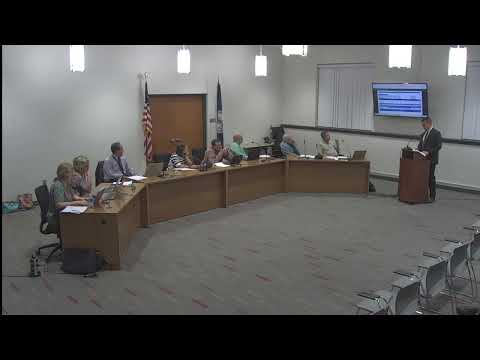
Jessica Nail, the district director of curriculum and instruction, and other staff presented a draft Family Life Education (FLE) curriculum to the Clarke County Public Schools Board on Sept. 22, 2025, describing state requirements, sample lessons for elementary and high school, survey feedback and a proposed opt‑out process for parents.
Jessica Nail, the district director of curriculum and instruction, and other staff presented a draft Family Life Education (FLE) curriculum to the Clarke County Public Schools Board on Sept. 22, 2025, describing state requirements, sample lessons for elementary and high school, survey feedback and a proposed opt‑out process for parents.
The presentation laid out the legal foundation for FLE. “The board of education shall develop standards of learning and curriculum guidelines for comprehensive sequential family life education curriculum in grades kindergarten through 12,” Nail said, quoting the relevant provisions in the Code of Virginia and Virginia Department of Education (VDOE) guidance that the draft follows.
Why it matters: the VDOE requires certain topics — including dating violence, human trafficking prevention, consent and personal boundaries — be taught at specified grade bands; the draft shows where those standards would appear in Clarke County’s lessons and how the district proposes to deliver them.
Staff said the draft pairs state standards (left-hand columns in the draft) with locally curated “essential knowledge, skills and processes” and identified who would teach each lesson. Alicia Solich, a school counselor at Boyce Elementary, walked the board through an elementary lesson on appropriate touch and self‑advocacy that uses the book Your Body Belongs to You and a parent handout on body‑safety rules. “We want kids to know that there are appropriate times and appropriate places and that you can value hugs and kisses … but that you do have the right to stand up for yourself,” Solich said.
At the high-school level, Clark (Clarke) County High School teacher Matt Ernst described a healthy‑relationships lesson covering boundaries, communication and consent, with partner discussions and role‑plays. “Consent, a big thing,” Ernst said. He said lessons also address online boundaries and sending private images.
Survey and committee work: staff reported 12 pieces of community feedback (10 submitted before the online survey closed and two emailed afterward). Nail summarized the responses: four of the 12 respondents said they fully supported the curriculum as written; none of the responses said the district should not teach FLE at all. Common suggestions included using biological names for body parts rather than only “private parts,” addressing sexting and cyberbullying across grade levels, and considering single‑gender groupings for some lessons. Staff noted that topics such as digital citizenship and substance abuse already appear elsewhere in the district curriculum.
Opt‑out, supervision and alternatives: staff described a draft parent opt‑out form that would be provided annually and tied to grade‑level standards. If parents opt their child out, students would receive an alternate, non‑punitive assignment such as a social‑emotional lesson, a career/health lesson or physical education in a separate location (for example, the library). Nail told the board that principals and administrators would conduct classroom walk‑throughs and provide supervisory oversight for lesson implementation.
Committee recommendation: the FLE committee reviewed the draft and recommended omitting from the FLE document any items already taught through the district’s approved health curriculum, counseling services or social‑emotional learning (SEL). “We now feel that we should probably omit those from our curriculum so that if a child is opted out of all of the FLE curriculum they’re not missing their required curriculum through health or social emotional learning or counseling,” Nail said.
Board questions and implementation details: trustees asked whether the FLE lessons would add instructional time to existing classes. Staff said the high‑school implementation would be integrated into existing health time (a two‑week block at the high‑school level) and would not materially change the district’s physical‑education minutes. Trustees also asked about parental presence during lessons, the logistics of large numbers of opt‑outs and whether opt‑out notices could be included in annual registration. Staff said families could opt out at any time but asked that parents notify the school in advance to allow planning for alternate supervision and instruction.
What’s next: staff asked the board for direction on the draft and said they can revise the opt‑out form (for example, by grade level) and adjust presentation and parent‑notification timing. No formal adoption vote of the FLE curriculum occurred at the Sept. 22 meeting; staff presented the draft and committee recommendations for board consideration.
Ending: staff emphasized that the draft aligns to VDOE standards and that the committee sought to balance comprehensiveness with avoiding duplication of lessons already approved in other district programs.